
Despite my love for historicals and Madhubala, I was surprised when Ava mentioned this film on her blog. A historical (and a Sohrab Modi one, too), with Madhubala, and I’d never heard of it? Ava recommended it, so I decided to keep an eye out for it. Fortunately, I discovered Raj Hath on Youtube—therefore, this post. Ava, thank you. This was an enjoyable film.
Tag Archives: Hindi cinema

Ten of my favourite ‘Who’s that lip-synching?’ songs
If the title of this post stumps you, let me explain.
Anybody who’s seen Hindi films (especially from the 1940s onward, when playback singing became widespread) knows that most actors and actresses onscreen weren’t singing for themselves. Occasionally, as in the case of artistes like Suraiya, KL Saigal, Noorjehan or Kishore Kumar, they did sing for themselves, but more often than not, the recording was done off-screen, and the actor lip-synched to the song onscreen. So we have all our favourite actors, warbling blithely (or not, as the case may be) in the voices of our greatest singers.
And just now and then, while the song may reach the heights of popularity, the person on whom it is filmed may be, to most people, a non-entity. Sidharth Bhatia, author of Cinema Modern: The Navketan Story (as well as a book on Amar Akbar Anthony, which I’m looking forward to reading) pointed this out to me the other day, with a couple of examples in support of his point. Jaan-pehchaan ho, and Tum apna ranj-o-gham. Sidharth made a request: would I compile a list of songs of this type? Famous songs, but lip-synched by not so famous faces?
So here it. And, Sidharth: thank you. This was challenging, and fun.

Boot Polish (1954)
When I reviewed Les Quatre Cents Coups a couple of weeks back, I was mentally riffling through the list of good films with child protagonists that I’d seen. I couldn’t, sadly, think of many. There were some—The Night of the Hunter, Bhai-Bahen, Bandish, Do Kaliyaan, for instance—in which children played an important part. But these were either not really films about children, or they were films about stylized children: little adults, really, or oversized toddlers.
Then I saw Kaphal – Wild Berries, made by blog reader, fellow blogger and film maker Batul Mukhtiar (aka Banno), and thought: yes, this is what a good film about children should be like. (Here, on my website, is a review of Kaphal). I also remembered, then, that Banno had once recommended a film about children. The Raj Kapoor production, Boot Polish, which she’d reviewed on her blog, and which I’d never got around to watching. If someone who could make such a lovely film about children could recommend a film, that film would be worth watching.
So here we are. And, thank you, Banno.
Railway Platform (1955)
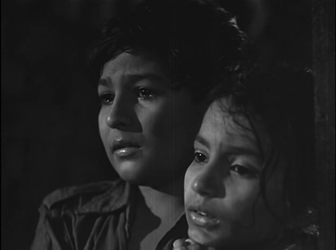
Railway Platform begins, not on a platform, but in a train.
It starts with a song, Basti-basti parbat-parbat gaata jaaye banjaara, lip-synched by a philosopher and poet (Manmohan Krishna) as he rides in a crowded train compartment. This man, only referred to as ‘kavi’ (poet) throughout the film, acts as a sort of sutradhar. Not strictly the holder of the puppet strings, not always a narrator, but a voice of reason, of conscience, of dissent. His favourite saying is that “Two and two do not always make four; they sometimes make twenty-two.”

Manna Dey: In Tribute
I am listening to Poochho na kaise maine rain bitaayi as I write this. I am hearing Manna Dey’s voice, bringing so much emotion, so much frustrated longing into “Ut jale deepak, it mann mera; phir bhi na jaaye mere mann ka andhera”. And I am remembering all the other songs of Manna Dey that I’ve loved over the years. Songs that I grew up with (and, more often than not back then, didn’t know who sang them). Songs that I loved from the very first moment I heard them. Songs that have grown on me. Songs that make Manna Dey immortal, even though he’s no more.
Waaris (1954)
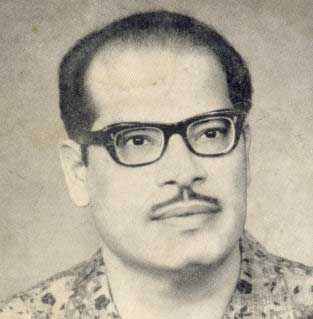
As frequent visitors to this blog would know by now, one of my weaknesses is good music—and there have been, over the years, dozens of films that I’ve watched primarily because they had good scores. In some instances, just one song that I really liked. More often than not, my luck’s been pretty shoddy and I’ve ended up sitting through frightful films like Akashdeep, Saaranga, and Akeli Mat Jaiyo.
With Waaris, which I watched mostly because of Raahi matwaale, I had hopes [cautious, considering my track record, but hopes nevertheless]. It stars Suraiya and Talat Mahmood, both favourites of mine, and it was produced by Sohrab Modi, who even if (when acting) had a penchant for ‘declaiming to the skies’, did make some good films.
Dharmputra (1961)
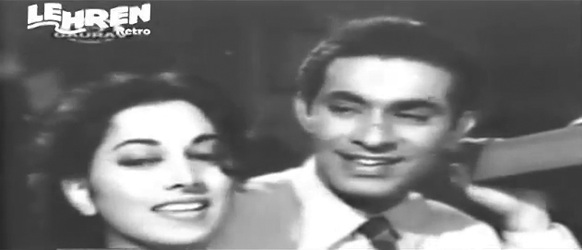
Several readers have told me, over the past couple of years, that I should watch this film. It is, if you go by just the details of cast, crew, and awards won, a promising film. Directed by Yash Chopra, starring Mala Sinha, Rehman, Ashok Kumar, Shashi Kapoor (in his first role as an adult), Nirupa Roy, Indrani Mukherjee, Manmohan Krishna—with guest appearances by Rajendra Kumar and Shashikala. The winner of the President’s Silver Medal for Best Feature Film in Hindi at the National Film Awards.
And with lyrics by Sahir Ludhianvi, set to music by N Dutta. I could well imagine Dharmputra would be a film worth watching. So when I finally managed to lay my hands on it, I didn’t waste much time getting around to seeing it.
Shikast (1953)
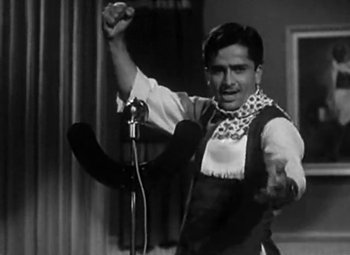
There is a story behind how I ended up watching this film last week.
I had first seen Shikast on TV years ago. I was a pre-teen, and didn’t much care for the film: it was too tragic, too angst-ridden, too lacking in entertainment, as far as I was concerned. For years afterwards, the only thing I remembered about the film was that it starred Nalini Jaywant and Dilip Kumar, and that through most of the film, Nalini Jaywant’s character sported a vivid crescent-shaped scar on her forehead. I had even forgotten the name of the film.

Love in Bombay (2013)
Or 1971, if you go by the year the film was made, not the year the film was released. Or 1974, which was when the censor certificate dates from.
I came to know of Love in Bombay a few months back, when a newspaper article mentioned that Joy Mukherji’s sons were finally going to be releasing this film. I forgot about it until I discovered that it had finally been released this last Friday—and then I was in a quandary. To see or not to see, as I put it. Various friends urged me on: Harvey, for instance, said that with Agha Jani Kashmiri having revised the script, it may be pretty good. Beth said that she’d heard the costumes were good. Sidharth Bhatia suggested that the presence of Joy Mukherji and Kishore Kumar might be one reason to watch.
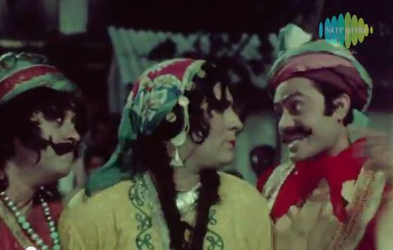
Halaku (1956)
Bunny Reuben’s biography of Pran, as many Pran fans would know, is called …and Pran: A Biography, a nod to the hundreds of credit sequences in which Pran—invariably one of the most prominent artistes in whichever film he was in—was listed at the end of the credits. A nod, not just to the fact that his character was more often than not at odds with the hero and heroine and their parents/friends/well-wishers listed first in the credits, but also that Pran deserved to be credited separately. A sort of ‘leaving the best for the last’? I like to think so.
In this film, even though he plays the title role, it’s no different. And Pran as Halaku.

 Dustedoff