Aakhri Dao (1958)

This was one film where I had a tough time making up my mind: should I review it? Should I not? It’s not a great film, but it’s not absolutely abysmal either. And it has a luminously lovely Nutan, plus some superb songs (courtesy Madan Mohan and Majrooh Sultanpuri) to compensate for other drawbacks in the film. It’s also a film about a murder (as macabre as that may sound, always something that catches my attention).

If for nothing else, as an example of a film that could have been pretty good but ends up a damp squib, this, I decided, was worth reviewing.

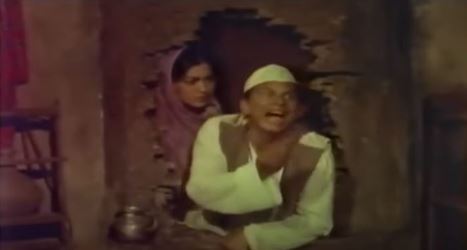
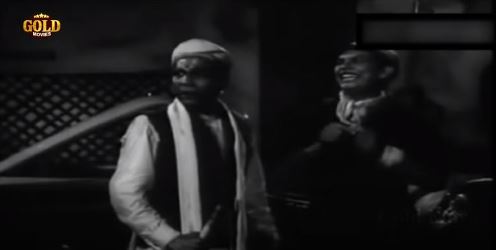
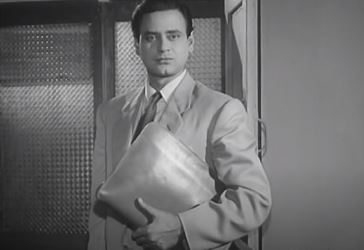
The story centres round Raj Kumar Saxena ‘Raju’ (Shekhar), a mechanic who works in a garage, and lives in a tiny room above the garage along with his friend and colleague Popat (Johnny Walker). Popat has been having a chat with a wealthy customer, Muthuswami Chetiyar (Mirajkar) and is keen on getting Muthuswami to invest in a garage for Popat. The incentive Popat offers is a match for Muthuswami’s daughter: Raju, he says, will be a fine bridegroom. Because he guesses Muthuswami will not be eager to marry his daughter to a mechanic, Popat takes care not to let on that the groom he has in mind is that figure hunched over a car at the other end of the garage…

Continue reading

Ten of my favourite Hindi film double roles

Some of you may know that besides being devoted to old cinema, I also watch a lot of modern Korean dramas. My love for K-dramas probably has something to do with the fact that the average Korean TV show has more than a passing resemblance to classic Hindi cinema, from star-crossed lovers (with one usually very wealthy, the other poor), to disapproving parents whom one cannot dishonour by rebelling, to hate-turned-to-love, and so on. They’re addictive, and though I don’t get the time to watch much Korean drama, I have enjoyed pretty much all I’ve seen so far.

The last K-drama I watched was the 2018 show, Are You Human? In this one, a brilliant robotics engineer is forced to leave the country after her husband (supposedly) commits suicide and their little son, Nam Shin, is taken away by her tyrannical father-in-law, who’s a very wealthy and powerful chaebol. The engineer, missing Nam Shin desperately, creates a marvel of AI, a robot designed to be exactly like her son. Twenty years pass, and Nam Shin, now grown up, is nearly killed in an attempted murder and goes into coma. To stop his company (he’s on the verge of inheriting his grandfather’s business empire) from sliding into the hands of baddies, his mother, along with a couple of friends, gets the robot to impersonate Nam Shin.

While the story was entertaining enough, what really struck me about Are You Human? was the acting of the male lead, Seo Kang Joon. The human Nam Shin is an abrasive, arrogant man who hides pain and trauma behind a façade of swagger and brusqueness. The robot Nam Shin is completely different: guileless, innocent, emotionless but with the rule to help humans hardwired into him. Two diametrically different personalities, and Seo Kang Joon played them brilliantly. It wasn’t as if these two characters looked different—they were identical—but Seo Kang Joon, just through body language and expressions (his eyes!), was able to show the difference between them even without dialogue. Brilliant.

Continue reading

Around India’s Towns in Ten Songs

Towns and cities. Not countryside, not rural hinterland.

As a family, we’re very fond of travelling. At least once a year, we make sure we go on a road trip (usually) that would take us through several towns, spending a couple of days here, a couple there. Exploring places beyond what we’re familiar with.

Of course, with the pandemic, that’s on hold for the time being. Though my husband and I are vaccinated, the LO (the ‘Little One’, our seven year old daughter) isn’t, and we don’t want to run any risks. So, we’re stuck at home, and I confine myself (and occasionally the LO, who is also fond of old Hindi film songs) to watching videos that take us places. Songs that are filmed in places far and wide, songs that go beyond the usual tourist attractions. Songs which make you feel you were, for those brief few minutes, in another town.

Continue reading

Apradhi Kaun (1957)

The world of Hindi cinema is peppered with names that anyone familiar with the industry (at least the industry of the 50s and 60s) can quickly slot into categories. Star. Villain. Comedian. Character actor. There are many, many names that automatically fall into (almost exclusively) one of these categories. Those that have shifted from one category to another—like Pran, for instance, once the quintessential villain but in later years the more interesting ‘good man’, or Ajit and Premnath, both initially hero and later villain—have again usually not done too many shifts.

Abhi Bhattacharya is one of those relatively rare individuals who seem to have appeared in a wide variety of roles, a wide variety of films. He was the idealistic school teacher of Jagriti, the ‘other man’ of Anuradha. The kind-hearted, principled example of the bhadralok in films like Amar Prem, and the straying older brother of Dev Anand in Love Marriage. He played Krishna and Arjun and Vishnu (the latter in a slew of mythologicals). He even played the villain, in the Vinod Khanna-Yogita Bali starrer, Memsaab.

This year marks the birth centenary of Abhi Bhattacharya (as far as I’ve been able to find out, he was born in 1921, though I’ve not been able to discover exactly when in 1921). To commemorate his career, I wanted to watch a Bhattacharya film, but a dilemma presented itself: which one? Hindi or Bengali? (since Bhattacharya had what seems to have been a very successful career in Bengali cinema as well). Eventually, I homed in on this film, a rare whodunit in Hindi cinema that’s pretty well made too.

Continue reading

Wahan ke Log (1967)

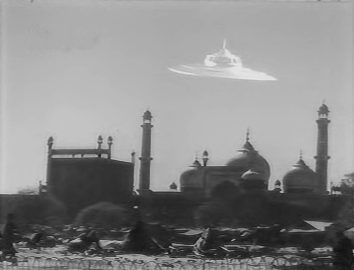
This is a film I’ve known about for many years now: I first heard about it on Greta’s blog, and have since been in two minds about whether to watch it or not. It sounded too nutty to miss (aliens toting laser rays and stealing diamonds? NA Ansari in a double role and Nilofer in a bad wig? Tanuja as ghost-who-sings?), but from my previous experiences of films directed by NA Ansari, I’ve realized that after a while, the madness of the script, the plethora of plot holes and the sheer pointlessness of much of what’s happening, can become very tedious.

But this is considered somewhat of a cult film, and one of the very few early Hindi films that had an element of sci-fi in it. So, if just for that (I like sci fi as a genre), I decided to watch Wahan ke Log.

Continue reading

Sunghursh (1968)

This was the first film I watched after Dilip Kumar passed away on July 7 this year. The tributes and reminiscences were still in full flow two days later, on July 9, which marked what would have been the 83rd birthday of Sanjeev Kumar. On a Sanjeev Kumar tribute post on Facebook, I read a comment in which someone recalled Dilip Kumar’s remark about Sanjeev Kumar, who was his co-star in Sunghursh: “Is Gujarati ladke ne toh paseena nikaal diya!” (“This Gujarati boy made me sweat!”)

This, I thought, might be an interesting film to review by way of tribute to both Dilip Kumar as well as Sanjeev Kumar. But I had other Dilip Kumar films to also watch: Musafir and Sagina Mahato for the first time, Ram aur Shyam for a long-overdue rewatch. So, while I watched this and wrote the review, I decided the publishing of the review could wait for now.

Because today, August 21, 2021, marks the birth centenary of Harnam Singh Rawail, the director of Sunghursh.  HS Rawail, as he was usually billed, debuted in 1940 with the film Dorangia Daaku, but it wasn’t until 1949, with Patanga (of Mere piya gaye Rangoon fame) that he became famous. Rawail was to make several well-known films through the following decades, but his two best-known works are probably Mere Mehboob (1963) and Sunghursh.

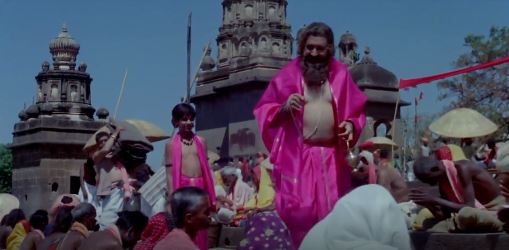
The story, based on Mahashweta Devi’s Laayli Aashmaaner Aaina, begins in Banaras of the 19th century (the riverfront, sadly, looks very mid-20th century). Bhawani Prasad (Jayant), bearded and seemingly benevolent, walks back from the temple after pooja. At his heels follows his grandson Kundan (?). Bhawani Prasad is much venerated, and the way he hands out alms to the poor and blesses those bowing before him, one might be forgiven for thinking him a good man.

Continue reading

Teen Bahuraaniyaan (1968)

I had read a review of this film on a blog years ago, but besides the fact that it starred Prithviraj Kapoor as the father-in-law of three women, I remembered nothing of what I’d read. Then, some weeks back, when Shashikala passed away, a couple of people remembered her role, as a popular film star, in this film. I was tempted to watch it.

The teen bahuraniyaan (the three daughters-in-law) live in one rambling house along with their husbands, their children, and their father-in-law Dinanath (Prithviraj Kapoor)a retired school teacher. The patriarch’s three sons, from eldest to youngest, are Shankar (Agha), Ram (Ramesh Deo) and Kanhaiya (Rajendranath). Appropriately enough, their wives, respectively, are Parvati (Sowkar Janki), Sita (Kanchana) and Radha (Jayanthi). Sita’s sister Mala (Vaishali), who’s come to town to do college, also lives with them.

Continue reading

Ram aur Shyam (1967)

I wanted to watch a Dilip Kumar film to commemorate the life and career of this extraordinary actor. But which one? There are lots of iconic Dilip Kumar films that I have either seen long ago (Devdas, Footpath, Daag, Deedaar, Udan Khatola, Andaaz) and not reviewed on this blog, or which I’ve never seen (Tarana, Jugnu, Mela, Shaheed, Musaafir). I could watch a film I’d never seen before, but—knowing what a lot of Dilip Kumar’s early films are like—there was always a chance I’d run up against something depressing.

I finally decided to rewatch a film I’d seen years ago. A film that’s a good showcase of Dilip Kumar’s versatility, his ability to pull off comic roles as well as the tragic ones for which he was better known. Ram aur Shyam is an out-and-out entertainer, a film I’d watched and loved as a teenager, and which I knew for a fact would cheer me up.

Continue reading

Ek Nazar (1951)

June 23, 2021 marked the birth centenary of one of my favourite actors, the very talented and charismatic Rehman. Born Sayeed Rehman Khan in Lahore, Rehman joined the Royal Indian Air Force in 1942 and underwent training at Pune as a pilot. The Air Force soon lost its charm for Rehman (he failed a test) and he went off to Bombay to join the cinema industry. Initially taken on as a third assistant director by the writer-director Vishram Bedekar for Bedekar’s film Lakharani (1945), Rehman went on to assist director DD Kashyap in the film Chaand, where, completely by chance, Rehman appeared onscreen. In a dance sequence in the film, a Pathan character was needed—and the only person around who knew how to tie a turban the Pathan way was Rehman. And he knew how to tie it only around his own head.

The Hindi proverb ‘Daane-daane pe likha hai khaane waale ka naam’ comes to mind.

Rehman was required to say a couple of lines in that brief appearance, and fluffed it repeatedly; thirty takes were required to get it right, possibly because the first line began with a K: “Kitna achha naach thha”. Rehman, even years later, and as a seasoned actor, found it very difficult to begin a dialogue with the K sound and would request that a different word be substituted, or the words moved around.

Rehman had enough of a presence for his potential as an actor to be recognized, and he went on to act as a lead, working opposite major actresses like Madhubala, Suraiya, Nalini Jaywant and Nigar Sultana.

Continue reading