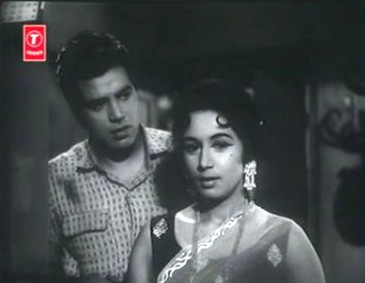
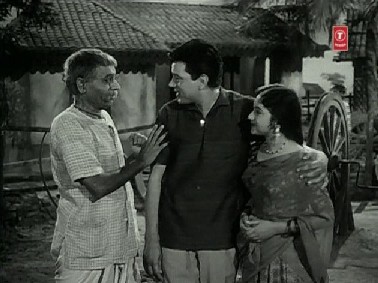
Udan Khatola (1955)    

Does Udan Khatola hold some sort of record for largest number of love/lust triangles?

Here’s a rough count:

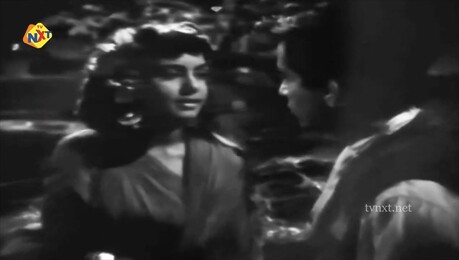
There’s the unnamed aviator, the pardesi (played by Dilip Kumar) who is in love with the local peshwa’s daughter Soni. Who, in turn, loves him back.

Continue reading

Kundan (1955)

Some days ago, in this delightful post about chai in Hindi cinema, I came across a mention of Kundan. Aao hamaare hotal mein chai peeyoji garam-garam sounded so interesting that I bookmarked the film without even really checking to see what it was all about (though the cast, barring Nimmi—whom I often find very irritating—appealed to me). Then, just a couple of days later, Anu posted this wonderful tribute to Sohrab Modi, in which she listed Kundan as one of her favourite ten films directed by Modi. Adapted from Victor Hugo’s classic Les Miserables.

That sealed it. I had read Les Miserables a couple of years ago, and had been blown away by it: by the depth and width of it, the characterization, the sheer scope of it all. And now, it looked as if the universe was pushing me towards Kundan. I had to watch this one.

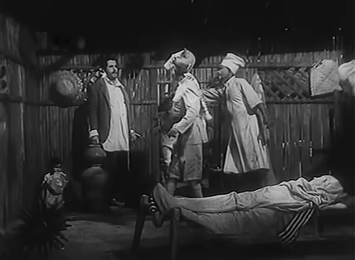
The story gets off to a flying start. Kundan (Sohrab Modi) is a very poor man who lives with his very ill sister and her little daughter Radha. Unable to earn [it’s not clear why, given that he looks able-bodied enough], a desperate Kundan finally steals a loaf of bread from a bakery and runs home to give it to Radha. Since he’s made no attempt to commit this theft in secrecy, the alarm has been raised and Kundan is arrested even as Radha is eating the loaf.

Continue reading

Aandhiyaan (1951)

In 1951, fresh from the success of the Dev Anand-Geeta Bali-Kalpana Karthik starrer Baazi, Chetan Anand decided to make a film that would highlight the very interesting aspects of film-making he had been learning from studying the works of various European directors. ‘Based on a true incident that took place in Amritsar’, as the film’s credits read, the story of Aandhiyaan was written by Chetan Anand himself, along with Hameed Butt.

The film’s credits roll to an unusual sequence of shots: in each frame, one actor or the other is shown, battling the eponymous ‘aandhi’ or storm, though in this case literal rather than metaphorical.

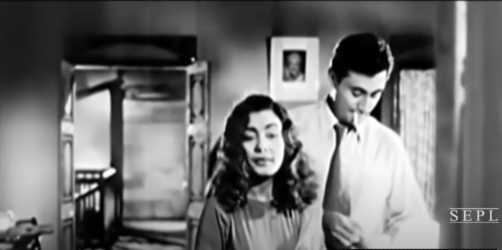
The story is centred round a young and zealous lawyer named Ram Mohan Kapoor (Dev Anand). Ram lives upstairs from his munshi (Ratan Gaurang), whose daughter Rani (Nimmi) has long been in love with Ram, though she’s too shy to let him know that. When the story begins, Ram’s mother (Durga Khote) is due to arrive, and Ram is getting ready to go to fetch her from the station. Rani makes tea for him, and an excited Ram confides in her: he’s asked his mother to come because he wants her to fix a match for him. With a girl he likes a lot.

Continue reading

Arpan (1957)

When I was going through Chetan Anand’s filmography last year (to commemorate his birth centenary), I stumbled across a Chetan Anand film in which he starred, besides directing it: a film, too, which immediately struck me as unusual, just given its length: a mere one hour. For a Hindi film, rare indeed. Though I didn’t watch Arpan back then, I bookmarked it and decided I’d watch it sometime later.

And it is an unusual film. Not just short, but also somewhat surreal in places. Hauntingly beautiful at times, outright odd at others.

Arpan is set, we are told, 2,500 years ago. A famine is ravaging the land, and people are starving left, right and centre. In this situation, the royalty, of course, is expected to set an example, and thus Princess Madhavi (Sheila Ramani) is going about, a large entourage with her, distributing food to her father’s subjects.

Continue reading

Ten of my favourite Nimmi songs

RIP, Nimmi.

It has been a nerve-wracking past few months. And just as I thought things couldn’t get much worse—what with the violence in Delhi, coming on the heels of increasingly acrimonious and violent disputes regarding CAA/NRC/NPR—coronavirus struck, and we, as a country, have ended up in lockdown.

And now, this news came. Nimmi, 88 years old, passed away on March 25.

Continue reading

Aan (1953)

I’ve seen this film – a ‘raja-rani’ film, like Rustom-e-Hind – several times, but the most memorable viewing of it was at my parents’ home a couple of years ago.

Continue reading

Akashdeep (1965)

Once upon a time, there was a writer.

No: it wasn’t Dharmendra, and it certainly wasn’t Nanda (old Hindi cinema, at least, doesn’t seem to believe women capable of writing anything more complex than a love letter, if that).
This writer was someone quite different, and one day (I’m guessing) decided that it was time to show the world what he was capable of. So, with a producer and a director, the writer went into action, and what resulted was Akashdeep. Looking at the film, I’m assuming this was somewhat of a collaborative effort. A “how about this?” and a “don’t you think it would be a good idea—?” sort of film.

Continue reading

Pooja ke Phool (1964)

I’ve been on a Dharmendra-Mala Sinha spree, and it’s been a disaster. Baharein Phir Bhi Aayengi started off promisingly, but deteriorated; and Neela Akash was an even bigger disappointment. I had grave doubts about Pooja ke Phool, and sadly, it proved even worse than Neela Akash. I’m not sure I want to watch any more Dharmendra-Mala Sinha starrers. I’ve had enough.

The film begins in a village where a poor blacksmith called Hansraj (Nana Palsikar) is slogging his butt off trying to scrape together money to pay for a college education for his younger brother Balraj `Raj’ (Dharmendra). The only other member of the family is Hansraj’s daughter Vijay (Sandhya Roy).

Hansraj, Raj and Vijay

Continue reading

Amar (1954)

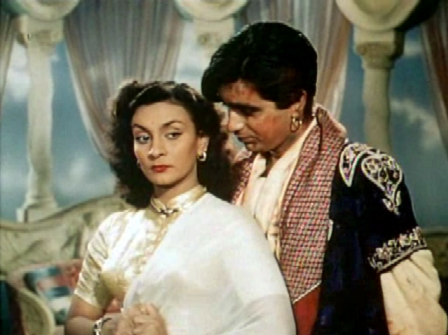
Mehboob Khan, who directed Aan, Andaz and Mother India, also made this unusual film. It explores themes that were avant garde for the 50’s: a man’s sudden succumbing to sheer lust, while being in love with another woman; a woman’s sympathy for `the other woman’; a villain who’s shades of grey rather than totally black-hearted. Not exactly standard Bollywood fare. There are clichés of course, but on the whole, this is worth a watch.

Continue reading