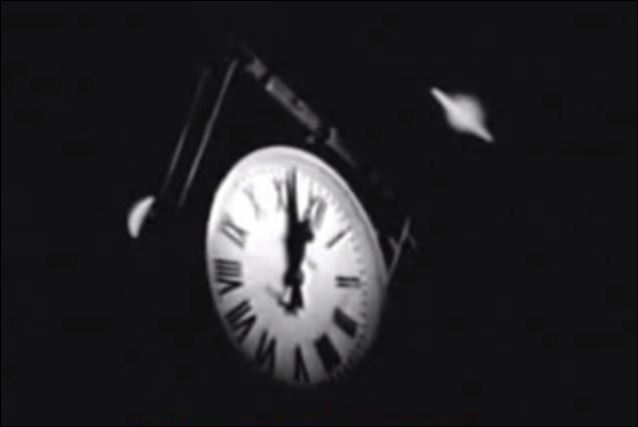
Chitralekha (1964)

I have decided it’s high time I began rewatching some of the old Hindi films I last saw when in my teens (or, in some cases, even before that). Back then, all our film viewing used to happen on India’s sole television channel, Doordarshan, which would telecast Hindi films every weekend, and sometimes in between as well. Most of the films were old classics, and I have fond memories of first viewings of films which became firm favourites almost from the get-go: Junglee, Teesri Manzil, Nau Do Gyarah, Dekh Kabira Roya, Woh Kaun Thi?, Mera Saaya

There were also films that I watched (we watched everything, there was such a paucity of options for entertainment) but which I ended up not liking. Or, as in the case of Chitralekha, not really understanding. I guess this was a simple case of being too young, too immature, to grasp the niceties of a film that wasn’t the standard masala entertainer.

About time, I thought, I saw this one again.

Kidar Sharma, who directed Chitralekha, had already made this film (based on a novel by Bhagwati Charan Verma) earlier as well. The 1941 Chitralekha starred Mehtab (who of course later married Sohrab Modi) and the juiciest bit of information about the film is that it featured a bathing scene (Cineplot used to have an article about this, an excerpt from Kidar Sharma’s autobiography, but since Cineplot now seems to be sadly defunct, that’s gone). Kidar Sharma did say, from what I recall of his autobiography, that the original Chitralekha was far superior to the 1964 remake.

But the 1941 film is, I think, gone—or at least not available for viewing online, though there are songs and stills galore. I may as well watch the 1964 Chitralekha, I decided, since that was the one I had hazy recollections of watching as a child.

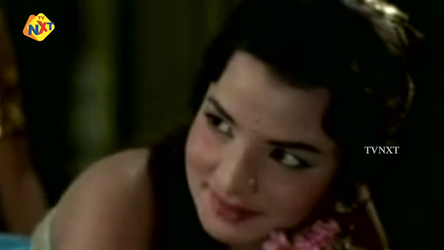
The story is set in Pataliputra during the heyday of the Gupta Empire. Aryaratan Samant Beejgupt (Pradeep Kumar), a high nobleman, has just returned to Pataliputra after a sojourn elsewhere. Beejgupt’s arrival in the city is greeted with anticipation: his fiancée Yashodhara (Shobhna) is shyly hopeful that this time he will marry her.
Continue reading

Naya Daur (1957)

Happy 100th birthday, Dilip Kumar!

It was on this day that Mohammad Yusuf Khan, who was to go on to become one of India’s most-loved and finest actors, was born in Peshawar’s Qissa Khwani Bazaar.

In a career spanning several decades, and some sixty-odd films, Dilip Kumar attained a status all his own. He was one of the first to win a Filmfare Award, and went on to win the most Best Actor Awards (until the record was equalled— though not yet surpassed). His scenes have been copied and re-done, his dialogues have become familiar to fans of cinema, his films and his acting closely dissected.

Continue reading

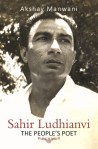
Ten Avatars of a Magician: The Genius of Sahir Ludhianvi

I am leery of attaching ‘best’ and ‘most favourite’ appellations to anybody or anything, no matter how much I may be fond of the person/creation/whatever in question. I tend to say that so-and-so song or film, for instance, is among my favourites; the same goes for actors, singers, directors, and so on. There are some whom I especially like, there are some for whom I will watch a film just because they’re in it. There are none whom I idolize and place on a pedestal and see no wrong in.

Sahir Ludhianvi may be one of the exceptions. This is one man whose genius blows me away. If I were to list my favourite Hindi songs from the Golden Period, based purely on the sheer memorability of their lyrics, the one lyricist who would lead the pack would be Sahir Ludhianvi. His versatility; his hard-hitting, often brutal, honesty; his occasional humour and his exquisite expressions of romance: all come forth in many, many songs composed across the three decades or so that he was actively writing songs for Hindi cinema.

Continue reading

Funtoosh (1956)

Today may (or may not) be the birth centenary of the film maker, writer, and actor Chetan Anand, eldest brother of Dev Anand and Vijay Anand. Different sources list different dates of birth: most sites (including IMDB) list his birth date as January 3, 1921; others, including Wikipedia (yes, I know not the most reliable of sources) say it’s January 3, 1915. (This article says it’s 1921, but then goes on to write that Chetan Anand was 27 years old in 1943, which is either dodgy maths or a suggestion that the year of birth was indeed 1915). The article, barring that slip, is a good, interesting introduction to the life and career of Chetan Anand.

Anyway. Even if I’m six years too late to the party, at least today is Chetan Anand’s birthday.

Continue reading

12 O’Clock (1958)

Years ago, in the good old days when the single channel on Doordarshan was our main source of entertainment and we therefore watched everything that was telecast, I watched 12 O’Clock. I’d already seen Guru Dutt’s big films—Pyaasa, Sahib Biwi aur Ghulam, Kaagaz ke Phool, Chaudhvin ka Chaand. I assumed, based on those (I had yet to watch Bahurani or Saanjh aur Savera, and had thought Mr & Mrs 55 a flash in the pan), that 12 O’Clock would be along the lines of the serious stuff Guru Dutt churned out.

… which this is not. Because this is one of a handful of the films Guru Dutt acted in but did not direct.

Continue reading

Dil Hi Toh Hai (1963)

Some months back, I watched two relatively new Muslim socials: Daawat-e-Ishq and Bobby Jasoos. Both were an interesting reflection on the way the Muslim social has changed over the years (after close to disappearing during the 90s). The Muslim social of the 1950s was, more often than not, a film that, even when set amongst the wealthy upper class—the nawabs and their kin—came heavily burdened with all the stereotypical trappings of what was perceived as ‘Muslim’: the qawwalis and mushairas, the shararas and sherwanis. (I’ll write about all of those, and more, in a post to follow).

Bobby Jasoos and Daawat-e-Ishq had shed those to quite an extent. But that process had begun in earlier films, even as far back as the 60s. In Neend Hamaari Khwaab Tumhaare, for example, where Nanda’s character—the daughter of a nawab, no less—doesn’t merely have a Western education, but spends most of her time in skirts and dresses. And this film, where Nutan’s Jameela is a firebrand, giving as good as she gets, and by no means the simpering and demure Muslim girl exemplified by her contemporaries in films like Mere Mehboob, Mere Huzoor, and Chandni Chowk.

Nutan as Jameela in Dil Hi Toh Hai

Continue reading

Aankhen (1968)

I spent part of last week reading fellow blogger Todd Stadtman’s book, Funky Bollywood: The Wild World of 1970s Indian Action Cinema (more on that, along with a link to my review of it, at the end of this post). Todd’s book discusses, in affectionate detail, all the iconic action films—spy thrillers included—of the 70s. In a fit of enthusiasm, brought on by Todd’s book, I told my husband, “I want to see Gunmaster G-9”. To which he replied, “I didn’t like that. What I really liked was Aankhen. That was fun.”

Dharmendra in Aankhen Continue reading

Ghazal (1964)

Those who frequent this blog have probably figured out by now that I have a soft spot (a very soft spot) for Muslim socials. So much so that I will watch just about any Muslim social out there, even if it features people who aren’t among my favourites. Even if it has a fairly regressive theme, and even if I end up not agreeing with half the things in the film. So, when I come across a Muslim social that stars some of my favourite actors (Sunil Dutt? Meena Kumari? Rehman? Prithviraj Kapoor? Rajendra Nath? Check, check, check), has lyrics by my favourite lyricist (Sahir Ludhianvi), and had its songs composed by one of my favourite music directors (Madan Mohan—and how appropriate, too, for a film called Ghazal to be scored by the Ghazalon ka Shahzaada): to not watch this would be a crime, I thought.

Meena Kumari and Sunil Dutt in Ghazal Continue reading