Anita (1967)

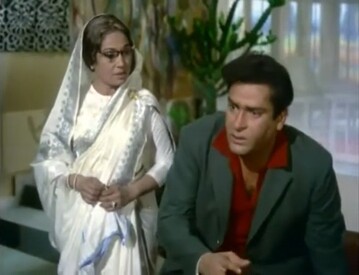
When, for May 31st this year (the 100th birth anniversary of film director Raj Khosla), I wanted to review one of his films, Anita was on my shortlist. Over the course of the years I’ve been writing this blog, I’ve reviewed several of Khosla’s films, including two of the three films (Woh Kaun Thi?, Mera Saaya and Anita) that comprise Khosla’s Sadhana suspense trilogy. Since Manoj Kumar had also passed away earlier this year, it seemed fitting to watch and review Anita, the last of the three films, and a film that starred Manoj Kumar opposite Sadhana.

For a tribute to Khosla, I ended up reviewing Kaala Paani instead. But I did watch Anita (a film that I’d last seen so long back, I remembered only the basics of it). And it seemed appropriate to review it too.

Therefore…

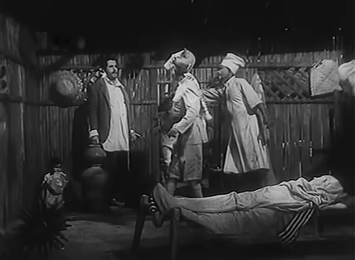
The film begins with a short, rather abrupt scene in which Seth Biharilal (Sajjan) visits a somewhat shady-looking pandit (Ulhas). Biharilal has brought along the horoscope of his 19-year-old daughter Anita for the pandit to have a look at, and to comment upon. The pandit has a peek, and says that this year is going to be really vile for Anita.

Continue reading

Kundan (1955)

Some days ago, in this delightful post about chai in Hindi cinema, I came across a mention of Kundan. Aao hamaare hotal mein chai peeyoji garam-garam sounded so interesting that I bookmarked the film without even really checking to see what it was all about (though the cast, barring Nimmi—whom I often find very irritating—appealed to me). Then, just a couple of days later, Anu posted this wonderful tribute to Sohrab Modi, in which she listed Kundan as one of her favourite ten films directed by Modi. Adapted from Victor Hugo’s classic Les Miserables.

That sealed it. I had read Les Miserables a couple of years ago, and had been blown away by it: by the depth and width of it, the characterization, the sheer scope of it all. And now, it looked as if the universe was pushing me towards Kundan. I had to watch this one.

The story gets off to a flying start. Kundan (Sohrab Modi) is a very poor man who lives with his very ill sister and her little daughter Radha. Unable to earn [it’s not clear why, given that he looks able-bodied enough], a desperate Kundan finally steals a loaf of bread from a bakery and runs home to give it to Radha. Since he’s made no attempt to commit this theft in secrecy, the alarm has been raised and Kundan is arrested even as Radha is eating the loaf.

Continue reading

Tumse Achha Kaun Hai (1969)

Lalita Pawar plays an ageing and very wealthy woman who employs a man (played by Shammi Kapoor) to reform her granddaughters, who are getting too wild for her liking. The man, poor and in desperate need of money to pay for the treatment of an ailing family member, takes up the offer, even though it will require him to pretend to be someone he’s not. In the process, he ends up falling in love with one of the granddaughters—much to the annoyance of the indignant grandmother.

This was the gist of the story of Professor (1962), though with one qualification: Shammi Kapoor’s Preetam in that film is initially hired just as a tutor for the younger brothers of the granddaughters; it’s only a little later that he’s also given the task of tutoring the young women. It was, as I’ve said on more than one occasion—and of course in my review of the film—a delightfully entertaining film, romantic and fun and with absolutely fabulous music.

Seven years later, Shammi Kapoor acted in another film with a somewhat similar plot. Here, in Tumse Achha Kaun Hai, he is Ashok, a musician; and Lalita Pawar plays Sarojini Devi, the very wealthy woman who approaches him with a proposition: that he take on the task of setting to rights her granddaughters, all three of whom (she feels) are a disgrace to Sarojini Devi.

Continue reading

Sanjog (1943)

I came to this film quite by chance. Back in April, when I reviewed Jhansi ki Rani, blog reader Maitreyee Mishra, commenting on that review, asked if I’d watched any other films featuring its lead actress, Mehtab. I had had to admit that I hadn’t; in fact, it seemed that most of Mehtab’s films were nowhere to be found—at least not online. I did find one film, though: AR Kardar’s Sanjog (1943), which starred, alongside Mehtab, Noor Mohammad ‘Charlie’.

Continue reading

Aadhi Raat ke Baad (1965)

I dithered over this film for a long time after I’d finished watching it. Should I review it? Should I not? It wasn’t a great film, but it wasn’t terrible, either. It wasn’t as if a review was needed to warn potential viewers off it. Or vice-versa, to alert people to a film they must see.

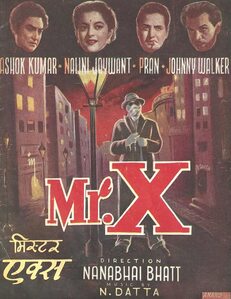
Eventually, I decided that at least a brief review was in order, because this film had an interesting connect to another film I’ve wanted to watch for a while: Mr X.

In 1957, Nanabhai Bhatt had directed a science fiction film (borrowing from HG Wells’s novel The Invisible Man) that starred Ashok Kumar and Nalini Jaywant. According to this web page on Mike Barnum’s blog, the film is about a man who ingests a drug that makes him invisible; he uses this invisibility to go on a Robin Hood-esque spree, helping the poor by robbing the rich. The cops, baffled by the invisible man, dub him Mr X.

I’ve long wanted to watch Mr X, mostly because it features one of my favourite N Dutta songs, Laal-laal gaal. The film isn’t available online, at least, or even on DVD, from what I can tell; perhaps there are carefully guarded prints deep in some archive…

Continue reading

Wahan (1937)

Aka Beyond the Horizon.

When I began this blog, it was with the intention of indulging in my love for old cinema. While that has remained the main objective of my writing here, I’ve added to it a desire to make this a means of documenting old cinema (especially Hindi cinema) too. Not all old cinema, since that would be too mammoth a task for one person to take up; but films that I think are worth documenting, in particular if they seem to be otherwise obscure now. Films that are landmarks in Hindi cinema history; films that were somewhat different, perhaps, from the usual.

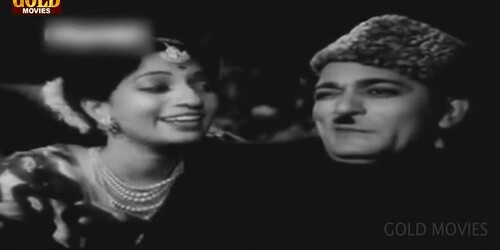
Or, as in this case, films that allow us a glimpse of familiar faces that we know from another, later, period. Leela Chitnis, the perennially poverty-stricken and very distressed mother of 60s cinema, stars in Wahan as an Aryan princess, and Ulhas, the well-known character actor of the 50s and 60s, appears in his debut role as her fiancé.

Continue reading

Do Phool (1958)

I have watched hundreds of Hindi films. Many of these I’ve reviewed here on this blog, and for many of those, I’ve had readers mention that so-and-so film was actually a remake of so-and-so Hollywood film, or was inspired from this novel or that play. In some, of course, I’ve been able to spot a source immediately: the grand mansion being run as a hotel by its manager who then forces the owner to pretend to be a guest is lifted from Come September and used—without any credit for the original idea—in both Kashmir ki Kali and Mere Sanam. Adalat is a remake of Madame X; Aradhana of To Each His Own; Gumnaam of And Then There Were None… all uncredited. And umpteen others.

This is something I find very irritating. The amount of work that goes into coming up with a good plot is substantial, and if you’re acknowledging that by thinking it worthy of being copied, then you should certainly think it worthy enough to pay for. But by calmly hogging all the credit and assuming that Indian audiences won’t cotton on to this plagiarism, and Hollywood (or foreign writers), too far from the world of Hindi cinema, will be oblivious.

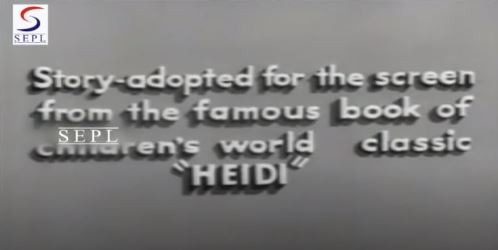
Anyway, that’s a long, convoluted and messy topic, which I should probably leave for later. For now, the reason why all of that came to my mind: because this film does give credit where it’s due. Not, unfortunately, to the writer of the book (Johanna Spyri), but at least to the book itself.

Continue reading

Nastik (1954)

A hundred years ago, on January 27, 1922, in Golconda (Hyderabad) was born Hamid Ali Khan, known to thousands of Hindi film viewers (and, even thousands more who have perhaps never watched any of his films) as Ajit. The man of ‘saara shahar mujhe loin ke naam se jaanta hai’. The iconic villain, suave and eerily soft-spoken though at the same time very oily and dangerous, of films like Zanjeer, Yaadon ki Baaraat, and Kalicharan. The baas of Raabert and Lilly (who was constantly being told not to be silly).

But long before he became the stuff of really bad jokes, before he attained the stature of one of Hindi cinema’s greatest onscreen villains, Ajit was a hero. Coming to Bombay in the face of parental opposition (having first sold his college books to finance the trip), Ajit had to struggle a lot to find work in the cinema industry. He began as an extra, and worked in several films until being noticed by the Gujarati-Hindi director Nanabhai Bhatt (Mahesh Bhatt’s father) who not only gave him the screen name Ajit, but also launched him in a leading role. Across the 50s and 60s, Ajit acted in a slew of films, both as leading man (Nastik, Dholak, Baradari, Marine Drive, Tower House, Opera House, etc) as well as in major supporting roles (of special note here are Naya Daur and Mughal-e-Azam, in both of which he appeared alongside Dilip Kumar).

Continue reading

Sunghursh (1968)

This was the first film I watched after Dilip Kumar passed away on July 7 this year. The tributes and reminiscences were still in full flow two days later, on July 9, which marked what would have been the 83rd birthday of Sanjeev Kumar. On a Sanjeev Kumar tribute post on Facebook, I read a comment in which someone recalled Dilip Kumar’s remark about Sanjeev Kumar, who was his co-star in Sunghursh: “Is Gujarati ladke ne toh paseena nikaal diya!” (“This Gujarati boy made me sweat!”)

This, I thought, might be an interesting film to review by way of tribute to both Dilip Kumar as well as Sanjeev Kumar. But I had other Dilip Kumar films to also watch: Musafir and Sagina Mahato for the first time, Ram aur Shyam for a long-overdue rewatch. So, while I watched this and wrote the review, I decided the publishing of the review could wait for now.

Because today, August 21, 2021, marks the birth centenary of Harnam Singh Rawail, the director of Sunghursh.  HS Rawail, as he was usually billed, debuted in 1940 with the film Dorangia Daaku, but it wasn’t until 1949, with Patanga (of Mere piya gaye Rangoon fame) that he became famous. Rawail was to make several well-known films through the following decades, but his two best-known works are probably Mere Mehboob (1963) and Sunghursh.

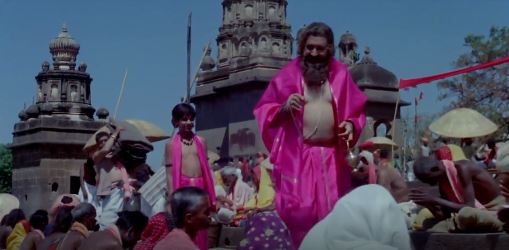
The story, based on Mahashweta Devi’s Laayli Aashmaaner Aaina, begins in Banaras of the 19th century (the riverfront, sadly, looks very mid-20th century). Bhawani Prasad (Jayant), bearded and seemingly benevolent, walks back from the temple after pooja. At his heels follows his grandson Kundan (?). Bhawani Prasad is much venerated, and the way he hands out alms to the poor and blesses those bowing before him, one might be forgiven for thinking him a good man.

Continue reading

Chanda aur Bijli (1969)

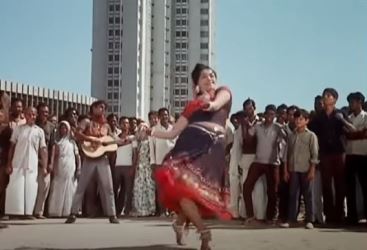
Chanda aur Bijli is one of those films I’ve known about for a long time—because of a family anecdote that is centred around a song from this film. My sister, a toddler when Chanda aur Bijli was released, quickly fell in love with Bijli hoon main toh bijli. Her version of it, though, was somewhat different (and suggests a mind that dwelt rather heavily on food):

Bijli hoon main toh bijli
Bun khaake jab bhi nikli
Logon ke dil mein machhli
(And here she’d add a little line completely off her own bat: ‘Wohi machhli jo Baby ne khaayi thhi!’)

For those who don’t understand Hindi, that means:

Lightning; I am lightning,
When I went out after eating a bun,
There was a fish in people’s hearts
That same fish that Baby ate!

The original, of course, is a rather more predictable Hindi film song:

Bijli hoon main toh bijli
Bal khaake jab bhi nikli
Logon ke dil mein machli

(Lightning; I am lightning,
Every time I went out, tripping along,
I made people’s hearts trip)

Continue reading