Kati Patang (1970)

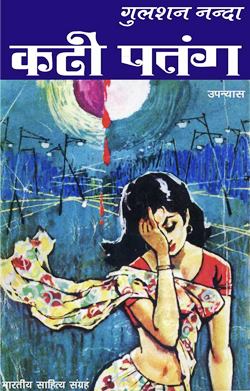
Our recent trip to Nainital prompted me (actually, even before we left on our trip) to read Gulshan Nanda’s novel Kati Patang. Gulshan Nanda, for those who may be unfamiliar with his work, wasn’t just a hugely successful writer of Hindi social-romantic popular fiction, but also a script writer for Hindi cinema: he wrote the scripts (many of them based on his own novels) of blockbusters like Saawan ki Ghata, Khilona, Kati Patang, and Jheel ke Us Paar. This insightful article about Nanda’s writing, as well as its adaptation to the big screen, is worth a read.

Continue reading

Ten of my favourite Sheila Vaz songs

RIP, Sheila Vaz.

This post is a little late in coming—Sheila Vaz passed away on June 29—but by the time I learnt of her passing, I was just about to post the first of my Nainital-Corbett travelogues, and knew that it would anyway take me at least a couple of days to compile a suitable tribute to one of Hindi cinema’s best dancers. So I decided to go ahead with that, and come back to this.

Sheila Vaz, without my knowing it, was probably one of the very first Hindi film dancers I ever saw onscreen: the first Hindi film I remember watching was CID, which I was taken to see when I was about nine. And there, lip-syncing to Leke pehla-pehla pyaar was this unabashedly effervescent woman, her eyes sparkling and her movements graceful. I won’t say that image stayed with me; I have no recollection of the song from back then. But Sheila Vaz became, years later when I grew much more devoted to Hindi cinema, one of my favourites. Besides the fact that she was so graceful and so emotive, I loved one thing that struck a chord with me: she was, like me, somewhat plus size. I’ve always been overweight, and have faced a lot of derision, hurtful ‘ribbing’ and more, for it: and here was Sheila Vaz, by no means a size zero, but undeniably beautiful and successful—I loved her the more for that.

Continue reading

Detective Story (1951)

Today, June 26, 2022, marks the birth centenary of one of my favourite Hollywood actresses, the beautiful and very versatile Eleanor Parker. Born in Cedarville, Ohio, on June 26, 1922, Eleanor Parker had decided fairly early on that she wanted to become an actress; but despite being noticed and invited for screen tests several times, she turned them down in order to focus on stage performances, preferring to gather experience onstage before getting into films. Finally entering Hollywood with a debut role in Busses Roar (1942), Eleanor went on to work in a very wide and varied range of films over the next nearly 50 years.

Most people associate Eleanor Parker with her role in The Sound of Music: but the elegant, beautiful, scheming but eventually gracious Baroness was only a minor role in what was a blockbuster hit of a film (which, I think, was the main reason for Eleanor’s popularity in it). You only have to watch Eleanor Parker in films where she had bigger, meatier roles—as the wild gypsy in Scaramouche, or the woman who finds herself imprisoned in Caged, or the feisty and funny Mary Stuart Cherne, out to get her man in Many Rivers to Cross—to realize that she was so much more versatile than many of her contemporaries. Of course, she could (and did) swing the standard arm candy roles, as in The Naked Jungle or Escape from Fort Bravo, but she could also do justice to roles that required some hardcore acting skills.

Continue reading

Anna Karenina (1948)

I have very, very vague memories of watching a Russian version of Anna Karenina years ago—it had been telecast on Doordarshan, with subtitles, and I, probably barely a teenager back then, understood very little of it.

But last year, having finally got around to reading Tolstoy’s novel, I decided I should find a cinematic adaptation to watch. Just to see how a screenwriter might interpret this pretty sprawling work (not as sprawling as War and Peace, but still). I read, in several places, that at least as far as English-language cinema is concerned, the 1935 Anna Karenina, starring Greta Garbo, was considered the best version there is. Despite much searching online, I couldn’t find a copy of it (the ones that were there were dubbed in other languages), but I did find this one, made thirteen years later and starring Vivien Leigh as Anna.

Continue reading

Ten of my favourite bicycle songs

Today is World Bicycle Day, used to promote the use of bicycles as a cheap, healthy, and eco-friendly means of transport. I have to admit I actually never learnt to cycle (I fell too many times as a kid when learning, and was too much of a coward to persist).

But bicycles happen to be important and very visible means of transportation in old Hindi cinema, so why not a post to celebrate it?  The bicycle, as it is even now, is the one vehicle that’s available even to the not-terribly-prosperous. A character who owned a car, just by virtue of that ownership, was automatically identified as moneyed. If you could not afford a car but were not utterly broke either, you had a bicycle. It didn’t need expensive fuel, yet it got you around faster than if you just walked everywhere.

Continue reading

Lukochuri (1958)

This film has been on my watchlist for a long time—many people, over the years, have recommended it to me as a good Bengali comedy—so when, on my ‘double roles’ post someone mentioned it, I decided it was high time I watched Lukochuri (‘Stealth’). I was a little sceptical; Kishore Kumar tends to go over the top when doing comedy, to the extent that I find him positively irritating in films like Half Ticket, Jhumroo, Naughty Boy, etc. But a Bengali film, I thought, might have a more sophisticated sense of humour? One could only hope.

The story starts in Jabalpur, where Kumar Chaudhury ‘Buddhoo’ (Kishore Kumar) is getting ready to leave for Bombay. Buddhoo works for a company which has transferred him to Bombay, and Buddhoo is bidding farewell to his father (Moni Chatterjee) and his Pishima (?), his father’s sister, who lives with them.

Continue reading

Ten of my favourite ‘secondary romantic couple’ songs

Think of ‘Hindi film song’ and chances are, you will think of a romantic song. A hero and a heroine, in a garden or under a moonlit sky, singing of their love for each other: the quintessential Hindi film song. But besides the heroes and heroines, there were often, too, the secondary couple. The man was often the hero’s sidekick, the best friend who helped him defeat the villain, overcome the objections of the disapproving father, and so on. The comic best pal’s love interest, too, was often of a similar bent of mind: good-hearted, nutty, comic in her own way. Also (oh so stereotypically) often an Anglo-Indian or a Goan, a girl who had few inhibitions about dancing and singing with her man.

The secondary romantic pair served several purposes. They provided, if not comic relief, at least some moments of light-heartedness (think Johnny Walker’s and Kumkum’s characters in the otherwise so grim Pyaasa). They brought a ray of hope, a refreshing change from the melodrama and seriousness that might plague the hero and heroine; they often helped in very concrete, practical ways. And, thankfully for us, they invariably had at least one romantic song to lip-sync to, and it was often just as good as the ‘main’ romantic songs. Some of these, in fact, are iconic songs in their own right.

Continue reading

Pehla Aadmi (1950)

Today is the birth centenary of one of Hindi cinema’s most familiar character actors, the very well-known Nasir Hussain (or Nazir Hussain, or Nazir Hussein, or Nazir/Nasir Husein, whatever; Hindi cinema credits are famous for being inconsistent). Not the same man as the film maker of the same name, but an important personality in his own right. Born in Usia (Uttar Pradesh) on May 15, 1922, Nasir Hussain came to cinema in a roundabout sort of way. Having worked briefly in the railways (where his father too was employed), Nasir had ended up joining the British Army, and was posted overseas—in Malaya—during World War II. Taken captive, he was freed and subsequently went oj to join Subhash Chandra Bose’s Indian National Army, the INA.

After his INA experience, Hussain could not find an alternate career and wound up doing bit parts in theatre. From here, a chance meeting with Bimal Roy finally brought him into cinema. Their very first film together (they were to go on to make several more films, with Nasir Hussain in front of the camera and Roy behind, such as Parakh, Do Bigha Zameen, and Devdas) was this one: Pehla Aadmi, in which Nasir Hussain was not just an actor, but also assistant to the director—as well as the writer of the story and the dialogues.

Continue reading

Wahan (1937)

Aka Beyond the Horizon.

When I began this blog, it was with the intention of indulging in my love for old cinema. While that has remained the main objective of my writing here, I’ve added to it a desire to make this a means of documenting old cinema (especially Hindi cinema) too. Not all old cinema, since that would be too mammoth a task for one person to take up; but films that I think are worth documenting, in particular if they seem to be otherwise obscure now. Films that are landmarks in Hindi cinema history; films that were somewhat different, perhaps, from the usual.

Or, as in this case, films that allow us a glimpse of familiar faces that we know from another, later, period. Leela Chitnis, the perennially poverty-stricken and very distressed mother of 60s cinema, stars in Wahan as an Aryan princess, and Ulhas, the well-known character actor of the 50s and 60s, appears in his debut role as her fiancé.

Continue reading

Do Phool (1958)

I have watched hundreds of Hindi films. Many of these I’ve reviewed here on this blog, and for many of those, I’ve had readers mention that so-and-so film was actually a remake of so-and-so Hollywood film, or was inspired from this novel or that play. In some, of course, I’ve been able to spot a source immediately: the grand mansion being run as a hotel by its manager who then forces the owner to pretend to be a guest is lifted from Come September and used—without any credit for the original idea—in both Kashmir ki Kali and Mere Sanam. Adalat is a remake of Madame X; Aradhana of To Each His Own; Gumnaam of And Then There Were None… all uncredited. And umpteen others.

This is something I find very irritating. The amount of work that goes into coming up with a good plot is substantial, and if you’re acknowledging that by thinking it worthy of being copied, then you should certainly think it worthy enough to pay for. But by calmly hogging all the credit and assuming that Indian audiences won’t cotton on to this plagiarism, and Hollywood (or foreign writers), too far from the world of Hindi cinema, will be oblivious.

Anyway, that’s a long, convoluted and messy topic, which I should probably leave for later. For now, the reason why all of that came to my mind: because this film does give credit where it’s due. Not, unfortunately, to the writer of the book (Johanna Spyri), but at least to the book itself.

Continue reading