David Lean, talking about Mitchum, once said, “Mitchum can, simply by being there, make almost any other actor look like a hole in the screen.”

David Lean, talking about Mitchum, once said, “Mitchum can, simply by being there, make almost any other actor look like a hole in the screen.”

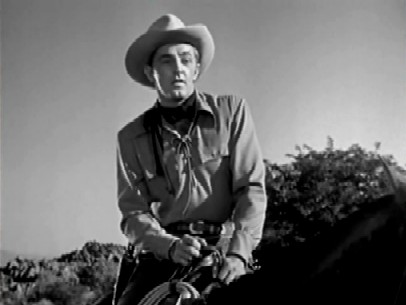
I’d been toying with the idea of a `star week’ for a while now, and who better to launch one with than Robert Mitchum? Mitchum was born on August 6th, 1917 (which is why I’m dedicating this week to him on my blog), and is one of my favourite Hollywood stars. Though burdened with—as he himself mentioned—lizard eyes and an anteater nose, not to mention a gut he was perpetually trying to hold in, Mitchum acted in some memorable films: drama, Western, war, comedy, and, most famously, noir.
Over this week, I’ll be reviewing a handful of Mitchum films, showing off some of my favourite Mitchum screen caps (yes, I do find this guy very handsome), and more. You’ll get a glimpse of why I like ‘Old Rumple Eyes’ so much, and I’m hoping some of you out there will be converted!
But, to begin with: Macao. A typical Mitchum noir, somewhat reminiscent of the Bollywood noir one got to see in the late 50’s. Exotic, sinister, not always coherent, but entertaining nevertheless.
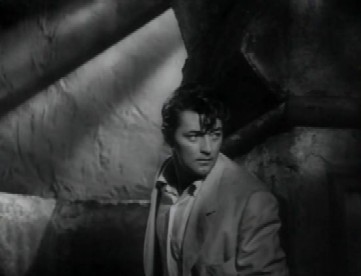
I was initially undecided about whether I should expend any energy on writing a review for this film. It wasn’t great—not even good, really. On the other hand, it wasn’t a pain to sit through and offered no unintentional hilarity of the Leader brand. Instead, it was a meandering, sometimes pointless film with little development of characters and indifferent screenplay.
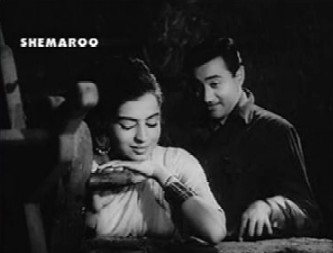
Why then this review? Simply because this was the first film of a charmingly gawkish youth who went on to become one of Hindi cinema’s biggest stars—and one of my favourite actors.

A Russian woman arrives in Paris in the first half of the 20th century, as a somewhat belated consequence of the Russian Revolution.
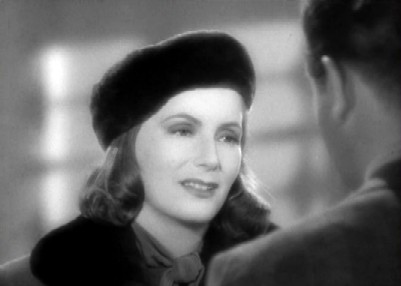
An earlier version of Anastasia? No, though I was surprised at the coincidence in basics between this film and the one I saw last week. And, interestingly enough, there was another similarity between Anastasia and Ninotchka: both starred Swedish actresses, Ingrid Bergman and Greta Garbo respectively.

I’m very fond of Bina Rai. I’m also a fan of Premnath in his pre-paunchy days. And a film that starred both of them? I didn’t even bother to try and find out what it was all about. So, when I began watching it and saw this, it made me sit up a bit:

I sometimes discover films in a very roundabout way. This one, for example.
Those who’ve explored this blog probably know that I also do travel writing, and that I recently went to Switzerland. While doing background research on the Russian Orthodox Cathedral in Geneva (which was constructed from funds donated by a Russian Grand Duchess, Anna Feodorovna), I read again about the Romanovs—and inevitably, about Anna Anderson, the woman who emerged in Western Europe in the 1920’s, claiming to be Czar Nikolai’s youngest daughter, the Grand Duchess Anastasia Nikolayevna. Some more research, and I ended up at this film, starring one of my favourite actresses.

With most films, by the time I see The End come up on the screen, I’ve more or less decided what I’m going to write about it, till which point I’m going to reveal the plot, and so on. With Haqeeqat, I’m still a little dazed. This is one of Bollywood’s earliest—and most realistic—war films, set against a backdrop of what was then the almost inaccessible region of Ladakh. It’s a blend of war and melodrama, propaganda and patriotism… and I’m not sure exactly what can be considered the main story of the film, since it actually consists of a number of stories woven into each other.

Memsaab’s excellent review of the Dev Anand-Waheeda Rehman starrer Solva Saal reminded me of this film. Also Dev Anand, also a suspense thriller, and also with great music. And, may I add, like Solva Saal, extremely entertaining.
So I rewatched this and enjoyed myself all over again, ogling Dev Anand, humming along with the songs, and wishing there were more films like this.

I’m sitting near an open window, breathing in what we always knew as the saundhi khushboo of wet earth (I’ve since discovered the correct English term is petrichor). Outside the window is a balcony, crowded with plants that are suddenly no longer limp and weary with the heat. Beyond the balcony is a field dotted with cows and cattle egrets. Pools of water shimmer silver in the field. The grass and the trees around the edges are bright green against the brooding grey of the clouds beyond. The monsoon is here. Finally, thankfully, here.

The American Film Institute, in its list of America’s 100 funniest films, put Some Like it Hot right at the top, at Number 1. Humour, like beauty, is subjective, so I’m not sure how many would agree with that decision. What matters is that this film, total farce from beginning to end and a great entertainer, is definitely one of the funniest I’ve seen.