I was in two minds about this list. Should it be a list of the ten best Tyrone Power films there are? As in ‘great’ films—the Nightmare Alley or This Above All category? Or should it be a list of ten films, even frivolous swashbuckling stuff in which all Power was required to do was romance a pretty heroine and wield a sword?
I decided on the middle path. These are ten films that starred Tyrone Power and are worth seeing—for whatever reason.
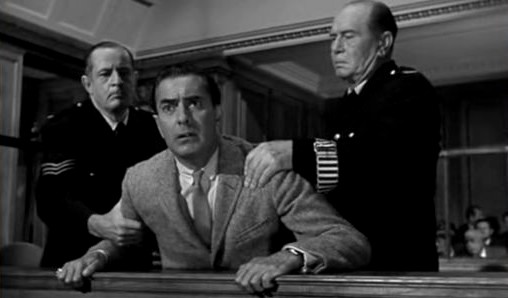
Witness for the Prosecution (1957)
“The trial of of Leonard Vole for the murder of Emily French aroused widespread interest. In the first place the prisoner was young and good-looking, then he was accused of a particularly dastardly crime, and there was the further interest of Romaine Heilger, the principal witness for the prosecution…” — Agatha Christie, The Witness for the Prosecution
Tyrone Power’s last full-length appearance on screen (he died while filming Solomon and Sheba a year later), Witness for the Prosecution is also one of his most famous films. Surprisingly, not mainly because of Power—his role in it, though pivotal, is actually quite small—but because of the overall brilliance of the film: the excellent acting, Billy Wilder’s direction, and a very good adaptation of one of Agatha Christie’s best-known short stories.
Nightmare Alley (1947)
Through much of his career, Tyrone Power bemoaned the fact that his ‘pretty face’ resulted in him being typecast—usually as the swashbuckling hero, sometimes as the dramatic hero, but always the basically good guy, even if he had his weak moments.
Which is why Nightmare Alley was the film of which Tyrone Power was most proud. He was a pretty face in most of the film (well, he couldn’t do much about that, could he?), but he also had more going for him: a very powerful, negative character that allowed Power to show that he could, despite that pretty face, act.
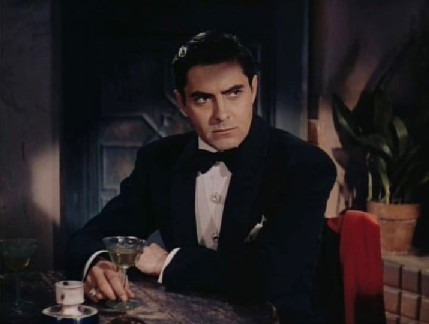
Who is this man?
No, I’m not launching a quiz; this is just a one-off question. Can you identify this very famous Hollywood actor?
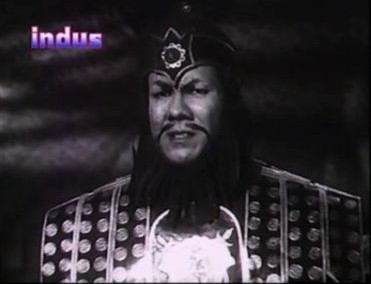
Changez Khan (1957)
Of the many things that fascinate me about old Hindi cinema, this is one: the making of films set in a time and space wholly alien to India of the mid-1900’s. The 1950’s, especially, seem to favour these sort of films, set in exotic locales and needing costumes, makeup, and sets that were vastly different from what one saw in the more usual Bollywood drama, thriller or even mythological. There was Yahudi (with Dilip Kumar looking far from Roman in a light-haired wig and ankle-length gown); Aurat (based on the story of Samson and Delilah)—and this one, about the Mongol warrior king, Changez (better known to the West as Genghis) Khan.
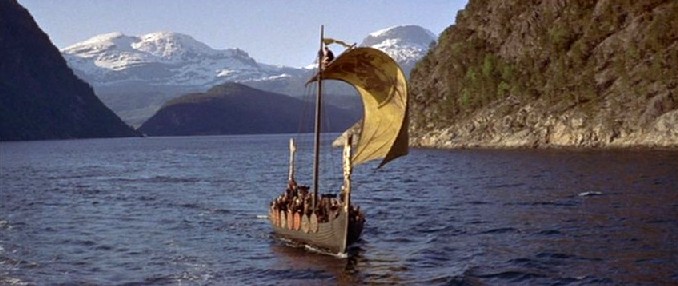
The Vikings (1958)
As I mentioned in a previous post, watching this film gave me a sense of déjà vu. There’s a lot about it that’s very reminiscent of classic Hindi cinema. The lost heir who can be identified by an amulet he wears; the long-lost brothers who don’t know they’re related and are at daggers drawn, partly because both love the same woman… fortunately, though, The Vikings is more than just a precursor to so many Hindi films. It’s also a very watchable film, with superb cinematography and a general air of having been made much, much later than it actually was.
Ek Musafir Ek Haseena (1962)
My post on how similar classic Hollywood actually is to classic Bollywood omitted a popular cliché: amnesia. So, if Greer Garson’s character could fall in love with a soldier who’d lost his memory in Random Harvest, Sadhana can do so too, in Ek Musafir Ek Haseena.
Two years after they both debuted in the generally-enjoyable Love in Simla, Joy Mukherji and Sadhana acted together again in this film. It has lots to recommend it: a very beautiful lead actress (I personally think Sadhana looks her best in this film), a superb musical score by O P Nayyar, Raj Khosla’s direction—then why, at the end of two and a half hours, do I feel a sense of dissatisfaction?
Now why does that sound familiar?
In The Vikings (1958), a Northumbrian queen is widowed and raped by a Viking conqueror named Ragnar. She later gives birth to his child, a son whom she tries to protect from the hatred of the newly-crowned king of Northumbria by tying a distinctive amulet around his neck and sending him far, far away, to grow up in safety.
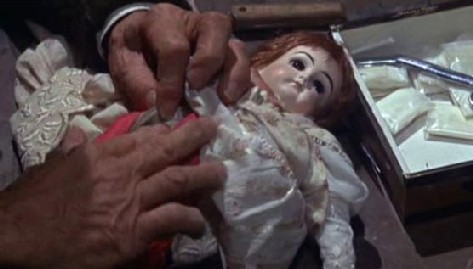
Wait Until Dark (1967)
On a flight from Montreal to New York, Lisa (Samantha Jones) smuggles a doll that plays a catchy little tune and holds in its stuffed cloth body a very valuable cache of heroin…
Baiju Bawra (1952)
At home, our tastes (when it comes to cinema) are very varied. My husband likes science fiction or fantasy, kung fu, conspiracy, superheroes, and (occasionally) comedy. And very little of it pre-90’s. I watch just about anything that’s pre-70’s. So, when we were deciding which DVDs we wanted to order next from our DVD rental service, I was taken aback when my husband said, “Baiju Bawra.”
“That’s black and white,” I said, wondering if the recent bout of long and stressful work hours had taken its toll. “Early 50’s. Hindi.”
“I know,” he said. “Good music.”
And yes, good music is the outstanding feature of this film. It had to be, since it’s about the legendary 16th century singer and musician Baijnath (‘Baiju’) Bawra.