Ten of my favourite ‘Man Sings, Woman Dances’ songs

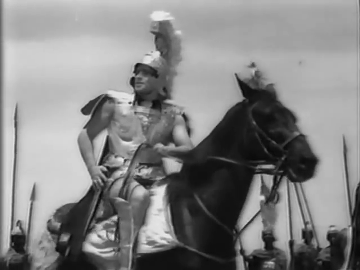
Sometime back, I was watching Dil Hi Toh Hai, and for the first time, actually paid attention to the scenario and picturization of the classic Laaga chunari mein daag. Raj Kapoor, in disguise, plays a classical singer who prides himself on singing such complex tunes that no accompanying dancer can match him. That sparked off a memory: the situation in Madhuban mein Radhika naache re is similar—it’s a faceoff between a singer (a man) and a dancer (a woman).

And that led to memories of other songs, all with a similar setting: a man singing, a woman dancing. A good enough theme for a post, I thought—especially as I could think of some superb songs that would fit right in. I only had to set down some rules for myself, and these (besides my usual one of including only songs from pre-70s films that I’ve seen) would be that in each of these songs, the man shouldn’t dance, and the woman shouldn’t sing.

Also, the man must be physically present in the picturization of the song (which is why the popular Tu hai mera prem devtaa doesn’t feature in this list, even though I like it).

Man sings, woman dances

Continue reading

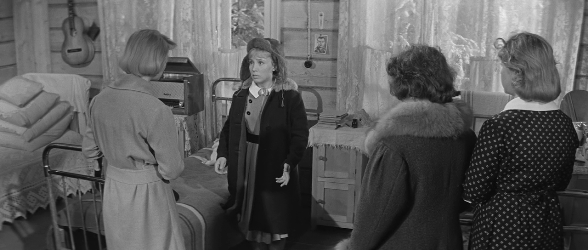
Dil Hi Toh Hai (1963)

Some months back, I watched two relatively new Muslim socials: Daawat-e-Ishq and Bobby Jasoos. Both were an interesting reflection on the way the Muslim social has changed over the years (after close to disappearing during the 90s). The Muslim social of the 1950s was, more often than not, a film that, even when set amongst the wealthy upper class—the nawabs and their kin—came heavily burdened with all the stereotypical trappings of what was perceived as ‘Muslim’: the qawwalis and mushairas, the shararas and sherwanis. (I’ll write about all of those, and more, in a post to follow).

Bobby Jasoos and Daawat-e-Ishq had shed those to quite an extent. But that process had begun in earlier films, even as far back as the 60s. In Neend Hamaari Khwaab Tumhaare, for example, where Nanda’s character—the daughter of a nawab, no less—doesn’t merely have a Western education, but spends most of her time in skirts and dresses. And this film, where Nutan’s Jameela is a firebrand, giving as good as she gets, and by no means the simpering and demure Muslim girl exemplified by her contemporaries in films like Mere Mehboob, Mere Huzoor, and Chandni Chowk.

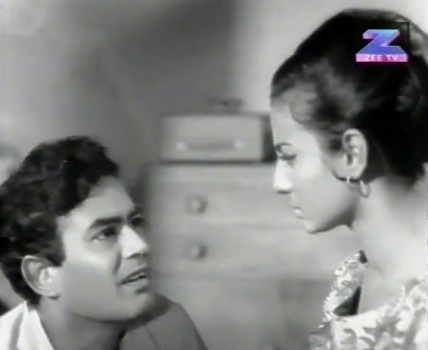
Nutan as Jameela in Dil Hi Toh Hai

Continue reading

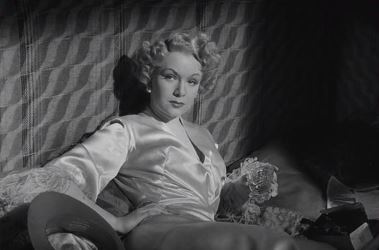
Rawhide (1951)

The other day, a blog reader, Dr Pradeep Prahlad, commented on one of my reviews of a Tyrone Power film, Witness for the Prosecution. It reminded me that a few years back, I went through a longish spell of complete and utter Power fandom.  I watched, over the space of a few months, just about every Tyrone Power film I could lay my hands on. Some were good, some were forgettable. Some I reviewed. Some I thought I’d review—and then forgot about them.

So here is one film that I liked, but ended up not having the time to review back then. I rewatched Rawhide a couple of weeks back, saw flaws in it I hadn’t noticed the first time round, and decided it merited a review. Even if only to keep the Power love alive, and even if only to draw attention to a Western that generally tends to get overlooked.

Tyrone Power as Tom Owens in Rawhide

Continue reading

Book Review: Jai Arjun Singh’s ‘The World of Hrishikesh Mukherjee’

In all the years I’ve been writing this blog, one film maker whose name keeps cropping up every now and then—whose films I’ve reviewed, whose work I’ve commented on—is the brilliant Hrishikesh Mukherjee. From his editing of classics like Do Bigha Zameen, Madhumati and Chemmeen, to his direction of both popular hits like Asli-Naqli and relatively little-known works like Majhli Didi and Biwi aur Makaan, Hrishikesh Mukherjee has had a hand (and a mind and a heart, and sometimes—as I discovered when I read Jai Arjun Singh’s ‘sort of biography’ of the man—a house) in some of my favourite films.

Jai Arjun Singh's 'The World of Hrishikesh Mukherjee'

Continue reading

Ten of my favourite romantic duets

One would’ve thought a blog dedicated largely to old Hindi cinema would milk Valentine’s Day for all it’s worth; after all, the number of old Hindi films that didn’t feature a romance of some sort, of some duration, can almost be counted on the fingers of one hand. True, the romance may end in tragedy; it may come up against one obstacle or the other; there may be misunderstandings galore—but romance and Hindi cinema did go hand in hand (still do, to a large extent). So a Valentine’s Day-themed post is pretty much de rigueur.

This year, after having dilly-dallied and wondered whether I should try a ‘romantic songs’ list, I decided I should. And, oddly enough, all the romantic songs that kept occurring to me—the ones which immediately popped into my head and kept playing—were of Shammi Kapoor lip-synching to Rafi. Too easy. So I decided to go a different route: ten romantic duets (yes, there’s still a good bit of Shammi Kapoor here, but not completely).

Romantic duets

Continue reading

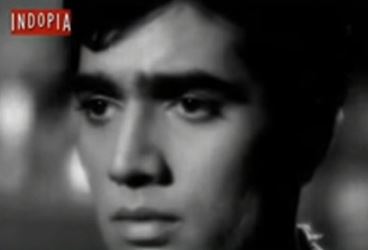
Biwi aur Makaan (1966)

I’m reading Jai Arjun Singh’s The World of Hrishikesh Mukherjee: The Filmmaker Everyone Loves these days (yes; a review will be posted sometime this month). A few pages into the book, and I came across a mention—followed by more interesting stuff—about a film I’d run into once, about ten years back. Biwi aur Makaan, of which I’d happened to find a VCD and had happily bought, guessing (from the synopsis on the VCD cover) that this might be fun.

That VCD turned out a dud: the first disc was fine, the second refused to play. So I set Biwi aur Makaan aside (regretfully), and ended up forgetting about it. Until earlier this week, when, reading Jai’s book, I was reminded of it, and on a whim, decided to see if I could find it on YouTube. Sure enough, there it was. And here is my review.

Biswajeet, Keshto Mukherjee, Kalpana and Shabnam in Biwi aur Makaan

Continue reading