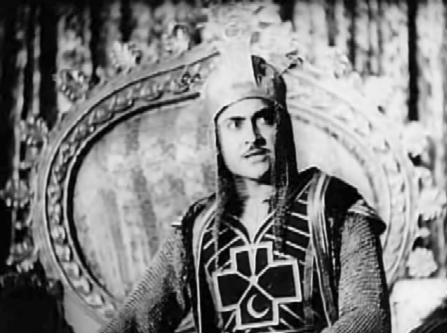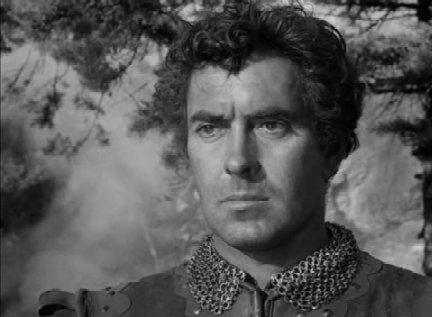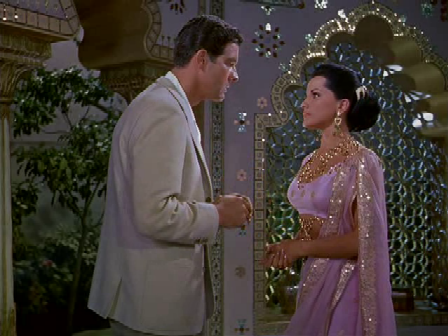
Hindi cinema’s fascination for the Mughals is – well, fascinating. Even before independence, we were busy churning out semi-historicals such as Humayun (1945) and Shahjehan (1946); then, in the 50s and 60s, there followed a spate of rather more big-budget extravaganzas, complete with big names, vast armies, glittering palaces and superb music: Mughal-e-Azam, Taj Mahal and Anarkali (Note: As a character, Anarkali seemed to be especially popular. Besides the Bina Rai-Pradeep Kumar version, there were Tamil, Telugu and Malayalam versions of her story; even a Pakistani version starring Noor Jehan. And that list neither includes the two versions made in 1928, nor a 1935 film starring Ruby Myers. Note that Mughal-e-Azam is also about Anarkali).
Only Angels Have Wings (1939)
The site stats for this blog sometimes show decidedly odd search terms that bring people to http://www.dustedoff.wordpress.com. ‘bollywood hide and seek behind a tree’; ‘sailing boat naked’; ‘iwanttohearmukeshsonginmukeshvoice’; ‘saree of kolkata grandmother’; and – this is one I can agree with, wholeheartedly: ‘cary grant being beautiful’. Yes, Cary Grant was very beautiful indeed (would ridiculously handsome be perhaps a more apt term?)
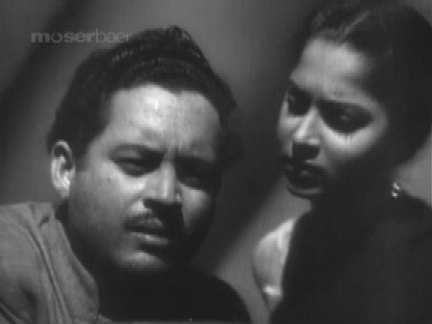
Teesri Kasam (1966)
One reason I’m glad I began this blog is that, because of it, I’ve met (although in most cases only in cyberspace) a lot of other people who are as enthusiastic about cinema as I am. Through these friends, I’ve been introduced to ‘new’ old films, to songs and directors and actors and styles of cinema that I hadn’t known before. Occasionally, too, my friends have been able to persuade me to give up a prejudice and watch a film I had no great expectations from. This is one of them.
At least four fellow bloggers/readers/friends – Yves, Bawa, Harvey and Pacifist – had been advising me, for a while now, to watch Teesri Kasam. I was assured that Raj Kapoor wasn’t at all Chaplinesque (something I dread in RK’s films) here, and that the film itself was excellent. I’d been trying to get hold of Teesri Kasam too, but the DVD rental company I subscribe to never seemed to have it in stock. Finally, last Sunday, I watched the film on Youtube. And yes, it is a wonderful film. Sensitive, lyrical, quiet, and easy to like.
Ten of my favourite bird songs
Birdsong? No, really. Bird songs.
I spent a bit of last Sunday at Delhi’s Okhla Barrage Bird Sanctuary. The barrage on the Yamuna hosts a vast number of migratory birds through the winter. Most of them are gone by this time of the year, but there’s plenty of bird life still to be seen:
Cat on a Hot Tin Roof (1958)
Less than two months ago, a couple whom I am distantly connected to by marriage were in town. The lady’s American; her husband is Indian, and they live in New York. We were chatting about this and that, and the lady told us an interesting story: of how, some years back, they had been invited for a party, the birthday (I think) of someone very wealthy and famous. They were just entering—my ‘relative’ in a lovely purple-blue silk ‘temple sari’—when they ran into Elizabeth Taylor. Ms Taylor had one look at that temple sari and wanted to buy it.
“She was willing to offer whatever sum I wanted,” my ‘relative’ recalled. “I couldn’t let her have it, of course. That was the sari I’d worn for my wedding reception; it had sentimental value… but it matched her eyes so completely.”
RIP, Ms Taylor. The lady with the violet eyes. The lady with the seven husbands. The lady who could set the screen on fire—both with her breath-taking beauty and her superb acting. Even though she’s no more with us (she passed away on March 23, 2011, at the age of 79), she will live on in her films, hopefully for many generations to come.
Dahej (1950)
I’ve lost count of the number of Hindi films I’ve seen in which a bride is left at the mandap just because her family hasn’t been able to provide a massive dowry. I have no idea which was the first such film to be made, but V Shantaram’s Dahej is one of the early ones. And to be expected too, from a film-maker who was deeply sensitive to the many shortcomings in the society of his time.
Triple Cross (1966)
Despite everything more fashionable cinema viewers may say, I love The Sound of Music. I love the songs, I love the mushy romance, I love the children. I love Julie Andrews. I love Christopher Plummer.
Which is why it’s always bothered me that Christopher Plummer used to refer to the film as The Sound of Mucus. Why, I wondered.
Well, this might just furnish some sort of answer to that question. Plummer stars in Triple Cross as a war-era safe breaker who offers his services to the Nazis as a spy in Britain. It’s not a frightfully demanding role, but it offers a glimpse of what Plummer was capable of. And I can understand why he might have thought of his role as Georg von Trapp as a little too much of a cakewalk.
Ten of my favourite Sahir Ludhianvi songs
Among the most popular posts on this blog are my top ten lists of songs. They’re also among my favourites; old Hindi film music is one big, big reason for my watching these films in the first place. Which is why I’ve ended up doing so many lists of songs—for music directors (S D Burman, O P Nayyar), singers (Rafi, Mukesh, Hemant, Manna Dey, Talat, Lata, Mahendra Kapoor), even for actors (Madhubala, Asha Parekh, Johnny Walker). But lyricists tend to get left out. A song wouldn’t exist without someone to write the words, would it? So, a post honouring one of my favourite lyricists: Sahir Ludhianvi, on his birth anniversary.
The Popcorn Essayists
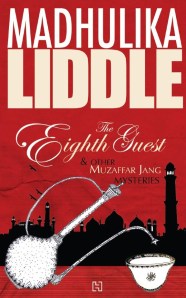
For those of you who like cinema, and who like reading about cinema (which is probably why you’re reading this), a piece of news I wanted to share: the launch of a new book. The Popcorn Essayists: What Movies Do To Writers is an anthology of film writing—by writers who don’t professionally review or otherwise write about cinema. Compiled and edited by Jai Arjun Singh, the book contains essays by a wide range of authors, most of them very well-respected and well-known. Anjum Hasan, Manjula Padmanabhan, Namita Gokhale and Amitava Kumar are among those who’ve contributed to The Popcorn Essayists.
True Grit (1969)
This last Saturday, on a mere whim (brought on by a good newspaper review) I went off to watch True Grit. The 2010 version, starring Hailee Steinfeld in an Oscar-nominated role as Mattie Ross. It was a good film, in true time-honoured Western mould, with tinges of both feminism and noir. And it spurred me on to finally watch the original True Grit, the film that won John Wayne his only Oscar.