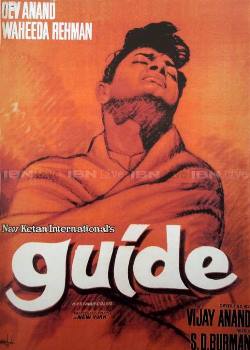
Kaala Paani (1958)

Today is the 100th birth anniversary of one of my favourite Hindi film directors, the suspense-specialist Raj Khosla (I hasten to add: I am well aware that that’s a generalization, since Khosla made a lot of films, too, that had nothing to do with the thriller/suspense genre: Mera Gaon Mera Desh, for example; Chirag, Main Tulsi Tere Aangan Ki, Do Badan, etc). But it is Khosla’s prowess with this particular genre that I especially admire, a skill and talent he showcased in classics of the genre such as Woh Kaun Thi? ((1964), Mera Saaya (1966), CID (1956) and Kaala Paani (1958). In each of these films, he managed to combine the classic elements of the Hindi masala film—a romance, a comedic side track, lots of fabulous songs—while making sure that the suspense remained (mostly) taut, the mystery a solid one.

To commemorate Khosla’s birth centenary, I wanted to review one of his suspense films. Several of these (CID, Mera Saaya, Ek Musaafir ek Haseena, Woh Kaun Thi?) I have already reviewed; I was torn between some of the others: Solva Saal, Kaala Paani, and Anita, all of which I have seen at some time or the other. I decided, eventually, that it was time to rewatch Kaala Paani, a film that I’ve watched several times, but too far back to have reviewed it on this blog.

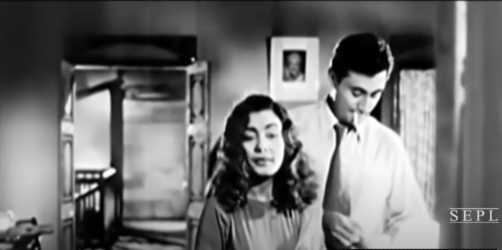
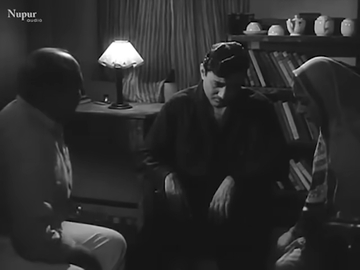
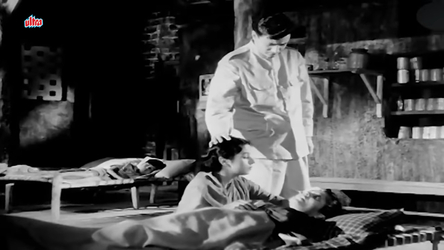
The story begins on a night in Bombay, with a woman (Mumtaz Begum) hurrying through the streets to the home of a family friend, Mr Kapoor (?). She is in great distress, and confides in Kapoor: Karan has discovered the truth. What this truth is we discover when Kapoor hurries to Karan’s home to find Karan (Dev Anand) sitting, looking bereft. He has found out (how, we aren’t told) that his father Shankar Lal has, for the past fifteen years, been incarcerated in Hyderabad jail for the murder of a tawaif named Mala. Not, as Karan has been led to believe all these years, dead.
Continue reading

Kaala Bazaar (1960)

The first time I watched Kaala Bazaar was perhaps in my early teens: the film was being shown on Doordarshan, and given that back then I was very fond of Dev Anand, I watched it. I have very vague recollections of that viewing. What I do recall, vividly, is that I didn’t like that my hero was a criminal.

… which, as I came to realize later, was actually not so very uncommon a style for the characters Dev Anand played. Unlike the other major romantic hero of the time, Shammi Kapoor, Dev Anand didn’t just play characters who got up to ‘mischief’, so to say; his characters—from Tony in Jaal to Raju in Guide, from Chhagan in Roop ki Rani Choron ka Raja to Babu in Bambai ka Babu, plus others—were outright criminals: thieves, conmen, smugglers, men definitely on the wrong side of the law.

Like Raghubir ‘Raghu’ in Kaala Bazaar. Raghu is a bus conductor when the story begins, and within the space of a couple of minutes, his life takes an about-turn. A belligerent passenger is standing in the bus (which is against the rules), and when Raghu asks him to get off the bus, the man refuses. Both he and Raghu lose their tempers. Fists fly, and the next thing we know, Raghu is without a job.

Raghu’s mother (Leela Chitnis) is ill, and he has a sister (Nanda) and a young brother (?) as well; he cannot afford to be without a job. Desperate, Raghu flounders about, trying to find work. If not work, money.

Continue reading

Insaniyat (1955)

This is one film that’s been on my to-watch list for several years now, mainly because it is the only film that stars both Dev Anand and Dilip Kumar. Also, as I’ve gathered from a few articles and posts I’ve read, this is also possibly the only film that doesn’t feature Dev Anand as a modern city slicker. He’s still somewhat of a sophisticate—by no means an illiterate rustic—but this is set in some undefined ‘raja-rani’ time period where Dev Anand spends all the film in something other than Western clothing.

But, to begin at the beginning. Zangoora (Jayant) is a nasty tyrant whose idea of ruling his kingdom is to be brutal with his subjects. Every now and then, his soldiers are sent out into the countryside to loot villages and bring back all that they can find. Zangoora’s troops are vile, uncaring, as brutal as their boss.

They’re at one village, upturning things, grabbing and snatching, when a furious village woman, Durga (Bina Rai) comes charging up. Durga lets fly at the man leading the troops, Bhanu Pratap (Dev Anand, his upper lip topped with a ridiculous moustache). Durga slaps Bhanu, and then proceeds to berate him for his mindless cruelty.

Continue reading

Aandhiyaan (1951)

In 1951, fresh from the success of the Dev Anand-Geeta Bali-Kalpana Karthik starrer Baazi, Chetan Anand decided to make a film that would highlight the very interesting aspects of film-making he had been learning from studying the works of various European directors. ‘Based on a true incident that took place in Amritsar’, as the film’s credits read, the story of Aandhiyaan was written by Chetan Anand himself, along with Hameed Butt.

The film’s credits roll to an unusual sequence of shots: in each frame, one actor or the other is shown, battling the eponymous ‘aandhi’ or storm, though in this case literal rather than metaphorical.

The story is centred round a young and zealous lawyer named Ram Mohan Kapoor (Dev Anand). Ram lives upstairs from his munshi (Ratan Gaurang), whose daughter Rani (Nimmi) has long been in love with Ram, though she’s too shy to let him know that. When the story begins, Ram’s mother (Durga Khote) is due to arrive, and Ram is getting ready to go to fetch her from the station. Rani makes tea for him, and an excited Ram confides in her: he’s asked his mother to come because he wants her to fix a match for him. With a girl he likes a lot.

Continue reading

Love Marriage (1959)

Today is the birth centenary of the Indian director, writer and producer Subodh Mukherji. While Mukherji doesn’t have a huge list of films to his name—barely a dozen—the majority of the films he did make proved to be very successful ones, big entertainers that had great music, starred beautiful people, and were generally good time-pass, if nothing else.

Born in Jhansi on April 1, 1921, Subodh Mukherji was jailed for three months in 1942 for his activities as part of the Indian freedom movement. Subsequently, at the behest of his family, he was made to go to Bombay to join his elder brother Sashadhar Mukherji (who had established Filmistan Studios along with Madan Mohan’s father, Rai Bahadur Chunilal; Ashok Kumar; and Gyan Mukherjee). It was for Filmistan that Subodh Mukherji made his first film, writing and directing Paying Guest (1957), though he also took time off in between to direct Munimji (1955). Through the late 50s and the 60s, Mukherji was to go on to write, produce, and/or direct several films that exemplified his philosophy of making films that told entertaining stories: Junglee (1961), Love Marriage (1959), Shagird (1967, starring Sashadhar Mukherji’s son, Joy Mukherji).

Continue reading

Funtoosh (1956)

Today may (or may not) be the birth centenary of the film maker, writer, and actor Chetan Anand, eldest brother of Dev Anand and Vijay Anand. Different sources list different dates of birth: most sites (including IMDB) list his birth date as January 3, 1921; others, including Wikipedia (yes, I know not the most reliable of sources) say it’s January 3, 1915. (This article says it’s 1921, but then goes on to write that Chetan Anand was 27 years old in 1943, which is either dodgy maths or a suggestion that the year of birth was indeed 1915). The article, barring that slip, is a good, interesting introduction to the life and career of Chetan Anand.

Anyway. Even if I’m six years too late to the party, at least today is Chetan Anand’s birthday.

Continue reading

Book Review: Guide, The Film: Perspectives

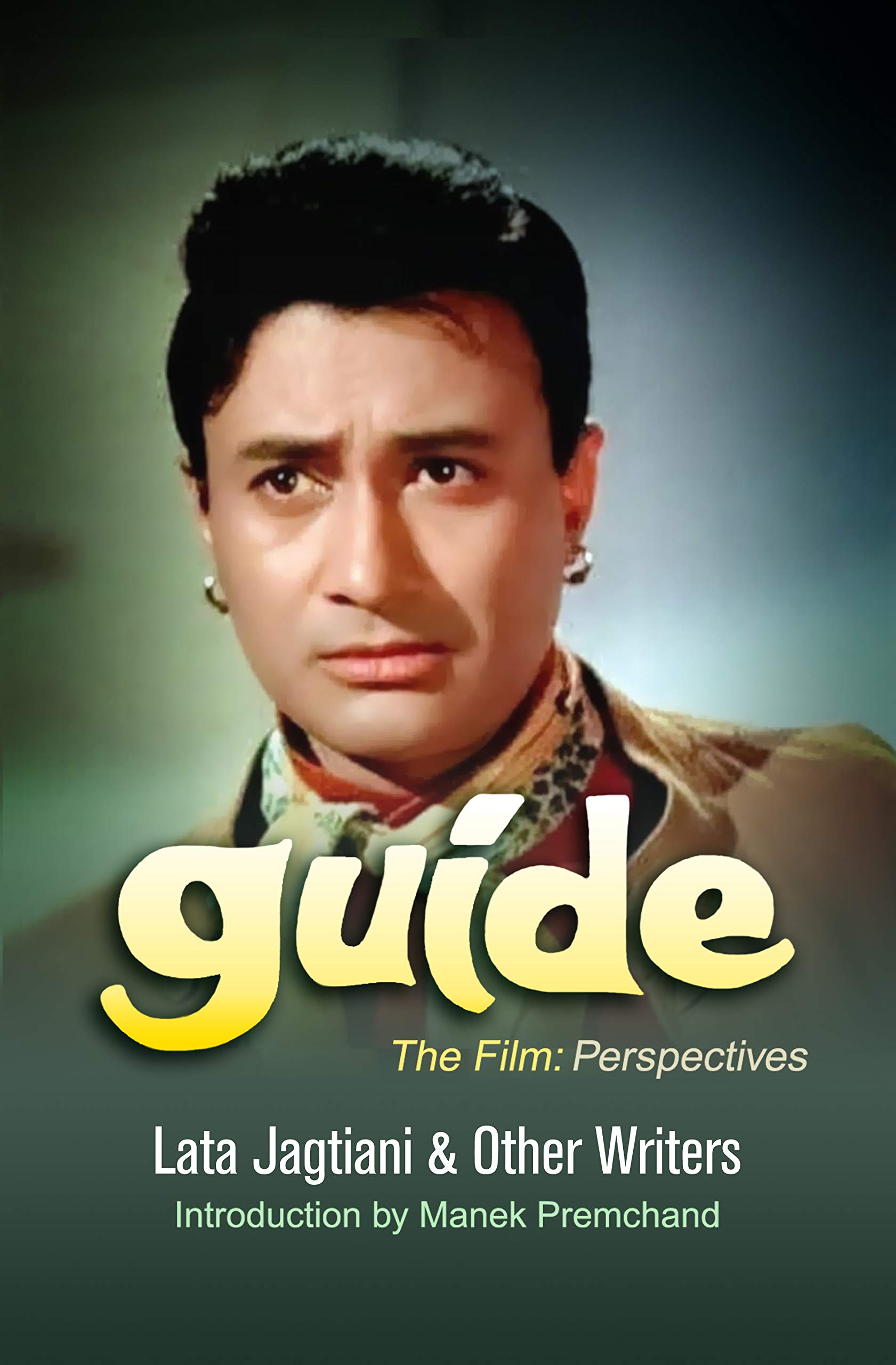
I watched Guide for the first time when I was about twelve or so. Till then, all the Hindi cinema I had watched was predictable, comfortable, simple enough for a pre-teen to know what to expect. Or so I thought.

Because Guide defied every norm I thought I understood. Heroes, not even when they were the anti-hero Dev Anand had played in earlier films like Baazi, Kaala Bazaar or House No. 44, did not go anywhere near another man’s wife. Heroines, even when they were married off against their wishes to men other than those they loved (as in Dil Ek Mandir, Gumraah, or Sangam) stayed true to their marriage vows and sooner or later left their past behind (I was to watch Yeh Raaste Hain Pyaar Ke only much later). They absolutely did not leave their husbands and start living with another man.

And heroes did not die. As when I watched Anand, when I watched Guide too, I kept thinking, “This isn’t it. He isn’t dead, he can’t be dead.”

Several years later, I had to study RK Narayan’s The Guide at school, and I pretty much knew what to expect—but once again, I found myself surprised, because the book was in many ways different from the film. The book had won its author the Sahitya Kala Akademi Award (the first book in English to win the award), and the film won accolades by the handful—and continues to do so, fifty-five years after it was released. It has been analyzed, discussed, derided, lauded. Personally, other than for its music and Waheeda Rehman’s dancing, I have never really liked Guide much—but even I, when offered the opportunity to read this collection of essays about Guide, couldn’t resist it. Partly, perhaps, because I hoped to be able to discover what fans of the film saw in it that I didn’t.

Continue reading

Roop ki Rani Choron ka Raja (1961)

In 1956, Waheeda Rehman made her debut in Hindi cinema in CID, with Dev Anand (Waheeda wasn’t the heroine of CID—Shakila was—but she had a good and somewhat offbeat role as the vamp with a heart of gold). Over the next decade and a half or so, Waheeda and Dev Anand were to go on to act together in several more films, probably their most famous pairing being in the hugely popular Guide (1965).

I have watched, as far as I know, all of the Waheeda-Dev films over the years. The only one that (again, as far as I know) I hadn’t watched yet was this one. Time, I decided, to make amends for that.

As in many other films of his, Dev Anand in Roop ki Rani Choron ka Raja is a crook—a thief, to be precise. We are introduced to Chhagan (Dev) when he’s in a shady-looking dive, buying a bottle of booze. Shortly after, Chhagan is accosted by ‘Langad Deen’, a partly-crippled character (played by Jeevan), who has a bit of news for Chhagan: a steamer is about to begin the journey down the river to the pilgrimage spot of Shivsagar. Langad Deen has it on authority that among the people on board is a wealthy jeweller who is carrying a very valuable diamond to be offered up to the god Shiv at Shivsagar.

Continue reading

The Guide (1965)

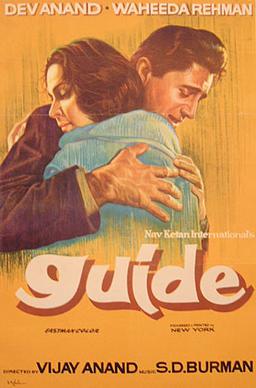
In 1960, RK Narayan won the Sahitya Akademi Award for his novel, The Guide, published in 1958. The story is of a small town tourist guide who has an affair with the lonely wife of an archaeologist, an affair that has a lasting impact on his life.

Of course, anybody who knows anything about Hindi cinema would recognize the plot (and the name) immediately: this, after all, was (minus the ‘The’) the name of one of Hindi cinema’s most popular films ever made. The Dev Anand-Waheeda Rehman starrer Guide, directed by Vijay Anand, won an impressive seven Filmfare Awards (and that excluding what should definitely have been an award, for SD Burman’s brilliant score for the film).

Continue reading

Tamasha (1952)

When you are as devoted to the pursuit of old Hindi cinema as I am—and you assiduously discuss old cinema with other like-minded souls—you keep getting recommendations. Some recommendations I take with a certain amount of leeway automatically assigned, since I know that the recommender has his or her own biases that are likely to be reflected in the film in question. Others I tend to blindly follow, because over time, I’ve realized that these are people who pretty much share my own ideas of what comprises watchable cinema.

One of these is Anu, who blogs at Conversations over Chai. We have our differences (Raj Kapoor is one), but by and large, Anu and I tend to agree about cinema. So when Anu, chatting with me during my trip in August to meet her, recommended Tamasha, I immediately made a note of it. After all, Dev Anand, Meena Kumari, Ashok Kumar, Kishore Kumar—and a comedy? That certainly sounded like something I wanted to watch.

Continue reading