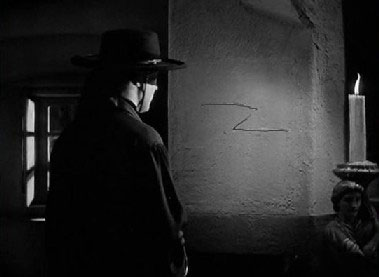
The Seahawk (1940)

Another offering for Flynn Week.

It was said, at one time, that if Bette Davis was the queen of Warner Brothers, Errol Flynn was the king. And a king, too, with a lineage that was astounding, to say the least. The Tasmanian-born Flynn spent a few years as a young man in Papua New Guinea holding down jobs as varied (and in some cases illegal) as diamond smuggler, slave recruiter, gold prospector, sheep castrator, and manager of tobacco and coconut plantations, before washing up in the big bad world of cinema. Flynn’s first role was as his own ancestor, Fletcher Christian, a mutineer on the HMS Bounty; two years later, opposite Olivia de Havilland (who was a very distant relative of his), Flynn acted as the pirate Captain Blood—and the king of swashbucklers had arrived.

Continue reading

The Dawn Patrol (1938)

Strangely—considering that Errol Flynn is best known for his swashbuckling roles—the film I most vividly remember of his is this one, an unusual war film. I first watched it years ago as a teenager, and ever since—in spite of having notched up The Prince and the Pauper, Captain Blood, The Adventures of Robin Hood and other blockbuster Flynn hits—this remains my favourite Errol Flynn film. Touching, thought-provoking, and utterly memorable.

Continue reading

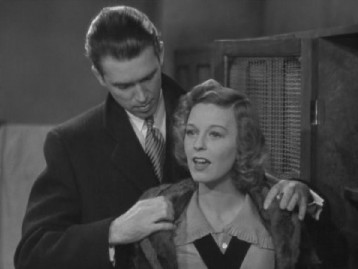
The Shop Around the Corner (1940)

What is it that tempts film-makers to say “Ah! Let’s do a remake of this one!”? A conviction that a script that’s worked once will work again? Also perhaps a somewhat egoistic belief that they will be able to make a better adaptation than whoever made the original film? This story, a classic Ernst Lubitsch romantic comedy, certainly had a lot going for it: sweetness, dewy-eyed romance, and a heart-warming wholesomeness set against a backdrop of wartime Budapest. No wonder, a mere 9 years after it was made, The Shop Around the Corner was remade as In The Good Old Summertime.

But which is better? And how do they compare?

Continue reading

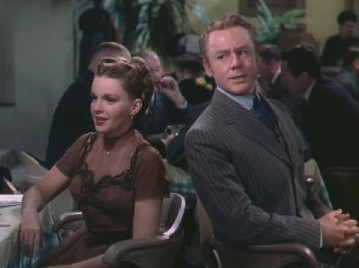
In the Good Old Summertime (1949)

Like Love Affair/An Affair to Remember, In the Good Old Summertime is also one of those romances that’s proved very popular across time and space. This is a cheery little love story, of a man and a woman who begin corresponding with each other, fall in love through their correspondence (all without even knowing the name of the other person), and when they eventually meet, become instant enemies. Sounds familiar? Yes, that’s The Shop Around the Corner. Also You’ve Got Mail. And Sirf Tum. It’s also this film, a sweet musical remake of the original The Shop Around the Corner.

Continue reading

Pillow Talk (1959)

Doris Day, Rock Hudson and Tony Randall acted together in three films: Pillow Talk, Lover Come Back, and Send Me No Flowers. Since I’d already reviewed the other two, I decided it was time to complete the trio with a re-view and a review of Pillow Talk, the first of the Day-Hudson-Randall films.

Continue reading

The Naked Jungle (1954)

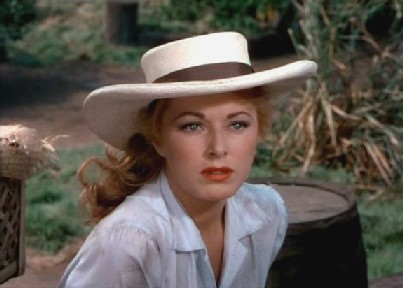
One person who’s figured very consistently on my blog statistics for the past year is the gorgeous Eleanor Parker. Any day, all I need to do is click my blog stats link, and I’ll see that among the top hits for my blog is ‘eleanor parker’ or ‘eleanor parker actress’. So, considering it’s her 88th birthday today, it seemed the perfect time to review a film that starred Ms Parker.
Eleanor Parker was born on June 26th, 1922. The ‘Woman of a Thousand Faces’ (so called because of her amazing versatility), she got three Oscar nominations, but is usually remembered mainly for her role as the beautiful Baroness in The Sound of Music. Ms Parker did, however, act in a host of other films—and in very varying roles, too. This, as the mail order bride of a plantation owner in South America, is just one of them.

Continue reading

The Inn of the Sixth Happiness (1958)

The Chinese wish each other five happinesses: wealth, longevity, good health, virtue, and a peaceful death in old age. The sixth happiness one must decide for oneself.

Richard’s recent post on Dr Kotnis ki Amar Kahani reminded me of this film, because the two films share a lot in common. Like Dr Kotnis ki Amar Kahani, The Inn of the Sixth Happiness is based on a real life story—in this case, that of the Englishwoman Gladys Aylward (1902-70), who in 1930 went off to China to ‘serve’ the people there. Like Dr Kotnis, she too fell in love with a Chinese national, and is even today, 40 years after her death, regarded as something of a national heroine.

The Inn of the Sixth Happiness, while not completely true to the story of Gladys Aylward (artistic license makes films sell!), is accurate enough in the basics. It tells, with sensitivity and feeling, the story of a brave woman’s determination to go halfway across the world—to a land of which she didn’t even know the language—simply in order to follow her dream.

Continue reading

Thoroughly Modern Millie (1967)

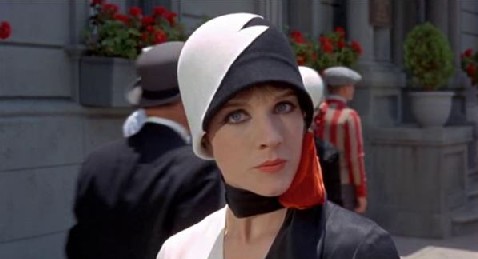
One of my biggest failings when it comes to cinema viewing is the naive belief that an actor or actress whom I’ve seen and appreciated for the first time will necessarily be fantastic in all their subsequent films that I watch. Thus, having watched The Sound of Music—and raved over every single element of it, especially Julie Andrews—I began searching out other films that starred Julie Andrews, in the childish hope that they’d all be as fabulous as The Sound of Music.
Alas, no. This one, for instance, made only two years after the von Trapp saga, is nowhere close to as endearing. Julie is superb as the 20’s flapper girl Millie Dillmount, trying her best to be hard-heartedly modern, but the film is a bit of a drag.

Continue reading

Ty Candy: The Beauty of Tyrone Power

In the film This Above All, Joan Fontaine’s character tells Tyrone Power’s character: “Oh, you’re rather good-looking, really. Nice sort of face. Nose a little on the fine side, mouth a little too big. One of your ears sticks out a little more than the other… did you know, your face is slightly lopsided?! [giggles]… but your eyes are good, nice deep brown.”

So, in celebration of those eyes, that fine nose and that nice sort of face: a Ty candy post (as bollyviewer commented, Tyrone Power’s name can be punned endlessly!)

To begin with, a shot from one of his earliest films, Suez (1938). He looks so wistful and downright beautiful here, very different from in his later films:

Continue reading

The Mark of Zorro (1940)

If there’s one film that’s quintessential Tyrone Power, it’s this one. The Mark of Zorro changed Tyrone Power from being just a pretty face to being a pretty face who could also do some very fancy stunts with a sword in hand. It made him a swashbuckling star, a stereotype that was to stick with him for a while, even though he tried to shake it off with roles like that in Nightmare Alley.
And what a film. What a rollicking, enjoyable, delightful film! I love every bit of it, and have been looking forward to sharing the joy with everybody ever since I first saw it, a few months back. So, without more ado, here goes.

Continue reading