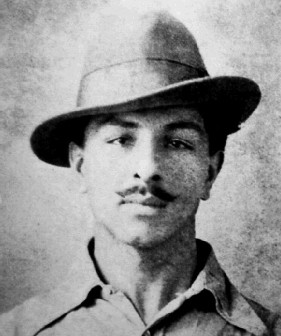
Kaala Paani (1958)

Today is the 100th birth anniversary of one of my favourite Hindi film directors, the suspense-specialist Raj Khosla (I hasten to add: I am well aware that that’s a generalization, since Khosla made a lot of films, too, that had nothing to do with the thriller/suspense genre: Mera Gaon Mera Desh, for example; Chirag, Main Tulsi Tere Aangan Ki, Do Badan, etc). But it is Khosla’s prowess with this particular genre that I especially admire, a skill and talent he showcased in classics of the genre such as Woh Kaun Thi? ((1964), Mera Saaya (1966), CID (1956) and Kaala Paani (1958). In each of these films, he managed to combine the classic elements of the Hindi masala film—a romance, a comedic side track, lots of fabulous songs—while making sure that the suspense remained (mostly) taut, the mystery a solid one.

To commemorate Khosla’s birth centenary, I wanted to review one of his suspense films. Several of these (CID, Mera Saaya, Ek Musaafir ek Haseena, Woh Kaun Thi?) I have already reviewed; I was torn between some of the others: Solva Saal, Kaala Paani, and Anita, all of which I have seen at some time or the other. I decided, eventually, that it was time to rewatch Kaala Paani, a film that I’ve watched several times, but too far back to have reviewed it on this blog.

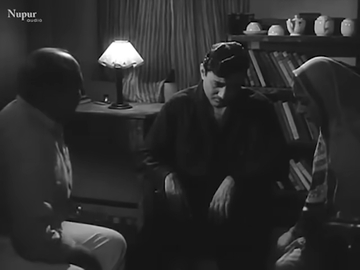
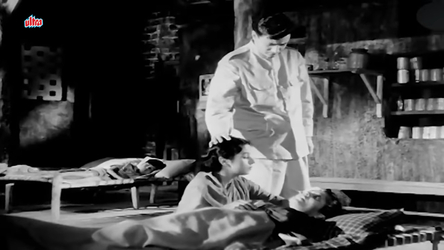
The story begins on a night in Bombay, with a woman (Mumtaz Begum) hurrying through the streets to the home of a family friend, Mr Kapoor (?). She is in great distress, and confides in Kapoor: Karan has discovered the truth. What this truth is we discover when Kapoor hurries to Karan’s home to find Karan (Dev Anand) sitting, looking bereft. He has found out (how, we aren’t told) that his father Shankar Lal has, for the past fifteen years, been incarcerated in Hyderabad jail for the murder of a tawaif named Mala. Not, as Karan has been led to believe all these years, dead.
Continue reading

Kaala Bazaar (1960)

The first time I watched Kaala Bazaar was perhaps in my early teens: the film was being shown on Doordarshan, and given that back then I was very fond of Dev Anand, I watched it. I have very vague recollections of that viewing. What I do recall, vividly, is that I didn’t like that my hero was a criminal.

… which, as I came to realize later, was actually not so very uncommon a style for the characters Dev Anand played. Unlike the other major romantic hero of the time, Shammi Kapoor, Dev Anand didn’t just play characters who got up to ‘mischief’, so to say; his characters—from Tony in Jaal to Raju in Guide, from Chhagan in Roop ki Rani Choron ka Raja to Babu in Bambai ka Babu, plus others—were outright criminals: thieves, conmen, smugglers, men definitely on the wrong side of the law.

Like Raghubir ‘Raghu’ in Kaala Bazaar. Raghu is a bus conductor when the story begins, and within the space of a couple of minutes, his life takes an about-turn. A belligerent passenger is standing in the bus (which is against the rules), and when Raghu asks him to get off the bus, the man refuses. Both he and Raghu lose their tempers. Fists fly, and the next thing we know, Raghu is without a job.

Raghu’s mother (Leela Chitnis) is ill, and he has a sister (Nanda) and a young brother (?) as well; he cannot afford to be without a job. Desperate, Raghu flounders about, trying to find work. If not work, money.

Continue reading

Funtoosh (1956)

Today may (or may not) be the birth centenary of the film maker, writer, and actor Chetan Anand, eldest brother of Dev Anand and Vijay Anand. Different sources list different dates of birth: most sites (including IMDB) list his birth date as January 3, 1921; others, including Wikipedia (yes, I know not the most reliable of sources) say it’s January 3, 1915. (This article says it’s 1921, but then goes on to write that Chetan Anand was 27 years old in 1943, which is either dodgy maths or a suggestion that the year of birth was indeed 1915). The article, barring that slip, is a good, interesting introduction to the life and career of Chetan Anand.

Anyway. Even if I’m six years too late to the party, at least today is Chetan Anand’s birthday.

Continue reading

Ek Phool Chaar Kaante (1960)

Sunil Dutt and Waheeda Rehman. The two names themselves conjure up a mix of everything from Pyaasa to Mother India, from Gumraah to Kaagaz ke Phool. Sunil Dutt, whom I tend to associate either with suspense films (Humraaz, Mera Saaya) or angst-ridden (or otherwise philosophical, socially relevant films like Railway Platform or Sujata. Okay, he did do Postbox No 999 and Padosan, but still… Waheeda, whose films with Guru Dutt did showcase her prowess as an actress, but which also tended to paint her as a ‘serious’ actress—although in her case, films like Solvaa Saal and 12 O’Clock showed that she could be as convincing in peppy and light-hearted roles as many of her contemporaries.

If that’s your impression of Dutt and Rehman—two actors who appeared in mostly grim films—this rom-com is worth seeing just for a different, fun, side to both of them.

Continue reading

Jhuk Gaya Aasmaan (1968)

Rajendra Kumar is one of those actors whom I’ve repeatedly mentioned as ‘not being one of my favourites’. Saira Banu, beyond her first few films (notably, Junglee and Shaadi), I find too shrill for my liking. Despite the fact that these two star in Jhuk Gaya Aasmaan, it remains one film I like a good deal—because it has such an unusual story.

A story to which there’s a brief nod in the first scene. Sanjay (Rajendra Kumar) and Priya (Saira Banu) meet in what looks like an obviously ‘indoor set’ representation of a cliff. There’s a little banter, she insisting that he’s irritating her with his wooing, he professing his love for her and asserting that he could do anything for her—even give up his life. Priya eggs him on: yes, please. Go ahead. Show us.

Priya begs Sanjay to jump off Continue reading

Maya (1961)

A wealthy young man strikes out on his own to see how the rest of the world lives. He pretends to be poor, goes to live in a community of poor people, and falls in love with a poor girl who doesn’t realise he’s a wealthy man. Starring Dev Anand as the protagonist.
Asli-Naqli? No. Interestingly, not. This was Maya, made just a year before Asli-Naqli, but with a very similar storyline.


Continue reading

Teesri Kasam (1966)

One reason I’m glad I began this blog is that, because of it, I’ve met (although in most cases only in cyberspace) a lot of other people who are as enthusiastic about cinema as I am. Through these friends, I’ve been introduced to ‘new’ old films, to songs and directors and actors and styles of cinema that I hadn’t known before. Occasionally, too, my friends have been able to persuade me to give up a prejudice and watch a film I had no great expectations from. This is one of them.

At least four fellow bloggers/readers/friends – Yves, Bawa, Harvey and Pacifist – had been advising me, for a while now, to watch Teesri Kasam. I was assured that Raj Kapoor wasn’t at all Chaplinesque (something I dread in RK’s films) here, and that the film itself was excellent. I’d been trying to get hold of Teesri Kasam too, but the DVD rental company I subscribe to never seemed to have it in stock. Finally, last Sunday, I watched the film on Youtube. And yes, it is a wonderful film. Sensitive, lyrical, quiet, and easy to like.

Continue reading

Shaheed (1965)

One thing that has long puzzled me is Bollywood’s reluctance to do real life stories. Where Hollywood has created films on the lives of people ranging from Napoleon’s one-time fiancée to an obscure British missionary in China, we have, to show for years of fascinating history… Shahjehan and Changez Khan, both so badly warped that they bear little resemblance to fact. Dr Kotnis ki Amar Kahani is a refreshingly unusual film in being relatively accurate, as well as entertaining—but a flash in the pan.

Our generally avid enthusiasm for the freedom movement and its exponents gave me hope that Shaheed, the story of Bhagat Singh, might be worth a watch. This, after all, was the young man who inspired an entire slew of films, beginning with (or so Wikipedia would have us believe) a film in 1954, followed by a 1963 film starring Shammi Kapoor, and this one: the first of Manoj Kumar’s many patriotic films. There have been later films—2002, for instance, saw two films, one a superb one starring Ajay Devgan and the other with Bobby Deol as Bhagat Singh—but Shaheed was the first major Bhagat Singh story.

Continue reading

Jaagte Raho (1956)

As I’d mentioned in my last post, I’m not much of a Raj Kapoor fan. I have seen most of his films, but I like very few of them. Jaagte Raho, a flop when it was first released (even though it won an award at Karlovy Vary) is one of the exceptions: an RK film that I found engrossing and worth the watch. Part of it probably is the fact that it features a veritable who’s who of 50’s Hindi cinema character actors. Part of it is due to Salil Choudhary’s superb music. And more than that, it’s because this is a well-scripted story, socially relevant in a tongue-in-cheek way.

Continue reading

Sahib Bibi aur Ghulam (1962)

After all the lightheartedness of the past few posts, time to get back to serious stuff. I had three none-too-cheery films lined up: Khamoshi, Andaz, and this one. Sahib Bibi aur Ghulam had been popping up in some recent posts (one song was part of the daaru list, and a discussion on Jawahar Kaul—one of the leads in Dekh Kabira Roya—ended up with a general wondering of what role he played in Sahib Bibi aur Ghulam). So Sahib Bibi aur Ghulam it was, a rewatch of a memorable film with some fine performances and superb music.

Meena Kumari and Rehman in Sahib Bibi aur Ghulam

Continue reading