Sapan Suhaane (1961)

Starring Balraj Sahni and Geeta Bali. With music by Salil Choudhary.

How could I—with a well-established reputation for watching films based on a single name I like among the crew and cast—pass up this one? Balraj Sahni is a favourite, as is Geeta Bali. And Salil Choudhary is one of those rare music directors for whom I’ll watch a film (even if I could just as well just listen to a playlist of the songs online).

These three were the reason I watched Sapan Suhaane, and I’ll admit that till more than midway through the film, I was congratulating myself on having stumbled on a hidden gem. Or, if not strictly a ‘gem’, at least a film that was watchable enough. After that…

But to start at the very beginning, when we are introduced to Shankar (Balraj Sahni) and his younger brother Dilip (Chandrashekhar). Shankar and Dilip are stepbrothers, but deeply devoted to each other. Shankar has given up his own comfort, his own prospects, in order to work so that he can finance Dilip’s studies.

Continue reading

Tumse Achha Kaun Hai (1969)

Lalita Pawar plays an ageing and very wealthy woman who employs a man (played by Shammi Kapoor) to reform her granddaughters, who are getting too wild for her liking. The man, poor and in desperate need of money to pay for the treatment of an ailing family member, takes up the offer, even though it will require him to pretend to be someone he’s not. In the process, he ends up falling in love with one of the granddaughters—much to the annoyance of the indignant grandmother.

This was the gist of the story of Professor (1962), though with one qualification: Shammi Kapoor’s Preetam in that film is initially hired just as a tutor for the younger brothers of the granddaughters; it’s only a little later that he’s also given the task of tutoring the young women. It was, as I’ve said on more than one occasion—and of course in my review of the film—a delightfully entertaining film, romantic and fun and with absolutely fabulous music.

Seven years later, Shammi Kapoor acted in another film with a somewhat similar plot. Here, in Tumse Achha Kaun Hai, he is Ashok, a musician; and Lalita Pawar plays Sarojini Devi, the very wealthy woman who approaches him with a proposition: that he take on the task of setting to rights her granddaughters, all three of whom (she feels) are a disgrace to Sarojini Devi.

Continue reading

Aandhiyaan (1951)

In 1951, fresh from the success of the Dev Anand-Geeta Bali-Kalpana Karthik starrer Baazi, Chetan Anand decided to make a film that would highlight the very interesting aspects of film-making he had been learning from studying the works of various European directors. ‘Based on a true incident that took place in Amritsar’, as the film’s credits read, the story of Aandhiyaan was written by Chetan Anand himself, along with Hameed Butt.

The film’s credits roll to an unusual sequence of shots: in each frame, one actor or the other is shown, battling the eponymous ‘aandhi’ or storm, though in this case literal rather than metaphorical.

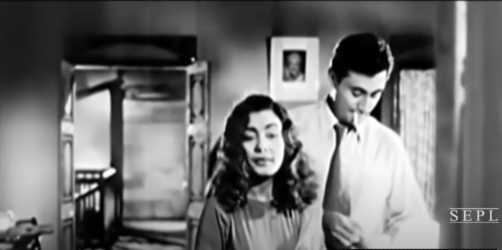
The story is centred round a young and zealous lawyer named Ram Mohan Kapoor (Dev Anand). Ram lives upstairs from his munshi (Ratan Gaurang), whose daughter Rani (Nimmi) has long been in love with Ram, though she’s too shy to let him know that. When the story begins, Ram’s mother (Durga Khote) is due to arrive, and Ram is getting ready to go to fetch her from the station. Rani makes tea for him, and an excited Ram confides in her: he’s asked his mother to come because he wants her to fix a match for him. With a girl he likes a lot.

Continue reading

Nastik (1954)

A hundred years ago, on January 27, 1922, in Golconda (Hyderabad) was born Hamid Ali Khan, known to thousands of Hindi film viewers (and, even thousands more who have perhaps never watched any of his films) as Ajit. The man of ‘saara shahar mujhe loin ke naam se jaanta hai’. The iconic villain, suave and eerily soft-spoken though at the same time very oily and dangerous, of films like Zanjeer, Yaadon ki Baaraat, and Kalicharan. The baas of Raabert and Lilly (who was constantly being told not to be silly).

But long before he became the stuff of really bad jokes, before he attained the stature of one of Hindi cinema’s greatest onscreen villains, Ajit was a hero. Coming to Bombay in the face of parental opposition (having first sold his college books to finance the trip), Ajit had to struggle a lot to find work in the cinema industry. He began as an extra, and worked in several films until being noticed by the Gujarati-Hindi director Nanabhai Bhatt (Mahesh Bhatt’s father) who not only gave him the screen name Ajit, but also launched him in a leading role. Across the 50s and 60s, Ajit acted in a slew of films, both as leading man (Nastik, Dholak, Baradari, Marine Drive, Tower House, Opera House, etc) as well as in major supporting roles (of special note here are Naya Daur and Mughal-e-Azam, in both of which he appeared alongside Dilip Kumar).

Continue reading

Aakhri Dao (1958)

This was one film where I had a tough time making up my mind: should I review it? Should I not? It’s not a great film, but it’s not absolutely abysmal either. And it has a luminously lovely Nutan, plus some superb songs (courtesy Madan Mohan and Majrooh Sultanpuri) to compensate for other drawbacks in the film. It’s also a film about a murder (as macabre as that may sound, always something that catches my attention).

If for nothing else, as an example of a film that could have been pretty good but ends up a damp squib, this, I decided, was worth reviewing.

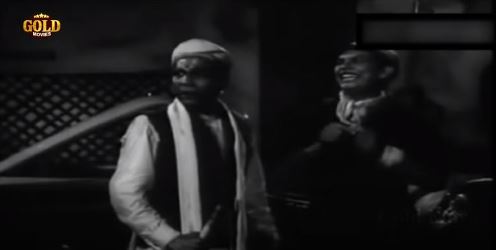
The story centres round Raj Kumar Saxena ‘Raju’ (Shekhar), a mechanic who works in a garage, and lives in a tiny room above the garage along with his friend and colleague Popat (Johnny Walker). Popat has been having a chat with a wealthy customer, Muthuswami Chetiyar (Mirajkar) and is keen on getting Muthuswami to invest in a garage for Popat. The incentive Popat offers is a match for Muthuswami’s daughter: Raju, he says, will be a fine bridegroom. Because he guesses Muthuswami will not be eager to marry his daughter to a mechanic, Popat takes care not to let on that the groom he has in mind is that figure hunched over a car at the other end of the garage…

Continue reading

Ram aur Shyam (1967)

I wanted to watch a Dilip Kumar film to commemorate the life and career of this extraordinary actor. But which one? There are lots of iconic Dilip Kumar films that I have either seen long ago (Devdas, Footpath, Daag, Deedaar, Udan Khatola, Andaaz) and not reviewed on this blog, or which I’ve never seen (Tarana, Jugnu, Mela, Shaheed, Musaafir). I could watch a film I’d never seen before, but—knowing what a lot of Dilip Kumar’s early films are like—there was always a chance I’d run up against something depressing.

I finally decided to rewatch a film I’d seen years ago. A film that’s a good showcase of Dilip Kumar’s versatility, his ability to pull off comic roles as well as the tragic ones for which he was better known. Ram aur Shyam is an out-and-out entertainer, a film I’d watched and loved as a teenager, and which I knew for a fact would cheer me up.

Continue reading

Door Gagan ki Chhaaon Mein (1964)

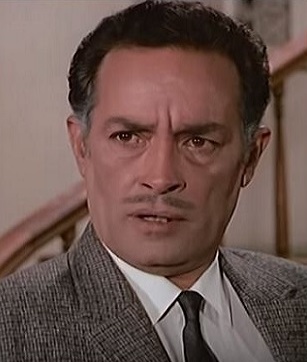
Just ten days ago, this blog celebrated the birth centenary of an actor who pretty much came to exemplify the ‘Hindi film villain’ of the 50s and 60s: the inimitable Pran. Today, it’s time to celebrate the birth centenary of another actor who carved such a niche for himself that his name became nearly synonymous with a particular kind of role. Iftekhar, who brought so much dignity and intelligence to his usual role of police officer or lawyer—or army officer, or doctor…

Continue reading

Sitaaron Se Aage (1958)

When I was reading Balaji Vitthal and Anirudha Bhattacharjee’s The Prince Musician, I came across a mention of this film, which I had never heard of. But the songs listed as being part of Sitaaron Se Aage were familiar to me, and both leads—Ashok Kumar and Vyjyanthimala—are among my favourites. Recently, reading HQ Chowdhury’s Incomparable Sachin Dev Burman, I was reminded again of Sitaaron Se Aage, and decided it was high time I watched it.

And what a showcase of SD Burman’s music this film is—right from the start. It begins with Sambhalke yeh duniya hai nagar hoshiyaaron ka, with Lattu (Johnny Walker) and his cronies, the pickpockets Bajjarbattu and Nikhattu, going about relieving passersby of their belongings. The three end up outside a theatre, where the superstar actor Rajesh (Ashok Kumar) has just completed yet another highly-acclaimed performance.

Continue reading

Poonam ki Raat (1965)

One style of mystery story popular in the early 60s (though there was the odd film even earlier, like Mahal) was the one where the suspense includes a seemingly supernatural element. A woman in white, singing a ghostly song of eternal yearning as she wanders half-seen (or unseen) through the gloom. Woh Kaun Thi?, Yeh Raat Phir Na Aayegi, Bees Saal Baad, Gumnaam, Raaz: all of them used this trope to the hilt.

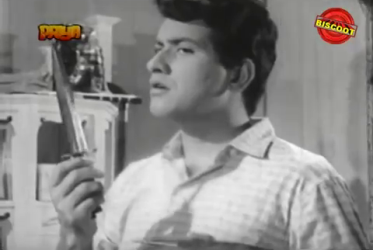
As did this relatively lesser-known film [and you’ll probably realize, by the end of this post, why it’s little-known]. Poonam ki Raat was made by actor/writer/director Kishore Sahu, who played an important role in this film, the star of which was Manoj Kumar, quite a veteran of these suspense thrillers.

Manoj Kumar in Poonam ki Raat

Continue reading

Majhli Didi (1967)

Let me begin this review with a quick confession: I don’t cry easily while watching films.

I didn’t sob my heart out while watching Majhli Didi either. But I had a lump in my throat during several scenes, and I wiped away more than a couple of tears.

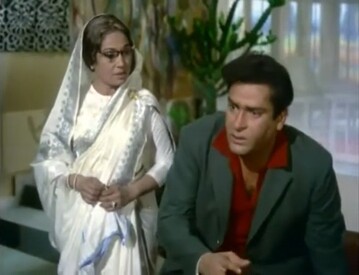
Meena Kumari in and as Majhli Didi.

Continue reading