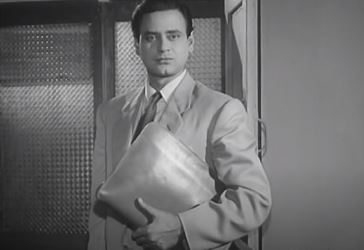
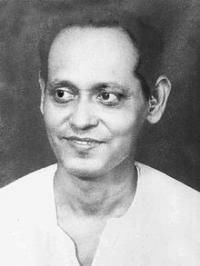
Jaal (1967)

I had first watched this film many, many years ago, probably as a young teen. It had been aired on Doordarshan, back in the good old days when our family used to watch pretty much every film that was shown (including some seriously grotty ones like Fauji).

I remembered little of Jaal: Mala Sinha and Biswajeet, yes; and that it was a suspense thriller set in a spooky mansion beside the sea. That was all.

While I don’t like Biswajeet, and the music of Jaal (by Laxmikant-Pyarelal) is forgettable enough to not want to watch it for the songs, I decided I should give this one another try. At least find out what it’s about.

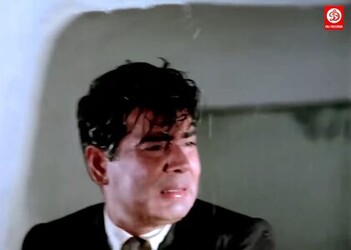
The story begins on a stormy night at sea. A small boat is tossed about on the waves, and we catch glimpses of the lone man on board: Sunder Singh (Sujit Kumar) as he tries to control his vessel. In the distance can be seen (like the boat and the waves, looking patently artificial) a lighthouse. Sunder, however, cannot make it safely to shore; his boat crashes against the rocks and explodes in a great burst of fire.
Continue reading

Himalaya ki God Mein (1965)

I realized the other day that there are umpteen well-known old films that I have seen but have never got around to reviewing on this blog—invariably because I had watched them before I started Dustedoff, and because there were so many ‘new’ old films to watch and write about, I never got around to rewatching stuff. It’s time to amend that, and revisit some films that perhaps should be talked about.

To begin with, Himalaya ki God Mein. Directed by Vijay Bhatt, Himalaya ki God Mein beat Haqeeqat and Waqt to win the Filmfare Best Film Award, and was a superhit. I had watched this donkey’s years ago, when it was telecast on Doordarshan. I remembered almost nothing of it except the fact that Manoj Kumar played a city doctor who relocated to the mountains to treat villagers and ended up falling in love with a village girl played by Mala Sinha. That was it. Time for a rewatch, I decided.

The film begins at night, on an aeroplane where Dr Sunil (Manoj Kumar) and his fiancée, also a doctor, Neeta (Shashikala) are travelling. Another passenger on the plane suddenly clutches his chest; Sunil examines him, diagnoses a heart problem, and asks that the plane land immediately.

Continue reading

Night in London (1967)

In which Biswajeet’s character ends up facing a wall studded with red-hot spikes. You don’t just skewered to death, you get barbecued in the process.

Continue reading

Lukochuri (1958)

This film has been on my watchlist for a long time—many people, over the years, have recommended it to me as a good Bengali comedy—so when, on my ‘double roles’ post someone mentioned it, I decided it was high time I watched Lukochuri (‘Stealth’). I was a little sceptical; Kishore Kumar tends to go over the top when doing comedy, to the extent that I find him positively irritating in films like Half Ticket, Jhumroo, Naughty Boy, etc. But a Bengali film, I thought, might have a more sophisticated sense of humour? One could only hope.

The story starts in Jabalpur, where Kumar Chaudhury ‘Buddhoo’ (Kishore Kumar) is getting ready to leave for Bombay. Buddhoo works for a company which has transferred him to Bombay, and Buddhoo is bidding farewell to his father (Moni Chatterjee) and his Pishima (?), his father’s sister, who lives with them.

Continue reading

Apradhi Kaun (1957)

The world of Hindi cinema is peppered with names that anyone familiar with the industry (at least the industry of the 50s and 60s) can quickly slot into categories. Star. Villain. Comedian. Character actor. There are many, many names that automatically fall into (almost exclusively) one of these categories. Those that have shifted from one category to another—like Pran, for instance, once the quintessential villain but in later years the more interesting ‘good man’, or Ajit and Premnath, both initially hero and later villain—have again usually not done too many shifts.

Abhi Bhattacharya is one of those relatively rare individuals who seem to have appeared in a wide variety of roles, a wide variety of films. He was the idealistic school teacher of Jagriti, the ‘other man’ of Anuradha. The kind-hearted, principled example of the bhadralok in films like Amar Prem, and the straying older brother of Dev Anand in Love Marriage. He played Krishna and Arjun and Vishnu (the latter in a slew of mythologicals). He even played the villain, in the Vinod Khanna-Yogita Bali starrer, Memsaab.

This year marks the birth centenary of Abhi Bhattacharya (as far as I’ve been able to find out, he was born in 1921, though I’ve not been able to discover exactly when in 1921). To commemorate his career, I wanted to watch a Bhattacharya film, but a dilemma presented itself: which one? Hindi or Bengali? (since Bhattacharya had what seems to have been a very successful career in Bengali cinema as well). Eventually, I homed in on this film, a rare whodunit in Hindi cinema that’s pretty well made too.

Continue reading

Love Marriage (1959)

Today is the birth centenary of the Indian director, writer and producer Subodh Mukherji. While Mukherji doesn’t have a huge list of films to his name—barely a dozen—the majority of the films he did make proved to be very successful ones, big entertainers that had great music, starred beautiful people, and were generally good time-pass, if nothing else.

Born in Jhansi on April 1, 1921, Subodh Mukherji was jailed for three months in 1942 for his activities as part of the Indian freedom movement. Subsequently, at the behest of his family, he was made to go to Bombay to join his elder brother Sashadhar Mukherji (who had established Filmistan Studios along with Madan Mohan’s father, Rai Bahadur Chunilal; Ashok Kumar; and Gyan Mukherjee). It was for Filmistan that Subodh Mukherji made his first film, writing and directing Paying Guest (1957), though he also took time off in between to direct Munimji (1955). Through the late 50s and the 60s, Mukherji was to go on to write, produce, and/or direct several films that exemplified his philosophy of making films that told entertaining stories: Junglee (1961), Love Marriage (1959), Shagird (1967, starring Sashadhar Mukherji’s son, Joy Mukherji).

Continue reading

Dil Tera Deewaana (1962)

Shammi Kapoor plays a wealthy man who pretends to be poor while far away from home. He falls in love with the only daughter of a poor blind man. Pran comes along and throws a spanner in the works.

Kashmir ki Kali? Yes, but also Dil Tera Deewaana.

It’s been a long while since I reviewed a Shammi Kapoor film, and considering he happens to be my favourite actor, I decided it was high time I revisited one of his films. I’d watched Dil Tera Deewaana many years back and remembered just the bare bones plot (besides the title song, which I don’t really care for). I did remember, though, that it was fairly entertaining as a film.

Continue reading

Suhaagan (1964)

I’ve had this film on my radar for a long time. I first came across a mention of it online about ten years ago, and since Guru Dutt had acted in so few films, I was curious about this one (which, incidentally, was also his last film). Back then, I used to subscribe to a video rental service, and having found Suhaagan on that, ordered it—and what I got was the absolutely execrable, horribly regressive Suhaagan that starred Geeta Bali [if ever I decide to draw up a list of Hindi films you must not watch, that Suhaagan will be on it].

The Guru Dutt-Mala Sinha Suhaagan, which several people on my blog have mentioned in the past (including fairly recently), and which I’d searched for on Youtube now and then, finally cropped up in Youtube’s recommendations for me. So I bookmarked it.

Continue reading

Humsaaya (1968)

In which Joy Mukherji single-handedly (with some help from the snow-clad Himalayas) defeats an invading army of Chinese guerrillas, thus lending a whole new meaning to the phrase ‘humsaaya aasmaan ka’.

Continue reading

Hamlet (1954)

Today, April 23, 2016, marks the 400th death anniversary of one of English literature’s greatest writers, a man who had a huge hand in making English what it is today. Though William Shakespeare’s date of birth is unknown, he died on this day, nearly 52 years after he was baptized. In less than half a century, he created a corpus of work that has endured—and continues to spawn adaptations by the dozen in popular culture—ever since.

Shakespeare, died April 23, 1616

Continue reading