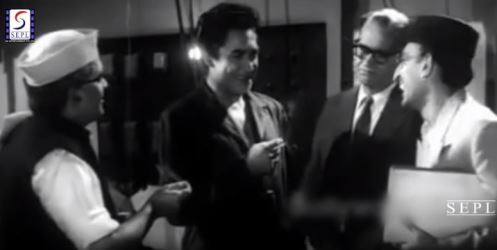
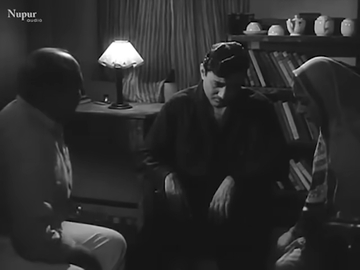
Kaala Paani (1958)

Today is the 100th birth anniversary of one of my favourite Hindi film directors, the suspense-specialist Raj Khosla (I hasten to add: I am well aware that that’s a generalization, since Khosla made a lot of films, too, that had nothing to do with the thriller/suspense genre: Mera Gaon Mera Desh, for example; Chirag, Main Tulsi Tere Aangan Ki, Do Badan, etc). But it is Khosla’s prowess with this particular genre that I especially admire, a skill and talent he showcased in classics of the genre such as Woh Kaun Thi? ((1964), Mera Saaya (1966), CID (1956) and Kaala Paani (1958). In each of these films, he managed to combine the classic elements of the Hindi masala film—a romance, a comedic side track, lots of fabulous songs—while making sure that the suspense remained (mostly) taut, the mystery a solid one.

To commemorate Khosla’s birth centenary, I wanted to review one of his suspense films. Several of these (CID, Mera Saaya, Ek Musaafir ek Haseena, Woh Kaun Thi?) I have already reviewed; I was torn between some of the others: Solva Saal, Kaala Paani, and Anita, all of which I have seen at some time or the other. I decided, eventually, that it was time to rewatch Kaala Paani, a film that I’ve watched several times, but too far back to have reviewed it on this blog.

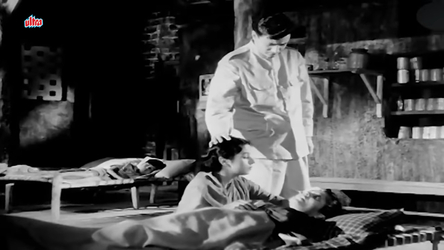
The story begins on a night in Bombay, with a woman (Mumtaz Begum) hurrying through the streets to the home of a family friend, Mr Kapoor (?). She is in great distress, and confides in Kapoor: Karan has discovered the truth. What this truth is we discover when Kapoor hurries to Karan’s home to find Karan (Dev Anand) sitting, looking bereft. He has found out (how, we aren’t told) that his father Shankar Lal has, for the past fifteen years, been incarcerated in Hyderabad jail for the murder of a tawaif named Mala. Not, as Karan has been led to believe all these years, dead.
Continue reading

Kaagaz ke Phool (1959)

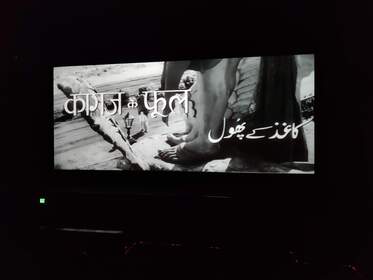
That first photo, because the space beyond the screen is so dark, may not be very obvious as regards context. But this is a photo from a full-sized film theatre, where I watched the re-released Kaagaz ke Phool on July 17th. The re-release was to mark the 65th anniversary of this film, a semi-autobiographical work that was a flop when it was first released, but has gained in popularity ever since. My niece had alerted me to the fact that PVR Inox would be showing Kaagaz ke Phool across its theatres, one show a day for a week, and I knew I couldn’t miss this one. If only for the fact that I get to see precious few old films on the big screen (Hum Dono was the last I saw).

I had thought I’d probably be one of a handful (ten, at the most?) of people in the theatre, because this, after all, is an old film; and this was an afternoon show on a weekday. But to my surprise, there were actually quite a few people, and—best of all—many of them were fairly young. Heartening.

But, to get to the film.

Continue reading

Kaala Bazaar (1960)

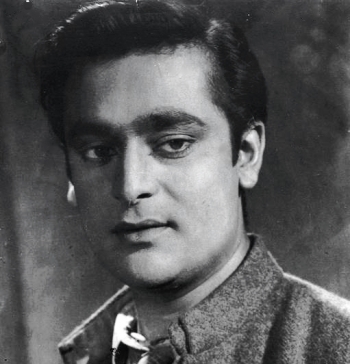
The first time I watched Kaala Bazaar was perhaps in my early teens: the film was being shown on Doordarshan, and given that back then I was very fond of Dev Anand, I watched it. I have very vague recollections of that viewing. What I do recall, vividly, is that I didn’t like that my hero was a criminal.

… which, as I came to realize later, was actually not so very uncommon a style for the characters Dev Anand played. Unlike the other major romantic hero of the time, Shammi Kapoor, Dev Anand didn’t just play characters who got up to ‘mischief’, so to say; his characters—from Tony in Jaal to Raju in Guide, from Chhagan in Roop ki Rani Choron ka Raja to Babu in Bambai ka Babu, plus others—were outright criminals: thieves, conmen, smugglers, men definitely on the wrong side of the law.

Like Raghubir ‘Raghu’ in Kaala Bazaar. Raghu is a bus conductor when the story begins, and within the space of a couple of minutes, his life takes an about-turn. A belligerent passenger is standing in the bus (which is against the rules), and when Raghu asks him to get off the bus, the man refuses. Both he and Raghu lose their tempers. Fists fly, and the next thing we know, Raghu is without a job.

Raghu’s mother (Leela Chitnis) is ill, and he has a sister (Nanda) and a young brother (?) as well; he cannot afford to be without a job. Desperate, Raghu flounders about, trying to find work. If not work, money.

Continue reading

Chalti ka Naam Gaadi (1958)

In response to that unwarranted comment about me ‘wasting my time watching silly Indian films’, I’ve done something (reviewed Bhabhi ki Chudiyaan and Devi) to uphold my contention that all Indian films are not silly. Now it’s time to look at Indian films which are silly, but where the silliness is intelligent, and deliberate.

What, after all, is wrong with silliness, or with humour? For me, the stuffy idea that humour is somehow low is very irritating. Some humour may be unpalatable to certain people (I, for one, find nothing humorous about sexist or racist jokes, or toilet humour), but humour can be sophisticated, it can be the result of a great intelligence.

As, I think, comes through in this delightful film about three brothers, all motor mechanics, who run a garage.

Brijmohan Sharma ‘Bade Bhaiya’ (Ashok Kumar), as he’s known, is the eldest of the three, and he rules with an iron fist in an iron gauntlet.  Bade Bhaiya is a hard taskmaster, and lords it over Jagmohan ‘Jaggu’ (Anoop Kumar) and Manmohan ‘Manu’ (Kishore Kumar), as also their apprentice Maujiya (Mohan Choti). One important aspect of Bade Bhaiya’s personality is his aversion to women: he sees red even when Maujiya hangs up a calendar with a painting of a woman on it.

Continue reading

Ek Nazar (1951)

June 23, 2021 marked the birth centenary of one of my favourite actors, the very talented and charismatic Rehman. Born Sayeed Rehman Khan in Lahore, Rehman joined the Royal Indian Air Force in 1942 and underwent training at Pune as a pilot. The Air Force soon lost its charm for Rehman (he failed a test) and he went off to Bombay to join the cinema industry. Initially taken on as a third assistant director by the writer-director Vishram Bedekar for Bedekar’s film Lakharani (1945), Rehman went on to assist director DD Kashyap in the film Chaand, where, completely by chance, Rehman appeared onscreen. In a dance sequence in the film, a Pathan character was needed—and the only person around who knew how to tie a turban the Pathan way was Rehman. And he knew how to tie it only around his own head.

The Hindi proverb ‘Daane-daane pe likha hai khaane waale ka naam’ comes to mind.

Rehman was required to say a couple of lines in that brief appearance, and fluffed it repeatedly; thirty takes were required to get it right, possibly because the first line began with a K: “Kitna achha naach thha”. Rehman, even years later, and as a seasoned actor, found it very difficult to begin a dialogue with the K sound and would request that a different word be substituted, or the words moved around.

Rehman had enough of a presence for his potential as an actor to be recognized, and he went on to act as a lead, working opposite major actresses like Madhubala, Suraiya, Nalini Jaywant and Nigar Sultana.

Continue reading

Composers sing for themselves: Ten songs

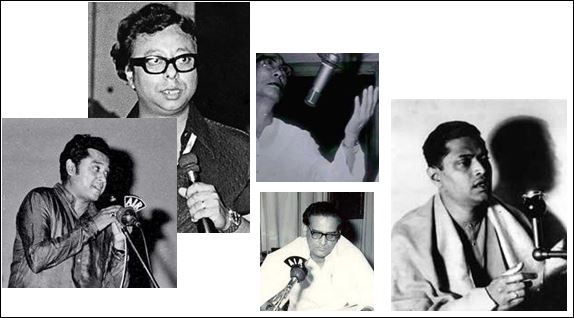
No, I don’t mean all those many renditions of Mae ri or Naina barse that one comes across, sung by Madan Mohan himself. I mean instances where a composer actually recorded—and it was included in the film in question—a song in his/her own voice.

This idea popped into my head one day when I was watching Baradari and came across a song that Nashad (the composer of the film’s score) sang in his own voice. It made me wonder: were there other composers, too, who had sung songs for their own films (I cannot, offhand, think of any composers—not also major playback singers—who have sung for other composers. SD Burman singing for RD Burman’s music is perhaps one of the exceptions). Of course, some names immediately came to mind: SD Burman, naturally, since I love his voice so much. RD Burman, who was also a good singer. Nashad, since his song had been the one that had sparked off this idea in the first place.

And, quickly, one after the other, more songs, more singers/composers, followed. So here it is, my list of ten songs that were both composed by and sung by the same person. As always, these are all from pre-1970s films that I’ve seen.

Continue reading

Funtoosh (1956)

Today may (or may not) be the birth centenary of the film maker, writer, and actor Chetan Anand, eldest brother of Dev Anand and Vijay Anand. Different sources list different dates of birth: most sites (including IMDB) list his birth date as January 3, 1921; others, including Wikipedia (yes, I know not the most reliable of sources) say it’s January 3, 1915. (This article says it’s 1921, but then goes on to write that Chetan Anand was 27 years old in 1943, which is either dodgy maths or a suggestion that the year of birth was indeed 1915). The article, barring that slip, is a good, interesting introduction to the life and career of Chetan Anand.

Anyway. Even if I’m six years too late to the party, at least today is Chetan Anand’s birthday.

Continue reading

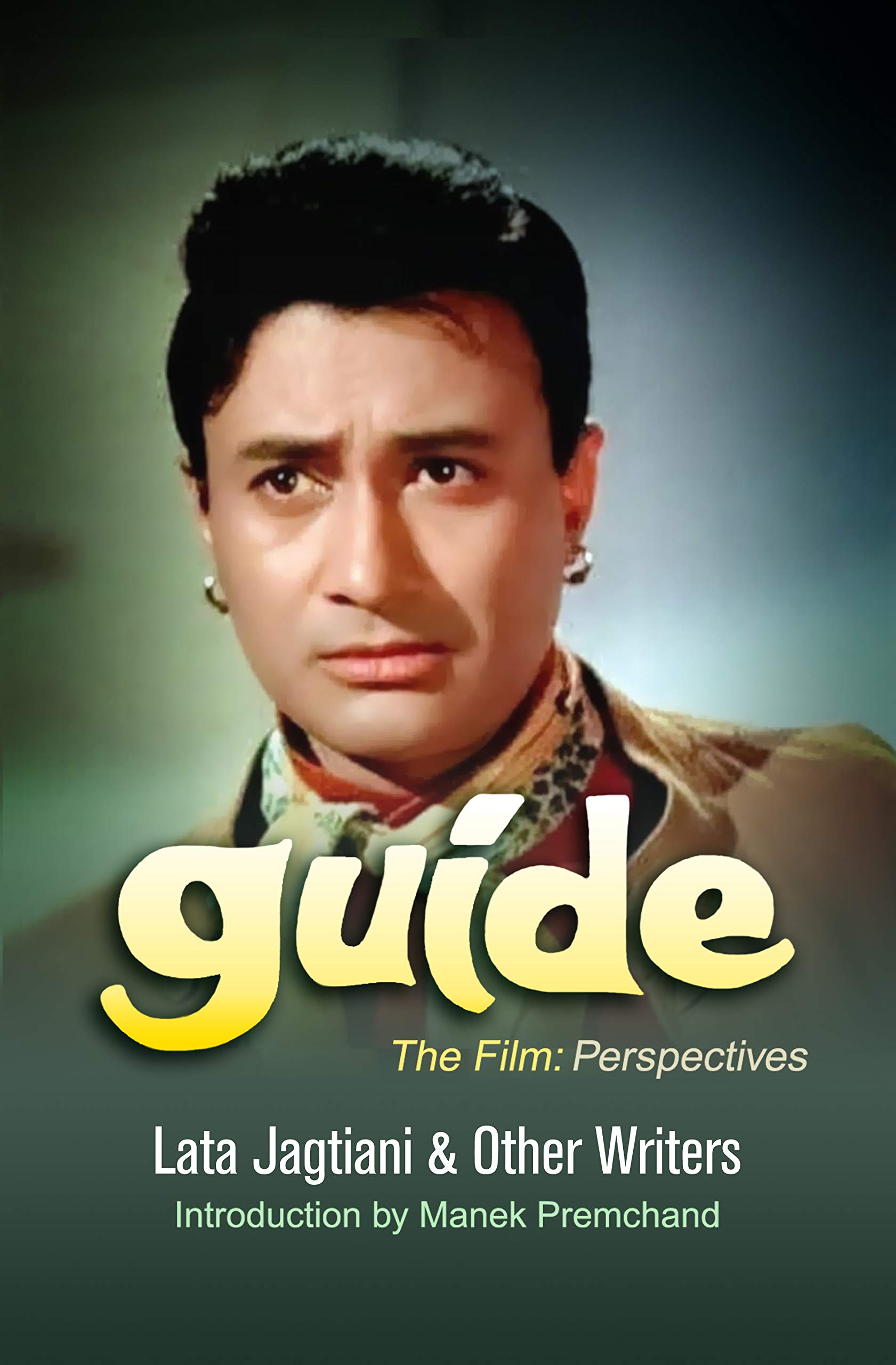
Book Review: Guide, The Film: Perspectives

I watched Guide for the first time when I was about twelve or so. Till then, all the Hindi cinema I had watched was predictable, comfortable, simple enough for a pre-teen to know what to expect. Or so I thought.

Because Guide defied every norm I thought I understood. Heroes, not even when they were the anti-hero Dev Anand had played in earlier films like Baazi, Kaala Bazaar or House No. 44, did not go anywhere near another man’s wife. Heroines, even when they were married off against their wishes to men other than those they loved (as in Dil Ek Mandir, Gumraah, or Sangam) stayed true to their marriage vows and sooner or later left their past behind (I was to watch Yeh Raaste Hain Pyaar Ke only much later). They absolutely did not leave their husbands and start living with another man.

And heroes did not die. As when I watched Anand, when I watched Guide too, I kept thinking, “This isn’t it. He isn’t dead, he can’t be dead.”

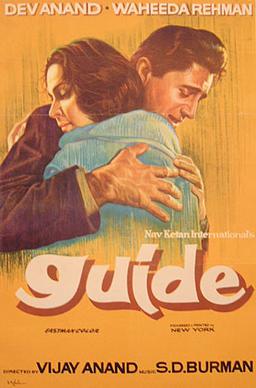
Several years later, I had to study RK Narayan’s The Guide at school, and I pretty much knew what to expect—but once again, I found myself surprised, because the book was in many ways different from the film. The book had won its author the Sahitya Kala Akademi Award (the first book in English to win the award), and the film won accolades by the handful—and continues to do so, fifty-five years after it was released. It has been analyzed, discussed, derided, lauded. Personally, other than for its music and Waheeda Rehman’s dancing, I have never really liked Guide much—but even I, when offered the opportunity to read this collection of essays about Guide, couldn’t resist it. Partly, perhaps, because I hoped to be able to discover what fans of the film saw in it that I didn’t.

Continue reading

Sitaaron Se Aage (1958)

When I was reading Balaji Vitthal and Anirudha Bhattacharjee’s The Prince Musician, I came across a mention of this film, which I had never heard of. But the songs listed as being part of Sitaaron Se Aage were familiar to me, and both leads—Ashok Kumar and Vyjyanthimala—are among my favourites. Recently, reading HQ Chowdhury’s Incomparable Sachin Dev Burman, I was reminded again of Sitaaron Se Aage, and decided it was high time I watched it.

And what a showcase of SD Burman’s music this film is—right from the start. It begins with Sambhalke yeh duniya hai nagar hoshiyaaron ka, with Lattu (Johnny Walker) and his cronies, the pickpockets Bajjarbattu and Nikhattu, going about relieving passersby of their belongings. The three end up outside a theatre, where the superstar actor Rajesh (Ashok Kumar) has just completed yet another highly-acclaimed performance.

Continue reading

Book Review: HQ Chowdhury’s ‘Incomparable Sachin Dev Burman’

This is the third biography of SD Burman’s that I’ve read in the past few years.

Continue reading