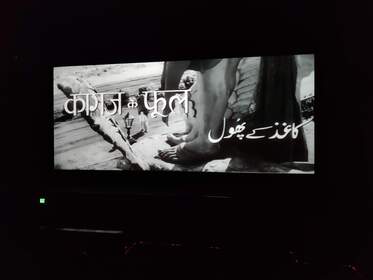
Kaagaz ke Phool (1959)

That first photo, because the space beyond the screen is so dark, may not be very obvious as regards context. But this is a photo from a full-sized film theatre, where I watched the re-released Kaagaz ke Phool on July 17th. The re-release was to mark the 65th anniversary of this film, a semi-autobiographical work that was a flop when it was first released, but has gained in popularity ever since. My niece had alerted me to the fact that PVR Inox would be showing Kaagaz ke Phool across its theatres, one show a day for a week, and I knew I couldn’t miss this one. If only for the fact that I get to see precious few old films on the big screen (Hum Dono was the last I saw).

I had thought I’d probably be one of a handful (ten, at the most?) of people in the theatre, because this, after all, is an old film; and this was an afternoon show on a weekday. But to my surprise, there were actually quite a few people, and—best of all—many of them were fairly young. Heartening.

But, to get to the film.

Continue reading
Kaala Bazaar (1960)

The first time I watched Kaala Bazaar was perhaps in my early teens: the film was being shown on Doordarshan, and given that back then I was very fond of Dev Anand, I watched it. I have very vague recollections of that viewing. What I do recall, vividly, is that I didn’t like that my hero was a criminal.

… which, as I came to realize later, was actually not so very uncommon a style for the characters Dev Anand played. Unlike the other major romantic hero of the time, Shammi Kapoor, Dev Anand didn’t just play characters who got up to ‘mischief’, so to say; his characters—from Tony in Jaal to Raju in Guide, from Chhagan in Roop ki Rani Choron ka Raja to Babu in Bambai ka Babu, plus others—were outright criminals: thieves, conmen, smugglers, men definitely on the wrong side of the law.

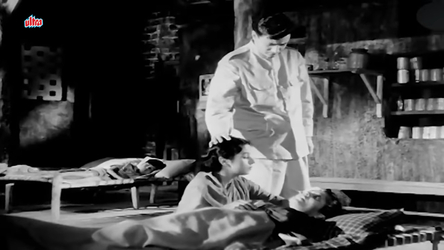
Like Raghubir ‘Raghu’ in Kaala Bazaar. Raghu is a bus conductor when the story begins, and within the space of a couple of minutes, his life takes an about-turn. A belligerent passenger is standing in the bus (which is against the rules), and when Raghu asks him to get off the bus, the man refuses. Both he and Raghu lose their tempers. Fists fly, and the next thing we know, Raghu is without a job.

Raghu’s mother (Leela Chitnis) is ill, and he has a sister (Nanda) and a young brother (?) as well; he cannot afford to be without a job. Desperate, Raghu flounders about, trying to find work. If not work, money.

Continue reading

Ram aur Shyam (1967)

I wanted to watch a Dilip Kumar film to commemorate the life and career of this extraordinary actor. But which one? There are lots of iconic Dilip Kumar films that I have either seen long ago (Devdas, Footpath, Daag, Deedaar, Udan Khatola, Andaaz) and not reviewed on this blog, or which I’ve never seen (Tarana, Jugnu, Mela, Shaheed, Musaafir). I could watch a film I’d never seen before, but—knowing what a lot of Dilip Kumar’s early films are like—there was always a chance I’d run up against something depressing.

I finally decided to rewatch a film I’d seen years ago. A film that’s a good showcase of Dilip Kumar’s versatility, his ability to pull off comic roles as well as the tragic ones for which he was better known. Ram aur Shyam is an out-and-out entertainer, a film I’d watched and loved as a teenager, and which I knew for a fact would cheer me up.

Continue reading

Dil Diya Dard Liya (1966)

Despite its having a cast of several people whom I like a lot (Waheeda Rehman, Dilip Kumar, Pran, Rehman, Shyama), a music director whom I like a lot (Naushad) and being by no means an unknown film, Dil Diya Dard Liya is one I’d never got around to watching. Perhaps it is because I had been told by knowledgeable readers that it was based on Wuthering Heights—and I could imagine what a confluence of Wuthering Heights (dark, grim, with two thoroughly selfish and unlikeable leads) and typical Bollywood (melodramatic, with no lead capable of being anything but noble, even if it’s only in the final analysis)—would be like. Mishmash, hard to bear?

But when I posted a Naushad song list in tribute on Naushad’s birth centenary last year, several people mentioned the songs of Dil Diya Dard Liya, and I decided it was time to take the plunge. If for nothing else than Naushad’s music.

Continue reading

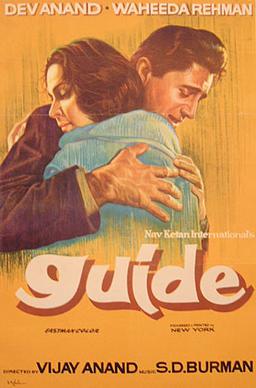
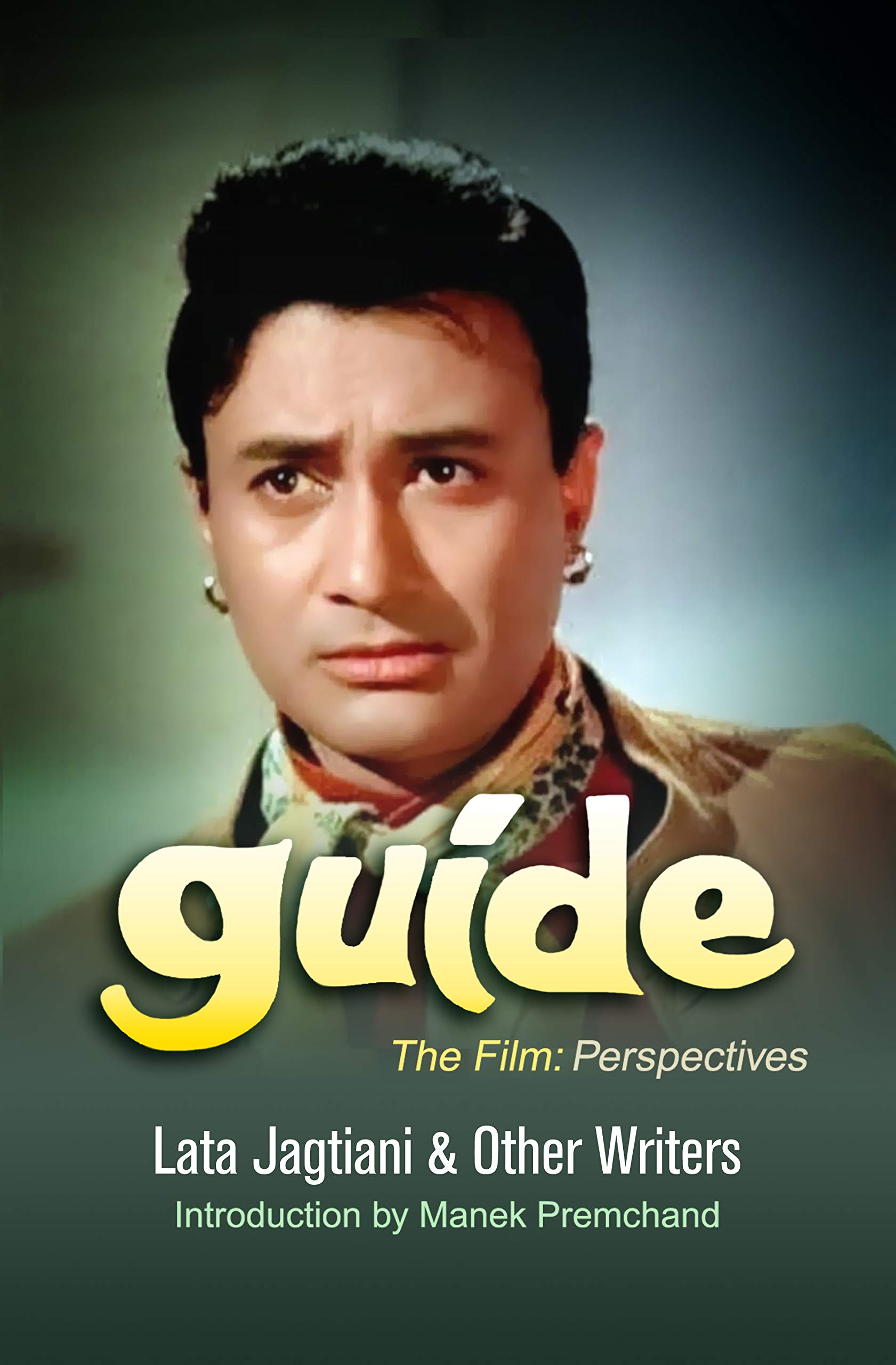
Book Review: Guide, The Film: Perspectives

I watched Guide for the first time when I was about twelve or so. Till then, all the Hindi cinema I had watched was predictable, comfortable, simple enough for a pre-teen to know what to expect. Or so I thought.

Because Guide defied every norm I thought I understood. Heroes, not even when they were the anti-hero Dev Anand had played in earlier films like Baazi, Kaala Bazaar or House No. 44, did not go anywhere near another man’s wife. Heroines, even when they were married off against their wishes to men other than those they loved (as in Dil Ek Mandir, Gumraah, or Sangam) stayed true to their marriage vows and sooner or later left their past behind (I was to watch Yeh Raaste Hain Pyaar Ke only much later). They absolutely did not leave their husbands and start living with another man.

And heroes did not die. As when I watched Anand, when I watched Guide too, I kept thinking, “This isn’t it. He isn’t dead, he can’t be dead.”

Several years later, I had to study RK Narayan’s The Guide at school, and I pretty much knew what to expect—but once again, I found myself surprised, because the book was in many ways different from the film. The book had won its author the Sahitya Kala Akademi Award (the first book in English to win the award), and the film won accolades by the handful—and continues to do so, fifty-five years after it was released. It has been analyzed, discussed, derided, lauded. Personally, other than for its music and Waheeda Rehman’s dancing, I have never really liked Guide much—but even I, when offered the opportunity to read this collection of essays about Guide, couldn’t resist it. Partly, perhaps, because I hoped to be able to discover what fans of the film saw in it that I didn’t.

Continue reading

Roop ki Rani Choron ka Raja (1961)

In 1956, Waheeda Rehman made her debut in Hindi cinema in CID, with Dev Anand (Waheeda wasn’t the heroine of CID—Shakila was—but she had a good and somewhat offbeat role as the vamp with a heart of gold). Over the next decade and a half or so, Waheeda and Dev Anand were to go on to act together in several more films, probably their most famous pairing being in the hugely popular Guide (1965).

I have watched, as far as I know, all of the Waheeda-Dev films over the years. The only one that (again, as far as I know) I hadn’t watched yet was this one. Time, I decided, to make amends for that.

As in many other films of his, Dev Anand in Roop ki Rani Choron ka Raja is a crook—a thief, to be precise. We are introduced to Chhagan (Dev) when he’s in a shady-looking dive, buying a bottle of booze. Shortly after, Chhagan is accosted by ‘Langad Deen’, a partly-crippled character (played by Jeevan), who has a bit of news for Chhagan: a steamer is about to begin the journey down the river to the pilgrimage spot of Shivsagar. Langad Deen has it on authority that among the people on board is a wealthy jeweller who is carrying a very valuable diamond to be offered up to the god Shiv at Shivsagar.

Continue reading

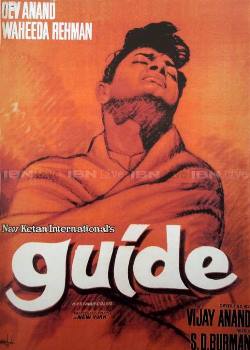
The Guide (1965)

In 1960, RK Narayan won the Sahitya Akademi Award for his novel, The Guide, published in 1958. The story is of a small town tourist guide who has an affair with the lonely wife of an archaeologist, an affair that has a lasting impact on his life.

Of course, anybody who knows anything about Hindi cinema would recognize the plot (and the name) immediately: this, after all, was (minus the ‘The’) the name of one of Hindi cinema’s most popular films ever made. The Dev Anand-Waheeda Rehman starrer Guide, directed by Vijay Anand, won an impressive seven Filmfare Awards (and that excluding what should definitely have been an award, for SD Burman’s brilliant score for the film).

Continue reading

12 O’Clock (1958)

Years ago, in the good old days when the single channel on Doordarshan was our main source of entertainment and we therefore watched everything that was telecast, I watched 12 O’Clock. I’d already seen Guru Dutt’s big films—Pyaasa, Sahib Biwi aur Ghulam, Kaagaz ke Phool, Chaudhvin ka Chaand. I assumed, based on those (I had yet to watch Bahurani or Saanjh aur Savera, and had thought Mr & Mrs 55 a flash in the pan), that 12 O’Clock would be along the lines of the serious stuff Guru Dutt churned out.

… which this is not. Because this is one of a handful of the films Guru Dutt acted in but did not direct.

Continue reading

Ek Phool Chaar Kaante (1960)

Sunil Dutt and Waheeda Rehman. The two names themselves conjure up a mix of everything from Pyaasa to Mother India, from Gumraah to Kaagaz ke Phool. Sunil Dutt, whom I tend to associate either with suspense films (Humraaz, Mera Saaya) or angst-ridden (or otherwise philosophical, socially relevant films like Railway Platform or Sujata. Okay, he did do Postbox No 999 and Padosan, but still… Waheeda, whose films with Guru Dutt did showcase her prowess as an actress, but which also tended to paint her as a ‘serious’ actress—although in her case, films like Solvaa Saal and 12 O’Clock showed that she could be as convincing in peppy and light-hearted roles as many of her contemporaries.

If that’s your impression of Dutt and Rehman—two actors who appeared in mostly grim films—this rom-com is worth seeing just for a different, fun, side to both of them.

Continue reading