Operation Y and Shurik’s Other Adventures (1965)

Or, to give it its original Russian title, Operatsiya Y I Drugie Priklyuchenia Shurik.

And, before you get intimidated by that rather ponderous title, a little carrot that I will dangle: this is a movie that’s recommended for those times when you’re feeling drained and overworked and your brain needs time off. It happens to me every now and then, when trying to relax by watching a film is not enough; the film too has to be something that I don’t need to think about: a film that I can just sit back and enjoy. This is that film.

Operation Y (which is how I will refer to it; the entire title is just too long) is about the eponymous Shurik (Aleksandr Demyanenko), a young college student at a polytechnic institute. In his spare time, Shurik works at a construction site; otherwise he’s a nerdy, earnest student, so focused on his studies that he mostly cannot see beyond his books…

Continue reading

Zabak (1961)

Zabak is a film I’ve been wanting to watch for a while, mostly for Shyama. I like Shyama a lot, and as far as I know, this is one of the rare colour films in which she acted as a lead. Plus, given my penchant for raja-rani films, I thought this might be worth a try.

Zabak (Mahipal) is the son of a healer and hamaam owner named Hassan Shah Isfahani (?). Hassan Shah is much acclaimed as a man who knows his medicine, and everybody around, from the Haakim (the Lord) of Isfahan to the man in the street, comes to him for relief from a variety of ailments. Zabak is a happy-go-lucky sort, spending his time joking around town, and romancing Zainab (Shyama), the daughter of the Lord of Isfahan.

Continue reading

The LO Goes to Himachal, Part 3: Beyond the Mall in Shimla

Most tourists seem to focus on the Mall and the Ridge, but there’s plenty to see beyond that as well. While I covered our forays along the Mall in Part 2 of this set of travelogues, here I’ll be describing something of what we experienced beyond the Mall.

My husband and I last visited Shimla in 2008, and one attraction I had especially fond memories of from back then was the Viceregal Lodge. Built as the residence of the Viceroy, the Viceregal Lodge was completed in 1888, built in a Scottish Baronial style. After independence, it was renamed Rashtrapati Nivas, and today it houses the Indian Institute of Advanced Studies, where scholars in the humanities can come for research and study.

Viceregal Lodge
Continue reading

The LO Goes to Himachal, Part 2: The Mall in Shimla

(For Part 1 of this travelogue, click here).

On Day 3 of our Himachal trip, we left Kasauli and drove up (with an abortive detour at Arki, as described in Part 1) to Shimla. At Shimla, we were booked to stay at The Oberoi Cecil, a hotel with a history to it. The spot where the Cecil now stands was once a home (Tendril Cottage) where Rudyard Kipling stayed while visiting Shimla in 1885. Three years later that home was torn down and another building came up in its stead. In 1902, this building was expanded, refurbished, and turned into a hotel: The Cecil, which—in 1944—was acquired by the hotelier MS Oberoi.

The Oberoi Cecil, outside and in.
Continue reading

The LO Goes to Himachal, Part 1: Chandigarh and Beyond

The LO—previously, the ‘Little One’—is my now-nine-year-old daughter. I say ‘previously’ because the LO has now decided (and both her father and I agree) that she’s too old to be called ‘little’. “How about Loved One instead?” she said, and I agreed. The LO is now the Loved One. She always has been, actually.

For those who’ve read previous travelogues on this blog, you’d know that the LO is quite a one for travelling. Much like her parents, really: all three of us like nothing better than to go new places, explore new cultures, experiment with new foods.

This time, our summer vacation was not really a completely new experience. My husband and I have been to Shimla before, and the LO has been to Himachal too. But she hasn’t been to Shimla, and that, we figured, needed to be corrected. Also, it had been fifteen years since the two of us had been there last. High time for another trip.

From Noida, it’s an easy two-day journey up to Shimla. This travelogue is about our trip up to Shimla and back; Shimla itself will be covered in Part 2 of this travelogue.

On our first day, we drove from Noida to Chandigarh in easy stretches, arriving in Chandigarh sometime in the late afternoon. We stayed at the Novotel, and the LO was very excited to discover that the hotel lobby houses a Porsche showroom! She couldn’t stop ogling the cars.

The Porsche showroom at the Novotel in Chandigarh.
Continue reading

Ramat Ramade Ram (1964)

Which, since I’ve not been able to find out exactly what this means, I choose to interpret from the subtitles of its title song: ‘Ram Plays a Game’.

If you’ve been following this blog for a while, you’d probably know of my near-constant mission to find subtitled Indian films. Regional films, non-Hindi ones. Sadly, not very many old films (barring Bengali) seem to be subtitled, so when I do find one that has subs, I am pleased as punch.

Especially when it turns out that it stars one of my favourite actors (Sanjeev Kumar) and that pretty much all the videos on YouTube, even the ones featuring only certain songs or scenes tag the film as a romantic comedy. I am all for rom-coms, and rom-coms that feature Sanjeev Kumar? This I needed to see.

Continue reading

Lahore (1949)

I’d been meaning to watch this film for a while now, because there’s a family history related to Lahore.

My uncle David Vernon Liddle ‘Verni’, as some of you may know, was a guitarist in Hindi cinema (this guest post, written by my father, Verni’s younger brother, is all about him). In 1947, Verni—then very young, no more than 16 years of age, but already an accomplished musician and making inroads into the Hindi film industry—was in Lahore and recording the songs for Lahore. Partition happened, and of course, there was so much violence and chaos that Verni had to flee Lahore and head eastwards into India. En route, during his travels, he ended up losing his sole pair of chappals and for quite a few days wandered about barefoot. Once he landed up in Punjab, he was able to make his way to some relatives in Ludhiana, and an aunt finally gave him a new pair of slippers! Verni also spent some time right after he came into Indian Punjab, working at a langar in a camp. The camp included Muslims and Sikhs, and Verni, being a Christian, was one of the few who was therefore not regarded with suspicion by anyone. This was what got him a job (sort of) serving food at the camp.

I am not sure about the story behind how Lahore came to be made. Since the music of most films back then used to be recorded before the film itself was completed, it’s possible that the songs of Lahore (written by Rajinder Krishan and composed by Shyam Sundar) had been readied even before filming began. As it is, it’s not as if the songs are very specific to this film or any particular scenarios; they are ‘generic’ love songs and sad songs, which could be fitted in pretty much anywhere in the average 50s or 60s film. It may just be that the real story of Lahore, of Partition disrupting a romance and a family, evolved somewhere in the course of time before, during and just after Partition.

So, this was a film I wanted to watch.

Sadly, I could find only one copy online (on the SEPL YouTube channel, never one I am happy to view films on because they have zero QA). This version turned out to be a mess: not only were there scenes arbitrarily chopped off, midway through the film, the sequence of the reels went for a toss too, so the chronology was all haywire.

This review, therefore, will be a little different from my usual style. What follows is not as detailed a synopsis as I usually provide, and it includes most of the film, so be aware that there are

Some spoilers ahead.

The story is set in Lahore, where Chaman (Karan Dewan) and Leelo (Nargis) are neighbours as well as collegemates, and sweethearts. Their love story is known and approved by their respective families. Leelo only has her mother (?), but Chaman lives with a fairly large family.

Continue reading

Book Review: Yatindra Mishra’s ‘Lata Mangeshkar: A Life in Music’

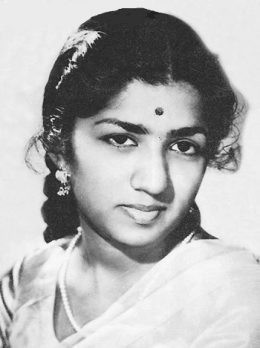
Over a period of about four years, from 2010 to 2014, Lata Mangeshkar was interviewed by the biographer Yatindra Mishra, the interviews coming together in the form of a Hindi book, Lata: Sur Gatha. The biography won a National Award, and was published in its English translation (Lata Mangeshkar: A Life in Music, translated by Ira Pande) earlier this year.

Continue reading

All About Eve (1950)

I am always a little intrigued by films about cinema: the inward-looking eye, the self-criticism (more often than not). From The Artist to Kaagaz ke Phool, there’s something about films like this that I usually find appealing: perhaps because they offer a glimpse, even if unsavoury, into what lies beyond what one is currently viewing.

All About Eve isn’t about cinema; it’s about a related art, theatre (but there are nods here, aplenty, to cinema: there’s a passing reference to Zanuck—who produced All About Eve; and there are instances of people vying for a role, possibly even a career, in Hollywood). It’s about the ambition, the cut-throat competition, the fiercely burning desire to stay in the limelight—or to claw one’s way up there, in the first place.

The story begins at a glittering but exclusive awards night. This is the annual awards ceremony of the fictitious Sarah Siddons Society, and the who’s who of the theatre world is gathered here. While a boring veteran actor gives his speech, we are introduced, through a voiceover, to some of the characters attending this function. Characters, too, who play an important part in the story.

To begin with, there is Addison DeWitt (George Sanders), an influential journalist.

Continue reading

Night in London (1967)

In which Biswajeet’s character ends up facing a wall studded with red-hot spikes. You don’t just skewered to death, you get barbecued in the process.

Continue reading