Insaaf ka Mandir (1969)

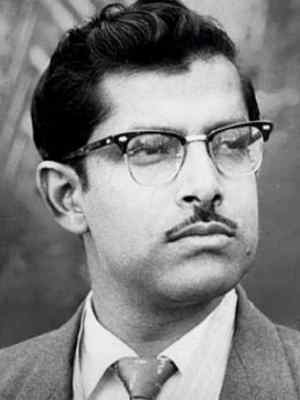
Insaaf ka Mandir is a relatively little-known film which I’d seen many years back, but had forgotten most of. It was fellow blogger Jitendra Mathur who reminded me of this, and my memories of the film were pleasant enough for me to want me to rewatch and review this.

The story begins with Sunil (Sanjeev Kumar), a student who’s just completed his law studies at college when he receives an urgent telegram: his father is very ill, Sunil should head home immediately. A classmate of Sunil’s, Sunita (Snehlata), comes by and, in a brief conversation, confesses to Sunil of her love for him; Sunil, embarrassed, tells her that he will not do anything against his father’s wishes.

Continue reading

Murder Most Foul (1964)

Agatha Christie is one of those writers I can depend upon to invariably entertain. Often, her books are downright brilliant; the occasional book may not quite match her own standards, but it’s a rare book that is so bad I would regret reading it.

It goes without saying, then, that I am always game for a film based on an Agatha Christie novel. Murder Most Foul is based on Christie’s Mrs McGinty’s Dead; the book was the 25th in the Hercule Poirot series, though the film (directed by George Pollock, with a script by Jack Seddon and David Pursall) made Miss Marple the detective.

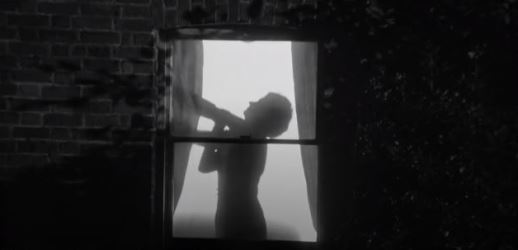
The story begins late one night, as a village constable goes about his rounds. He heads for a pub (which is closed, but where he’s obviously expected). At the window, the policeman is handed a mug of beer, which he downs happily, while sitting at a bench outside. He’s so engrossed, he never realizes there’s high drama silhouetted in a nearby window.

Continue reading

Ten of my favourite Shankar-Jaikishan songs

When it comes to Hindi film composer duos, for me there’s none greater than Shankar-Jaikishan. By no means the first (Husnlal Bhagatram, for one, predated them) and definitely not the last (there have been many others, from Laxmikant Pyarelal and Kalyanji Anandji to more recent duos like Anand-Milind), Shankar Jaikishan were unparalleled in the sheer quality of their work. They composed some of Hindi cinema’s best-loved tunes, all the way from Westernized club songs to ghazals, from dreamy love songs to peppy folk numbers. Versatility, finesse, and that ability to appeal to the common janta, to have ordinary folk humming their tunes: these were some traits which set Shankar-Jaikishan apart.

Continue reading

The Adventures of Huckleberry Finn (1960)

I got introduced to Mark Twain’s books about the rambunctious, adventure-seeking Tom Sawyer and his best friend, Huckleberry Finn in my early teens. I read a lot of Twain in those days, and—as tends to happen with me when I’ve read a lot of one author’s works—over a period of time, they started to blur. I forgot which books I’d read, and which I hadn’t.

The Adventures of Huckleberry Finn is one such: I couldn’t recall whether this was among the books I’d read. But, while making my very sporadic way through The Daily Telegraph’s list of 100 Great Novels Everyone Should Read, I found this book on it, and decided I may as well read it. And, as often happens when I read a book that’s fairly popular (in this case, an acknowledged classic), I followed that up with seeing if it had been made into a film. Sure enough, it had: a 1960 adaptation starring Tony Randall was what I chanced upon.

Continue reading

Mem-Didi (1961)

Today marks hundred years of the birth of one of Hindi cinema’s finest directors: Hrishikesh Mukherjee was born on September 30, 1922, in Calcutta.  Beginning in the late 1940s, Mukherjee worked as a film editor in Calcutta, before moving on to Bombay, where too he continued as editor, gradually moving on to direction as well. Mukherjee’s first film as director was Musafir (1957), and while it didn’t fare too well, it set the tone for a lot of Mukherjee’s later works: films about everyday people, with everyday triumphs and everyday sorrows. His were not the masala films that have always tended to dominate Hindi cinema, and yet—whether he was making classic comedies like Chupke-Chupke or Golmaal, or more nuanced, sensitive films like Majhli Didi, Satyakam, or Abhimaan, Hrishikesh Mukherjee made films that were hard to fault. He is one of the rare directors for whom I will watch a film just because it’s been made by this person.

Continue reading

One Voice, Two Faces: Ten of my favourite ‘one-singer-duets’

One playback singer sings for two (or, in some cases, more than two) people who lip-sync to the song onscreen. Within the same song, not two different versions of the song.

You’d have thought that wouldn’t be very common, given that a lot of our playback singers have had such distinctive voices that you wouldn’t expect two people in the same setting to be singing with that same voice. But then, reality and Hindi cinema have never been the best of friends; and anyway, there were probably other considerations: one singer is cheaper than two; it’s easier to get recording dates if you don’t have to juggle dates for two people; and all said and done, Hindi cinema is all about the willing suspension of disbelief. If three women (or four, or five) can all ‘sing’ in Shamshad Begum’s voice, so be it.

Continue reading

The LO Goes to Agra, Part – II

(For part I of this travelogue, click here).

The next morning, we’d planned to go as early as possible to the Taj. This, given that the LO eats in a very leisurely style, meant that we eventually ended up leaving the hotel by around 8.30. It was a little cloudy at the time, but nothing, we thought, that might be a problem.

You can use fossil fuel transport till only outside a kilometre of the Taj; so our Ola taxi dropped us off, and we set off on foot, pursued hotly all the way by guides offering their services. We managed to fob them all off (we’ve been here several times before, and given that I did a lot of research on the Taj and Agra in general for my book Engraved in Stone, I do know a fair bit), and bought our tickets (Rs 200 per adult Indian if you want to go inside the mausoleum; Rs 50 if you’re content to see everything else but not enter the mausoleum).

Security, of course, is quite stringent, and this was where we ran up against an obstacle.

For the Agra trip, the LO had brought along a prized possession, a plastic tiara. This she insisted on wearing, in the fond belief that Mumtaz Mahal deserved a visit from someone dolled up like a maharani (never mind that the tiara didn’t quite match with the jeans, T-shirt, and Crocs the LO was clad in).

The tiara.
Continue reading

The LO Goes to Agra, Part – I

Some of you who’ve been following this blog over the past few years might know about the LO. The ‘Little One’, my now-nearly-nine year old daughter, has figured prominently in my travelogues over the past several years. She is an enthusiastic traveller, and few things bring her greater joy than to go to new places, stay at nice hotels (yes, a vital part of travel for the LO) and generally let her hair down.

Agra is a place we’ve been meaning to go for a while now. Of course the Taj Mahal is iconic, but there are several other wonderful old monuments in the city that my husband and I wanted to see again, and the LO, from seeing photos of the Taj in school textbooks and elsewhere, was eager as well. What’s more, the LO’s best friend has her nanihaal —her maternal grandparents’ home—in Agra. Every few months, the kid goes off to Agra, and of course tells the LO all about it.

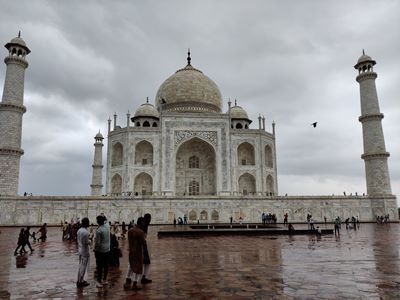
The Taj Mahal on a rainy day
Continue reading

L’armata Brancaleone (1966)

Which is literally translated as The Army of Brancaleone, though this Italian film, directed by Mario Monicelli, was marketed to the English-speaking world as For Love and Gold.

Can one list, as a favourite, somebody whose work you’ve only encountered a few times? Is it necessary to view all (or most) of an actor’s films in order to be able to label them a ‘favourite’?

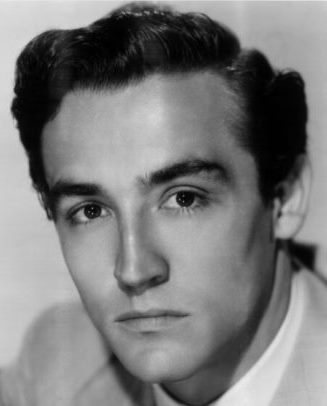
I think not. I hope not, because Vittorio Gassman is one I count among my favourites, even though I’ve watched probably not even ten of his films. And, given that today is Gassman’s birth centenary (he was born in Genoa on September 1, 1922), I decided it was a good day to show some Gassman love.

Continue reading

Bhoot Bungla (1965)

The last of the ‘silly Indian films’, at least for now.

I watched Bhoot Bungla for the first time as a child, when it was aired on Doordarshan. I remembered very little of it, except that RD Burman struck me as very funny (even funnier than Mehmood, who—back then—I had still not begun to think of as irritating). And that my mother, sitting beside me and watching Tanuja lip-sync to O mere pyaar aaja, remarked that she (Mummy) used to sing this song as a lullaby for my sister when she was a baby.

Then, when I reviewed Adhey Kangal some time back, a few blog readers observed that the plot was pretty similar to that of Bhoot Bungla.

Time, I decided, for a rewatch.

As the credits roll, an unidentified man screams “Lakshmi!” and having pulled a bloodied dagger out of his chest, proceeds to keel over, dead. A woman (Minoo Mumtaz), presumably Lakshmi, goes running out of the house, clutching a toddler to her, looking panicked.

Continue reading