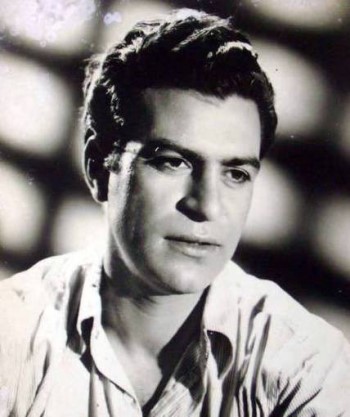
Ten Avatars of a Magician: The Genius of Sahir Ludhianvi

I am leery of attaching ‘best’ and ‘most favourite’ appellations to anybody or anything, no matter how much I may be fond of the person/creation/whatever in question. I tend to say that so-and-so song or film, for instance, is among my favourites; the same goes for actors, singers, directors, and so on. There are some whom I especially like, there are some for whom I will watch a film just because they’re in it. There are none whom I idolize and place on a pedestal and see no wrong in.

Sahir Ludhianvi may be one of the exceptions. This is one man whose genius blows me away. If I were to list my favourite Hindi songs from the Golden Period, based purely on the sheer memorability of their lyrics, the one lyricist who would lead the pack would be Sahir Ludhianvi. His versatility; his hard-hitting, often brutal, honesty; his occasional humour and his exquisite expressions of romance: all come forth in many, many songs composed across the three decades or so that he was actively writing songs for Hindi cinema.

Continue reading

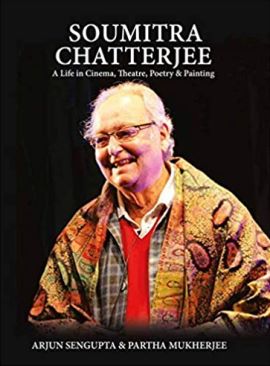
Book Review: Arjun Sengupta and Partha Mukherjee’s ‘Soumitra Chatterjee: A Life in Cinema, Theatre, Poetry & Painting’

The first Soumitra Chatterjee film I saw was Charulata (1964). I had known of Soumitra Chatterjee before, had known even of his stature in Bengali cinema; but this film was my introduction to him. And what an introduction it proved to be.

Even now, several years down the line, I cannot claim to have done justice to Soumitra Chatterjee’s filmography, not even to his most famous phase of the fourteen films he did with Satyajit Ray. I have seen some films, of course, including Aranyer Din Ratri, Samapti (the third part of the Teen Kanya trilogy of short films), Kapurush and Sonar Kella from among Ray’s works, and a few by other directors, such as Barnali (which I watched a few weeks back, when Chatterjee passed away). My relative lack of familiarity with Chatterjee’s work made me a little nervous about reading his biography: I wondered if I would be able to understand all the nuances, whether it would not be too much for a Chatterjee-ignoramus like me.

Continue reading

In Memory: Bollyviewer

In the years since I first began this blog in 2008, I have written many tributes to many film personalities. A few, a mere handful, saddened me enough to make me feel I had lost someone especially dear to me personally.

Never had I thought a day would come when I would need to (yes, I do need to, for my own self) write a tribute to a fellow blogger. Bollyviewer, who meant much more to me than just a fellow blogger.

Continue reading

Dharti ke Laal (1946)

Balraj Sahni devotes several pages of his autobiography to one of his first films, KA Abbas’s directorial debut, Dharti ke Laal (1946). Here, among other behind-the-scenes reminiscences, is an anecdote which especially struck me.

A scene of the film depicts the death of one of its characters, an old peasant who has come to Calcutta to escape the famine in the countryside. In his dying delirium, the old man ‘sees’ the ready crop, fields of rice waiting to be harvested. Around him, his friends and family hover, as the man’s eyes open wide in joy and then, suddenly, he keels over.

It’s a dramatic scene, and was envisioned as taking place under a street lamp, with the light shining on the dying man’s face in his moment of delirium. The set was ready, but somebody had blundered, and the bulb that was supposed to shed its light on the character refused to light up. Abbas, Sahni, Shombhu Mitra (who played the role of the dying peasant), the cameraman and the rest of the crew were in a flap, when a mazdoor—a labourer—suggested an alternative: let the light be provided not by a street lamp, but by the headlights of an approaching car, shining on the dying man’s face. And, as the car moves away, its tail lights should provide the last glow before the man finally dies.

Continue reading

So Long, Farewell

(In somewhat belated tribute to the inimitable Christopher Plummer, who passed away on February 5, 2021).

Continue reading

Madame X (1966)

I still remember the very first Lana Turner movie I watched: The Three Musketeers, in which she starred as the evil but beautiful Lady de Winter. I watched that film mostly for Gene Kelly, one of my favourites; but I remember being struck by Lana Turner. So icily beautiful, but so ruthlessly, coldly calculating and vicious too. She was exactly as I’d imagined Lady de Winter to be when I’d read The Three Musketeers (it’s a different matter that the film diverged considerably from the novel).

Today may be the birth centenary of Lana Turner (the ‘may be’ because some say she was born on February 8, 1920, rather than 1921). Born in Idaho, as Julia Jean Mildred Frances Turner, ‘Lana’ came to California with her mother after her father was murdered in 1929. By the time she was 17, Lana had landed her first role in cinema, and by the early 40s, had started becoming an actress to be reckoned with. ‘The Sweater Girl’, as she was known, ended up being projected mostly as little more than a sex symbol by MGM, but proved, over time, that she could act with the best of them. Films like Peyton Place, Imitation of Life and The Postman Always Rings Twice gave her a chance to show that her acting talent was everywhere as good as her legendary beauty.

Continue reading

Thillana Mohanambal (1968)

Finally. Finally, finally, finally!

Okay, perhaps I need to step back and explain that a bit. Back in 2013, to mark a hundred years of Indian cinema, I watched my first-ever Tamil film (actually, first-ever South Indian film, as far as I can remember), the excellent suspense thriller Andha Naal. Someone, commenting on the review, recommended another Tamil film for me to watch: Thillana Mohanambal.

Continue reading

Chase a Crooked Shadow (1958)

One of my favourite genres is suspense. Give me a good Hitchcock film, and I’m a happy camper (Hitchcock happens to be among my favourite directors, but no, that doesn’t mean I regard only him as a great director when it comes to suspense films; there are many films not directed by Hitch that are favourites of mine, including Charade, Gaslight, and How to Steal a Million).

Anyway, talking of suspense: someone mentioned Chase a Crooked Shadow, telling me that it was a good suspense film, and I decided I had to watch it. This one wasn’t directed by Alfred Hitchcock, but by Michael Anderson.

Continue reading

Do Dulhe (1955)

Today is the birth centenary of one of a handful of Hindi film actors who managed to cross from one type of role to another—again and again. Like Ajit, Pran, and Premnath (though not in the same league as them, when it came to success and popularity), Sajjan Lal Purohit—better known simply as Sajjan—appeared in leading roles in several of his early films (including, notably, in Saiyyaan, where he acted opposite Madhubala), then drifted into supporting roles (as Dev Anand’s sculptor friend in Paying Guest; as Mini’s father in Kabuliwala; and more), and eventually into villainous roles (in April Fool, Aankhen, Farz, etc).

Continue reading

Funtoosh (1956)

Today may (or may not) be the birth centenary of the film maker, writer, and actor Chetan Anand, eldest brother of Dev Anand and Vijay Anand. Different sources list different dates of birth: most sites (including IMDB) list his birth date as January 3, 1921; others, including Wikipedia (yes, I know not the most reliable of sources) say it’s January 3, 1915. (This article says it’s 1921, but then goes on to write that Chetan Anand was 27 years old in 1943, which is either dodgy maths or a suggestion that the year of birth was indeed 1915). The article, barring that slip, is a good, interesting introduction to the life and career of Chetan Anand.

Anyway. Even if I’m six years too late to the party, at least today is Chetan Anand’s birthday.

Continue reading