Kalpana (1960)

Though I’d heard of this film – and loved one of its songs (As-salaam-aaleikum babu) – I’d not been too keen on watching it. Firstly, Ashok Kumar is not really my idea of a dashing leading man. Secondly, I’m not a great one for the Travancore Sisters. At the risk of being labelled an iconoclast, I’m going to admit that dance is not generally a big thing for me – I’m awful at any sort of dancing myself, and I don’t have much of an eye for watching it, either. Plus, there’s the fact that both Padmini and Ragini have horrid Hindi accents, which means that when they’re playing Hindi-speaking characters, they are not exactly very believable.

Then Richard reviewed Kalpana, and I got to know a bit more about the film. And then, to add to it all, Tom Daniel praised it too. So, I ended up watching Kalpana. It turned out to be – surprise, surprise – much more engrossing than I’d expected it to be.

Ashok Kumar and Padmini in Kalpana

Continue reading

Mai Baap (1957)

Today is the 100th birth anniversary of one of my favourite Hindi film actors, the extremely talented, very versatile Balraj Sahni. Born on May 1, 1913 (an interesting coincidence, considering he went on to become the first president of the leftist All India Youth Federation), Balraj Sahni became a prominent writer—first in English, later in Punjabi—and, of course, a brilliant, much-respected actor, with a dignity and screen presence that made him stand apart in films as different as Do Bigha Zameen, Waqt, Kabuliwaala, Haqeeqat, Anuradha, and Sone ki Chidiya.

Balraj Sahni in Anuradha

Continue reading

Shamshad Begum: A Tribute

When I began April 2013 on my blog, I’d promised this month would be dedicated to celebrating 100 years of Indian cinema—not merely Hindi cinema, as I tend to do, but regional language cinema as well. Apart from a review of the first full-length Indian feature film (Raja Harischandra) and a post on 100 years of Hindi film music (and how could I not post that, in a month commemorating Indian cinema’s centenary)?—I have tried to stick to my promise.

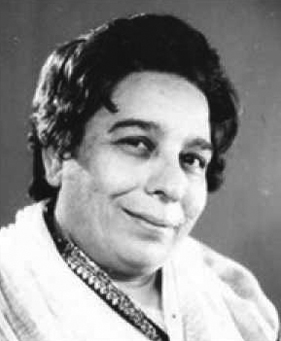
But, the day I was posting Songs for all times, I received a sad piece of news: that Shamshad Begum had died, just a little over a week after her 94th birthday. I did fit in a small tribute to Shamshad Begum in that post, but I had to say a fonder farewell, with a longer post showcasing this singer’s wonderful, very distinctive voice.

Shamshad Begum

Continue reading

Songs for all times: Celebrating 100 years of Hindi film music

Late last year, an editor from ForbesLife India wrote to me, telling me they’d be doing special ‘100 years of Indian cinema’ editions this year. Would I be interested in contributing an article? That was a no-brainer (or so it seemed), but when I got over my initial excitement and began to think, I realised that:
(a) I know virtually nothing about Indian cinema in general. Hindi cinema, yes; other Indian cinema, almost negligible.
(b) It was too vast a canvas. What would I write?

Much thought later, I offered to write about something I know something about: Hindi film music. What follows is a version of the article that appeared in the April-June 2013 issue of ForbesLife India. Do buy yourself a copy to read the final article—and to read some more interesting writing on a century of Indian cinema.

Jaan-pehchaan ho, from Gumnaam

Continue reading

Raja Harischandra (1913)

April 2013 has a special significance: this month marks 100 years of Indian cinema. The country’s first indigenously produced full-length feature film, Raja Harischandra, made by the legendary Dhundiraj Govind ‘Dadasaheb’ Phalke, was shown to a select audience at Bombay’s Olympia Theatre, on 21st April, 1913.
(Note: There is some controversy about this; some film historians believe that Shree Pundalik, 1912, was the first full-length feature film).

But. Celebrating the centennial of Raja Harischandra seemed good enough reason to dedicate this month to Indian cinema. Not just Hindi cinema, as I have been prone to do, but Indian regional cinema. I am painfully aware that the only regional language cinema I’ve reviewed so far has been Bengali, so this is a good place to make a start. April 2013 on Dusted Off is going to be when I set about exploring more of cinema from across the country.

I thought it appropriate to begin with Raja Harischandra itself.

Dhundiraj Govind 'Dadasaheb' Phalke

Continue reading

Mirza Sahiban (1947)

If you’ve read Greta’s latest blog post, you’ll know there are some recent and  utterly mouthwatering additions to the Edu Productions page—including this film, Noorjehan’s last to be made in India. Greta, on the Edu Productions page, mentions that source is a mediocre quality tape supplied by Muz.” Well, no longer. Tom’s cleaned it up beautifully, and Pacifist has subtitled the film. The result is something I’m grateful for. And that, coming from someone who’s not a fan of tragic romances, is a lot.

Noorjehan and Trilok Kapoor in Mirza Sahiban

Continue reading

The Paradine Case (1947)

This is one of the few Hitchcock films I didn’t see in my younger years. And, considering that Hitchcock is one of my favourite directors, and Gregory Peck one of my favourite actors, that is odd indeed. Perhaps I should put it down to the fact that The Paradine Case is not one of Hitch’s best-known works; in fact, he more or less washed his hands off it. And Peck, too, seems to have not really liked it.

Gregory Peck in The Paradine Case

Continue reading

Sharmeelee (1971)

Happy 75th birthday, Shashi Kapoor!

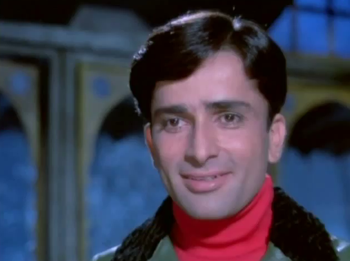
Yes, the youngest of the three Kapoor brothers was born on March 18, 1938, in Kolkata. He is one of my favourite actors, and one of the very few whom I like also in his 70s avatar—that charm didn’t desert him with time. But. To return to the time period this blog specializes in: looking through the films I’ve reviewed till now, I realized there are only a handful of Shashi Kapoor films here. Prem Patra (another favourite), Pyaar Kiye Jaa, Pyaar ka Mausam, The Householder, Benazir.

So, this calls for another review, another Shashi Kapoor favourite of mine. Sharmeelee, which, though it was released in 1971, has enough of the feel of the 60s—in fashions, music, crew and cast involved—for me to include it in my list. Most of all, it has Shashi Kapoor at his absolutely irresistible best.

Shashi Kapoor in Sharmeelee

Continue reading

Ek Do Teen (1953)

I am a fan of Meena Shorey’s. I find her a delight to watch: those eyes are very expressive, her smile is wonderful, and the characters she plays seem to be invariably feisty, self-assured young women who are resourceful and witty. Just my type. I’d already watched (and adored) Meena Shorey in Ek Thi Ladki and Dholak, so when my father offered to lend me his VCD of Ek Do Teen, I pounced on it. Meena Shorey with Motilal. Directed by Roop K Shorey, and with music by Vinod. Could it get any better?

Meena Shorey in Ek Do Teen

Continue reading

Ten of my favourite female duets

Hindi cinema has seesawed wildly when it comes to the depiction of women: on the one hand we’ve had films that glorify womanhood (even if it’s long-suffering, almost-always patient womanhood, as in Mother India); on the other, we’ve had appalling stuff like Suhaagan, which made no bones about telling women exactly where their loyalties lie.

But let’s lay aside the filmi angst and sacrifice for the time being, and celebrate International Women’s Day—with a list of female duets. While bromances have been so very popular with film makers, it seems rather surprising that the number of songs in which two men get together are relatively few. But put two (or, even better, more) women together, and—hey, presto—they burst into song.

Sai and Subbluaxmi in Aplam chaplam chaplai re

Continue reading