Lilies of the Field (1963)

And why take ye thought for raiment? Consider the lilies of the field, how they grow; they toil not, neither do they spin:
And yet I say unto you, That even Solomon in all his glory was not arrayed like one of these.

-Matthew 6: 28-29, King James Version

I am very familiar with this passage from the Bible (part of the Sermon on the Mount, this passage is part of one of my favourites—a beautiful little piece of scripture on how futile it is to worry), but when I first heard of the name of this film, the relevance of its title didn’t strike me. When I started watching it, I realized: yes, the lilies of the field are impermanent, evanescent, depending on no-one and yet not even doing anything very visible to keep themselves alive. But they—like all the flowers of this world, especially the wild ones, with no-one to care for them—are amongst the most beautiful of God’s creations.

Not an exact parallel with the protagonists of this heart-warming and sweet little tale, but close. And with some subtly-put messages about being content with one’s lot, yet pushing on, working hard.

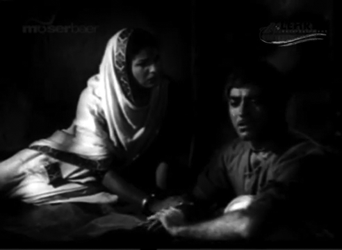
Sidney Poitier and Lilia Skala in Lilies of the Field Continue reading

Chor Bazaar (1954)

There were various reasons for my wanting to see this film. One was that it’s a historical (okay, faux historical, considering it’s set in some undefined supposedly Middle Eastern land named Sherqand). The other was that its music was scored by Sardar Malik, one of—in my opinion—Hindi cinema’s very underrated music directors. The main reason, however, was Shammi Kapoor. Though still in his moustached pre-Tumsa Nahin Dekha days, he is one of my favourite actors. So just about anything starring Shammi Kapoor is, for me, worth watching at least once.

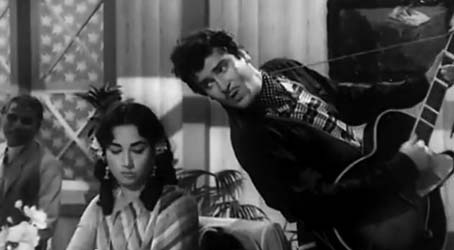
Shammi Kapoor in Chor Bazaar Continue reading

Sultangarhi: ‘The Sultan of the Pit’

The locals—and the local signboards, when written in Devnagari—mostly refer to this little-known tomb as ‘Sultangarhi’ (सुल्तानगढ़ी), which sounds more like a fortress than a tomb. The actual, correct pronunciation, is सुल्तानग्हारी (or, if you can’t read Devnagari, approximately ‘Sultanghaari’,). … Continue reading

Ten of my favourite Madan Mohan songs

I have never—in all the years this blog has been in existence—compiled a list of my favourite Madan Mohan songs. An oversight, and one for which I have no explanation to offer: just reparation.

Born Madan Mohan Kohli in Erbil (Iraqi Kurdistan) on June 25, 1924, the young Madan Mohan returned with his family to their home town of Chakwal (in Punjab) when he was 8 years old. His parents went on to Bombay, where his father, Rai Bahadur Chunilal, entered the cinema industry: as a partner at Bombay Talkies Studio, and then at Filmistan Studio. Madan Mohan too moved to Bombay, where he finished school and eventually joined the army—only to finally leave soldiering to become a music director. The first film for which he provided the score, at the age of 26, was Aankhen (1950).

Madan Mohan, 1925-75 Continue reading

Ánimas Trujano (1962)

In a scene in Ánimas Trujano, the protagonist—the eponymous Ánimas, an inveterate gambler, drunk, and believer in every charm or superstition floating around—has just lost a lot of money on a cockfight. Ánimas, before the fight, had been certain he would win, because a fortune teller’s little bird had ‘told’ Ánimas’s fortune by picking out a card on which were written words to the effect that Ánimas’s luck would shine on this day.

But the bird has proved wrong, and Ánimas has lost all his money. In a fit of anger, he goes back to the fortune teller, takes the bird from him, and goes off into a deserted ruin by himself, where he raves and rants at the bird, clutching it in his fist and cursing it for not predicting his fortune correctly.

Toshiro Mifune in and as Animas Trujano Continue reading

Chaunsath Khamba: a very unusual tomb

A couple of weeks back, I’d written a post here on a little-known but lovely little medieval tomb in Delhi: that of Atgah Khan, foster-father of Akbar. This tomb—Chaunsath Khamba (literally, ‘sixty-four pillars’)—is not just in close proximity to Atgah Khan’s Tomb, but also has a connection to Atgah Khan’s Tomb: Chaunsath Khamba is the tomb of Mirza Aziz Kokaltash, the son of Atgah Khan. (Incidentally, also the man who built Atgah Khan’s Tomb).

Chaunsath Khamba - a view of the tomb.

Chaunsath Khamba – a view of the tomb.

Continue reading

Ghazal (1964)

Those who frequent this blog have probably figured out by now that I have a soft spot (a very soft spot) for Muslim socials. So much so that I will watch just about any Muslim social out there, even if it features people who aren’t among my favourites. Even if it has a fairly regressive theme, and even if I end up not agreeing with half the things in the film. So, when I come across a Muslim social that stars some of my favourite actors (Sunil Dutt? Meena Kumari? Rehman? Prithviraj Kapoor? Rajendra Nath? Check, check, check), has lyrics by my favourite lyricist (Sahir Ludhianvi), and had its songs composed by one of my favourite music directors (Madan Mohan—and how appropriate, too, for a film called Ghazal to be scored by the Ghazalon ka Shahzaada): to not watch this would be a crime, I thought.

Meena Kumari and Sunil Dutt in Ghazal Continue reading