
I spent part of last week reading fellow blogger Todd Stadtman’s book, Funky Bollywood: The Wild World of 1970s Indian Action Cinema (more on that, along with a link to my review of it, at the end of this post). Todd’s book discusses, in affectionate detail, all the iconic action films—spy thrillers included—of the 70s. In a fit of enthusiasm, brought on by Todd’s book, I told my husband, “I want to see Gunmaster G-9”. To which he replied, “I didn’t like that. What I really liked was Aankhen. That was fun.”
Tag Archives: Dharmendra

Baazi (1968)
The first time I began watching this film was on Doordarshan, many years ago. It surprised me, largely because it featured Waheeda Rehman in a very Westernised avatar I had never seen before. It also had an intriguing story. And Dharmendra, always one of my favourites. And Helen. And Johnny Walker.

Ten of my favourite Dharmendra songs
Happy birthday, Dharmendra!
Considering I am so fond of Dharmendra (and I’ve reviewed so many of his films—including his debut film, the forgettable Dil Bhi Tera Hum Bhi Tere), it seems odd that I’ve never created a list of my favourite Dharmendra songs. Even though he did have a lot of good songs picturised on him. And he acted in some excellent films.
Born on December 8, 1935, in Sahnewal (Punjab), Dharmendra arrived in Bombay after winning the Filmfare New Talent Award. His first films weren’t huge successes: Dil Bhi Tera Hum Bhi Tere, Shola aur Shabnam, and Boyfriend were all flops, despite (in the case of Boyfriend) having an otherwise very popular lead pair. Within a couple of years, though, by appearing in hits like Anpadh and Bandini (in both of which, though, he didn’t have very major roles), Dharmendra began to be a known face—and was soon, by the mid-60s, one of Hindi cinema’s hottest (literally). He was to go on to become the ‘Garam Dharam’ of the 70s, but to me, the Dharmendra is the 60s hero: the quiet, sensitive poet of Anupama; the idealist of Satyakam; the dashing spy of Aankhen.
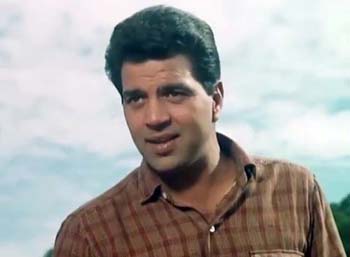
Mohabbat Zindagi Hai (1966)
Considering ‘arranged marriages’ were—and still are—so common in India, the fact that old Hindi cinema tended to focus mostly on ‘love marriages’ seems rather odd to me. It’s more romantic, I suppose, to imagine that one will fall in love and end up, after various trials and tribulations and having encountered sundry obstacles, married to one’s sweetheart.
There were exceptions, though, the occasional film about people getting married first, and falling in love later. There was Ghoonghat, Saanjh aur Savera, Blackmail, or those examples of child marriages, Chhoti si Mulaqat and Ji Chaahta Hai. Most of them about people who are forced—because of their own submissiveness, and because they can’t pluck up the courage to say no to bossy elders—into getting married to near or complete strangers.
Unlike this one. Mohabbat Zindagi Hai is one of the few examples (Mr & Mrs 55 was another) of someone getting married for a very mercenary reason. And, as in Mr & Mrs 55, the heroine here is an heiress who needs to get married in a hurry in order to inherit. No husband, no money. But, unlike Mr & Mrs 55, the heroine here doesn’t marry because she thinks she can easily divorce her unwanted husband soon after; she marries him because he’s on death row. He won’t be alive three days after their wedding.

Mamta (1966)
While watching Pakeezah some months back (and reading Meghnad Desai’s book about the film), I was struck by how fond old Hindi cinema used to be of the motif of the ‘chaste tawaif’. A paradox, seemingly, because how could a woman be a tawaif – a prostitute, to put it bluntly – and be chaste? But films like Pakeezah and Adalat did just that: they portrayed women who lived in kothas, sang (in Adalat) and danced (in Pakeezah) but were ‘good’ women, chaste and pure, women who may have been lusted after by bad men, but who – thanks to fate, good friends and relatives, kind strangers (both human and animal) – were always able to avoid the fate worse than death: of yielding their chastity to a man they were not married to, or weren’t going to eventually marry, even if only in secret.

Akashdeep (1965)
Once upon a time, there was a writer.
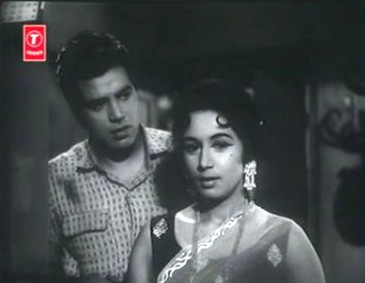
No: it wasn’t Dharmendra, and it certainly wasn’t Nanda (old Hindi cinema, at least, doesn’t seem to believe women capable of writing anything more complex than a love letter, if that).
This writer was someone quite different, and one day (I’m guessing) decided that it was time to show the world what he was capable of. So, with a producer and a director, the writer went into action, and what resulted was Akashdeep. Looking at the film, I’m assuming this was somewhat of a collaborative effort. A “how about this?” and a “don’t you think it would be a good idea—?” sort of film.
Khamoshi (1969)
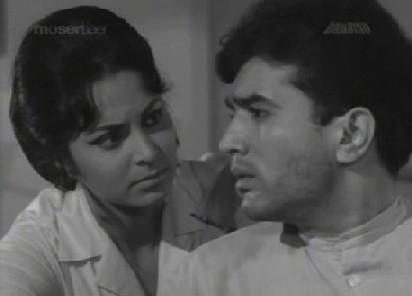
I first watched Khamoshi when I was a child (and too immature to really understand it). I last watched it as a teenager, more able to appreciate the film—which left a handful of clear, sharp images burnt into my memory: Dharmendra, looking out over a balcony and singing Tum pukaar lo; Dharmendra flinging a glass of water at Waheeda Rehman and then watching, half-bemused, half-shy, as she laughingly wipes her face against the front of his shirt. Waheeda Rehman, clinging to Rajesh Khanna but thinking of Dharmendra.
So, considering that this last week saw Dharmendra’s 74th birthday (on December 8th), and having read some very enjoyable posts by fellow bloggers: I decided it was time to re-view and review Khamoshi. It came as a bit of a surprise to realise that Dharmendra actually appears onscreen for just over 5 minutes (and that includes a song). The male lead is Rajesh Khanna. And the film belongs to Waheeda Rehman.
Dil Bhi Tera, Hum Bhi Tere (1960)
I was initially undecided about whether I should expend any energy on writing a review for this film. It wasn’t great—not even good, really. On the other hand, it wasn’t a pain to sit through and offered no unintentional hilarity of the Leader brand. Instead, it was a meandering, sometimes pointless film with little development of characters and indifferent screenplay.
Why then this review? Simply because this was the first film of a charmingly gawkish youth who went on to become one of Hindi cinema’s biggest stars—and one of my favourite actors.

Haqeeqat (1964)
With most films, by the time I see The End come up on the screen, I’ve more or less decided what I’m going to write about it, till which point I’m going to reveal the plot, and so on. With Haqeeqat, I’m still a little dazed. This is one of Bollywood’s earliest—and most realistic—war films, set against a backdrop of what was then the almost inaccessible region of Ladakh. It’s a blend of war and melodrama, propaganda and patriotism… and I’m not sure exactly what can be considered the main story of the film, since it actually consists of a number of stories woven into each other.

Eye Candy Part 2: Bollywood’s Classic Hunks
Sabrina Mathew’s recent post on cinema’s most beautiful women reminded me that it was time for me to do the second of my eye candy posts. Men again, but this time it’s good old Hindi cinema. As a reader pointed out, early Hindi cinema—the 30’s and 40’s—doesn’t seem to have had too many men who could be classified as hunks, but by the 50’s and 60’s (the period I concentrate upon) we had them in deliciously large numbers. Here goes, more or less in order, with my top ten:

 Dustedoff