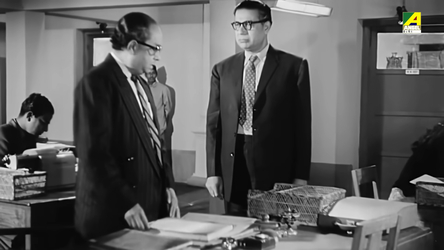
Deya Neya (1963)

In English, ‘Give and Take’.

I read a review of this Uttam Kumar-Tanuja starrer many years ago, and, ever since, I’ve been wanting to watch Deya Neya. All this time, I had never been able to get a subtitled version of it, but now there’s one (thank you, Angel), and I wasted no time in watching it.

The story begins in Lucknow, where Proshanto Roy (Uttam Kumar) lives with his parents: his very successful and wealthy industrialist father BK Roy (Kamal Mitra) and doting mother (Chhaya Devi). Mr Roy has Proshanto working at the office, doing accounts; but Proshanto is never to be found at work, and it riles his father up no end.

Continue reading

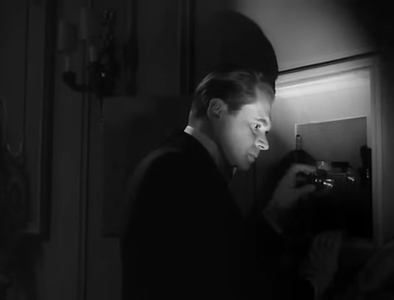
Woh Kaun Thi? (1964)

I began this blog on November 4. 2008 (with a review of Vacation from Marriage), so this post marks the fifteenth birthday of Dusted Off. I dithered over how I might celebrate the occasion, and finally came to the conclusion that it would be good to mark it with a review of a film I’ve been meaning to review ever since I decided to start blogging about classic cinema. Woh Kaun Thi? is a film I enjoy a lot, and which I’ve seen in various avatars: first on Doordarshan, when I was a teenager. Then, when VHS tapes became available, multiple times on our VCR. Then, when CDs came along, this was one of the first VCDs I bought… then the DVD. Now YouTube.

The story begins on a stormy night. Dr Anand (Manoj Kumar) is driving down a pot-holed and lonely road when he sees a woman (Sadhana), clad in white and standing in the middle of the road. Anand tells her to move out of the way, but when she doesn’t respond, he is compelled to get out and talk to her. To all his questions—who is she, where is she going, isn’t she scared to be out here alone—she gives evasive, mysterious answers. Finally, however, she consents to let Anand give her a lift, but on one condition: he is not to ask any questions. [Given the way he’s been bombarding her with questions, I’m not surprised].

Continue reading

The General (1926)

I have a confession to make: I’ve never actually got around to watching, as far as I can remember, any of Buster Keaton’s films. The great American comedian, a contemporary of Charlie Chaplin’s, is often regarded on par with (if not better than) Chaplin. His The General, about an engine driver who accidentally becomes a Civil War hero, is considered by many to be a masterpiece, with Orson Welles calling it the ‘greatest comedy ever made’ (and ‘possibly the greatest movie ever made’).

It was about time I watched The General. Especially since it’s easily available (it’s in the public domain, you can even watch it on YouTube, here).

The story begins in Marietta, Georgia, in 1861. Engine driver Johnnie Gray (Buster Keaton) has just come into town, driving his beloved engine, which is named The General. The General is Johnnie’s great love, along with the pretty Annabelle Lee (Marion Mack). Johnnie attends to his beloved engine, then goes off to meet Annabelle.

Continue reading

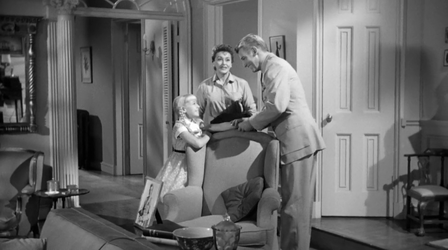
The Bad Seed (1956)

I am always intrigued by films that have children in important roles, films like The Search or The Four Hundred Blows, which call for children to really show off their acting skills. The Bad Seed is another for the list, and an unusual film, in that it has the child (Patty McCormack) in what might have been an unsettling experience for a child actor.

The Bad Seed begins in the home of Colonel Kenneth Penmark (William Hopper), who has been transferred to Washington, DC and is just about to leave. His farewell to his wife Christine (Nancy Kelly) and their eight-year-old daughter Rhoda (Patty McCormack) is touching: these three are obviously a loving, happy family. Rhoda, in particular, comes across as an affectionate child, adored by her father.

Continue reading

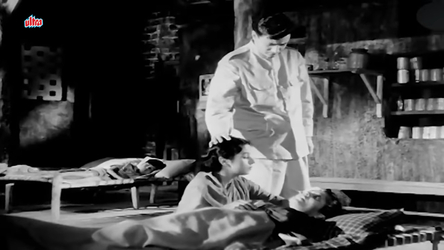
Kaala Bazaar (1960)

The first time I watched Kaala Bazaar was perhaps in my early teens: the film was being shown on Doordarshan, and given that back then I was very fond of Dev Anand, I watched it. I have very vague recollections of that viewing. What I do recall, vividly, is that I didn’t like that my hero was a criminal.

… which, as I came to realize later, was actually not so very uncommon a style for the characters Dev Anand played. Unlike the other major romantic hero of the time, Shammi Kapoor, Dev Anand didn’t just play characters who got up to ‘mischief’, so to say; his characters—from Tony in Jaal to Raju in Guide, from Chhagan in Roop ki Rani Choron ka Raja to Babu in Bambai ka Babu, plus others—were outright criminals: thieves, conmen, smugglers, men definitely on the wrong side of the law.

Like Raghubir ‘Raghu’ in Kaala Bazaar. Raghu is a bus conductor when the story begins, and within the space of a couple of minutes, his life takes an about-turn. A belligerent passenger is standing in the bus (which is against the rules), and when Raghu asks him to get off the bus, the man refuses. Both he and Raghu lose their tempers. Fists fly, and the next thing we know, Raghu is without a job.

Raghu’s mother (Leela Chitnis) is ill, and he has a sister (Nanda) and a young brother (?) as well; he cannot afford to be without a job. Desperate, Raghu flounders about, trying to find work. If not work, money.

Continue reading

The Ladykillers (1955)

Long-time readers of this blog probably know by now that I have a soft spot for suspense films, heist films, comedies, and—where these genres sometimes meet—films about bumbling crooks. The funny heist film, so to say, where everything goes wrong. Some months back, when I watched Gambit (which I enjoyed very much), a subsequent search for funny heist films threw up another suggestion that I’d heard of before: The Ladykillers. Like Gambit, this too starred Herbert Lom, an actor I like, and because I was fresh from watching Gambit, I thought why not give this one a try too.

The Ladykillers begins with the lady in question: sweet, somewhat scatter-brained old lady Mrs Wilberforce (Katie Johnson), who emerges from her house at the end of a lane and walks down the street nearby. Everybody around seems to know and like Mrs Wilberforce: people greet her, and when she reaches her destination—the local police station—the cops are indulgent. Mrs Wilberforce has come to clarify that her friend, another elderly lady who had informed the police station about spotting a spaceship, was actually misinformed… Mrs Wilberforce’s explanation is detailed and apologetic, and her earnestness shines through bright and clear.

Continue reading

Barjatri (1951)

Aka The Wedding Procession, though Hindi speakers will probably be able to relate to a more exact approximation of what barjatri means: baraati. The people who, at a wedding, accompany the bridegroom to the venue, invariably in great pomp and to be made much of. This delightfully funny film centres around a group of young men whose story begins just before all of them are to travel, as baraatis, for their friend’s wedding.

One of these is Ganesh ‘Gansha’ (Kali Bannerjee), who lives in his uncle’s home, and is unemployed. Uncle (?) has been pushing Ganesh to find a job, but Ganesh couldn’t be bothered. He would rather spend time sitting with his pals, chatting and smoking, all of them generally enjoying themselves.

Continue reading

Amrapali (1966)

Happy birthday, Vyjyanthimala! (it’s either her 90th birthday or her 87th today, it doesn’t seem very clear which, but anyway).

Among the recent books I’ve read is Advait Kottary’s Siddhartha: The Boy Who Became the Buddha, a fictionalized retelling of the story of the Buddha. While Siddhartha is the focal point of the narrative, several other important historical personages appear in the book, among them the nagarvadhu or courtesan of Vaishali, Amrapali. Amrapali is shown to have originally had a relationship with the ruler of Magadha, Bimbisara: so much so that she bears him a son, whom she is later compelled by circumstances to hand over to the Buddha to bring up. Bimbisara’s belligerent and headstrong son and heir, Ajatshatru, though he’s never seen ‘his father’s courtesan’ (as Kottary describes her), detests Amrapali.

… until he, injured in a way with Vaishali, impersonates a Lichhavi (native to Vaishali) soldier in order to escape with his life. Fate brings Ajatshatru and Amrapali together: she, thinking him to be Lichhavi, tends to his wounds and heals him, and they fall in love.

It’s been ages since I watched the Vyjyanthimala-Sunil Dutt Amrapali, and while I remembered some of the core elements, I’d forgotten much of it. As far as I remembered, the film had nothing whatsoever about Amrapali’s relationship with Bimbisara or her having a son with him. To be honest, I’d have been very surprised if that aspect of her life had been shown: it would have been far too bold for Hindi cinema, back then, to have a heroine who could have affairs with both father and son, and bear a child out of wedlock.

So I decided it was time to rewatch Amrapali, which begins in Magadha. Here, the king, Ajatshatru (Sunil Dutt), is in conference with his trusted advisor, friend, and Magadha’s commander-in-chief, Veer (Premnath). Ajatshatru is a hot-headed warmonger, and right now baying for the blood of the democratic Lichhavis, whose land, Vaishali, lies across the river to the north.

Continue reading

Insaniyat (1955)

This is one film that’s been on my to-watch list for several years now, mainly because it is the only film that stars both Dev Anand and Dilip Kumar. Also, as I’ve gathered from a few articles and posts I’ve read, this is also possibly the only film that doesn’t feature Dev Anand as a modern city slicker. He’s still somewhat of a sophisticate—by no means an illiterate rustic—but this is set in some undefined ‘raja-rani’ time period where Dev Anand spends all the film in something other than Western clothing.

But, to begin at the beginning. Zangoora (Jayant) is a nasty tyrant whose idea of ruling his kingdom is to be brutal with his subjects. Every now and then, his soldiers are sent out into the countryside to loot villages and bring back all that they can find. Zangoora’s troops are vile, uncaring, as brutal as their boss.

They’re at one village, upturning things, grabbing and snatching, when a furious village woman, Durga (Bina Rai) comes charging up. Durga lets fly at the man leading the troops, Bhanu Pratap (Dev Anand, his upper lip topped with a ridiculous moustache). Durga slaps Bhanu, and then proceeds to berate him for his mindless cruelty.

Continue reading

Spring in Park Lane (1948)

PG Wodehouse is one of my top favourite writers. I’ve read most of his books, and I’ve explored some of his intersections with cinema: the films he was involved in, and the films that were based on his books. Of the latter, I’ve realized again and again, there seem to be very few that do anything close to justice to Wodehouse’s inimitable blend of humour. Some of the shorter TV films (like Heavy Weather, starring Peter O’Toole as the eccentric Lord Emsworth) or TV series like Jeeves and Bertie are good (though Jeeves and Bertie, after a few good episodes, went off the rails).

But now and then I come across a film that has nothing to do with Wodehouse, but seems somewhat like a homage. With the same light-hearted charm of the master, the same frothy humour that never fails to appeal to me.

As in Spring in Park Lane

The film begins with Judy Howard (Anna Neagle) ringing the doorbell of her home in London, only to have the door opened by a complete stranger (Michael Wilding). Judy is surprised, and the conversation that ensues has both her and the man quite baffled. It’s only with a little perseverance, and some help from the butler Perkins (GH Mulcaster), who comes rushing up from below stairs, for the fog to clear. This man, Richard, is the new footman.

Continue reading