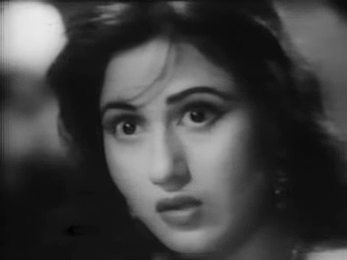
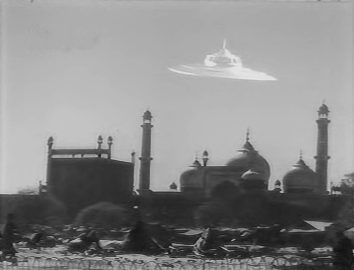
Chitralekha (1964)

I have decided it’s high time I began rewatching some of the old Hindi films I last saw when in my teens (or, in some cases, even before that). Back then, all our film viewing used to happen on India’s sole television channel, Doordarshan, which would telecast Hindi films every weekend, and sometimes in between as well. Most of the films were old classics, and I have fond memories of first viewings of films which became firm favourites almost from the get-go: Junglee, Teesri Manzil, Nau Do Gyarah, Dekh Kabira Roya, Woh Kaun Thi?, Mera Saaya

There were also films that I watched (we watched everything, there was such a paucity of options for entertainment) but which I ended up not liking. Or, as in the case of Chitralekha, not really understanding. I guess this was a simple case of being too young, too immature, to grasp the niceties of a film that wasn’t the standard masala entertainer.

About time, I thought, I saw this one again.

Kidar Sharma, who directed Chitralekha, had already made this film (based on a novel by Bhagwati Charan Verma) earlier as well. The 1941 Chitralekha starred Mehtab (who of course later married Sohrab Modi) and the juiciest bit of information about the film is that it featured a bathing scene (Cineplot used to have an article about this, an excerpt from Kidar Sharma’s autobiography, but since Cineplot now seems to be sadly defunct, that’s gone). Kidar Sharma did say, from what I recall of his autobiography, that the original Chitralekha was far superior to the 1964 remake.

But the 1941 film is, I think, gone—or at least not available for viewing online, though there are songs and stills galore. I may as well watch the 1964 Chitralekha, I decided, since that was the one I had hazy recollections of watching as a child.

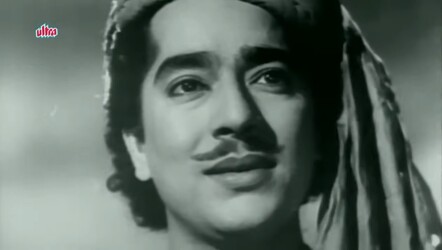
The story is set in Pataliputra during the heyday of the Gupta Empire. Aryaratan Samant Beejgupt (Pradeep Kumar), a high nobleman, has just returned to Pataliputra after a sojourn elsewhere. Beejgupt’s arrival in the city is greeted with anticipation: his fiancée Yashodhara (Shobhna) is shyly hopeful that this time he will marry her.
Continue reading

Ten of my favourite Pradeep Kumar songs

This post is ten days late. January 4, 2025 marked the 100th birth anniversary of an actor who, in an industry dominated by Punjabis, was one of just a handful of Bengali leading men. And, unlike—say, Biwasjit or Joy Mukherjee—to have a respectably long innings as an actor, playing lead roles right through the 50s and 60s, and then continuing as a character actor up to the last years of the 1900s. Impressive.

Continue reading

Police (1958)

If you’ve been reading this blog some years, you probably know by now that I am a fan of Madhubala’s. I’ve watched most of her films (several of which I have not got around to reviewing on this blog), I’ve done lists of my favourite songs of hers, and I have waxed eloquent every now and then about how much I like her.

One of the things I dislike about much of the online (at least) raving about Madhubala is that the praise is invariably just about her beauty. How gorgeous, how exquisite. Yes, indeed; but Madhubala’s beauty, I think, often comes in the way of people appreciating what a good actress she was, too. Watch her performances in films like Mughal-e-Azam and Amar, for instance, and if you can look past her face, you will see how well she holds her own against heavyweight thespians like Dilip Kumar and Prithviraj Kapoor.

And she was a fantastic comedienne too. The madcap way she matches Kishore Kumar in Chalti ka Naam Gaadi, for example. Or her airhead character in Mr & Mrs 55. Interestingly, Madhubala is often compared to Marilyn Monroe, almost entirely on the basis of their beauty and popularity; but I think the two stars had one more thing in common: both could portray the ditzy beauty very well. This, in fact, is just the type of woman Manju, of Police, is: nutty, silly, a clown. But so endearing too (and, it goes without saying, so gorgeous).

Continue reading

Wahan ke Log (1967)

This is a film I’ve known about for many years now: I first heard about it on Greta’s blog, and have since been in two minds about whether to watch it or not. It sounded too nutty to miss (aliens toting laser rays and stealing diamonds? NA Ansari in a double role and Nilofer in a bad wig? Tanuja as ghost-who-sings?), but from my previous experiences of films directed by NA Ansari, I’ve realized that after a while, the madness of the script, the plethora of plot holes and the sheer pointlessness of much of what’s happening, can become very tedious.

But this is considered somewhat of a cult film, and one of the very few early Hindi films that had an element of sci-fi in it. So, if just for that (I like sci fi as a genre), I decided to watch Wahan ke Log.

Continue reading

Zindagi ya Toofaan (1958)

After many years of telling myself I should read Mirza Hadi ‘Ruswa’s Umrao Jaan Ada, I finally got around to reading a Hindi translation a couple of weeks back. This turned out to be an underwhelming experience (more details here, on my Goodreads review of the book), but it impelled me to read a synopsis of Umrao Jaan Ada. I ended up reading, too, about the screen adaptations of the book (which is regarded by many as the first Urdu novel), and was surprised to discover that, besides the Rekha-starrer and the (much later) Aishwarya Rai-starrer, there were two other films, both released in 1958, based on Umrao Jaan Ada. One was Mehendi; the other was Zindagi ya Toofaan. I haven’t got around to watching Mehendi yet, but the fact that one of my favourite actresses of the 50s, Nutan, starred in Zindagi ya Toofaan, made me eager to watch this one.

Continue reading

Gateway of India (1957)

Hindi cinema has a tendency towards stories that stretch over long periods of time. Days, at the least, but often months, often many years too (that old trope of children growing up has been a part of too many films to name). It is the unusual film, especially in the 50s and 60s, that extends over just a few hours. Solvaa Saal was one such; Gateway of India is another. Both films are about runaway girls who meet the loves of their lives in the course of one night. That, though, is where the resemblance stops.

Continue reading

Noorjehan (1967)

Give me a period film, and I’m willing to give it a shot. If it happens to be set in Mughal India, so much the better. If the cast features people like Meena Kumari, Pradeep Kumar, Rehman, Veena, Lalita Pawar and Nighar Sultana: well, there’s hope that the acting will be passable. And when I realize that the music composer is Roshan: then I’m certainly on for it.

Noorjehan, of course (though Richard would probably question that ‘of course) is about the noblewoman who married the fourth of the Great Mughals, Jahangir. Born in May 1577 and named Mehrunissa, she was the daughter of a man who rose to great prominence in the Mughal court: Itmad-ud-Daulah (‘Pillar of the State’) was the title given to him, and the marriage of Mehrunissa to Jahangir made of Mehrunissa a powerful woman, too. Initially given the title Noormahal (‘Light of the Palace’) by her doting husband, she was subsequently given the title of Noorjehan (‘Light of the World’) and went on to become probably the most influential of imperial consorts in the Mughal dynasty, a wealthy woman in her own right, as well as a woman who exercised a good deal of power from beyond the purdah.

pic1

Continue reading

Mahabharat (1965)

I hadn’t heard of this version of the Mahabharat till a few days back (not, of course, that the existence of this film is surprising; given Hindi cinema’s love for mythology, there was bound to be at least one version of this epic floating about). Then, commenting on my jewellery songs post, blog reader Afsal posted a song from Mahabharat, and mentioned part of the cast: Pradeep Kumar as Arjun. Dara Singh as Bheem. Padmini as Draupadi.
And good songs.

That sounded deliciously unlike the usual B grade Hindi mythological, so I went looking for it on YouTube, and watched it.

I won’t narrate the complete story here; the Mahabharat is too well-known for that (and if you aren’t familiar with it, I’d advise checking it out first before watching the film). Suffice to say that the film begins right in the middle of some action, without setting any preliminary background in place. At the court of the blind King Dhritrashtra in Hastinapur, the entire court is watching the two cousins Bheem (Dara Singh) and Suyodhan/Duryodhan (Tiwari) engage in a wrestling match.

The wrestling match at Dhritrashtra's court

Continue reading

Raj Hath (1956)

Despite my love for historicals and Madhubala, I was surprised when Ava mentioned this film on her blog. A historical (and a Sohrab Modi one, too), with Madhubala, and I’d never heard of it? Ava recommended it, so I decided to keep an eye out for it. Fortunately, I discovered Raj Hath on Youtube—therefore, this post. Ava, thank you. This was an enjoyable film.

Madhubala and Pradeep Kumar in Raj Hath Continue reading