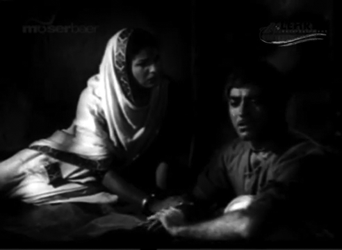
Who would’ve thought that the Ramsay Brothers’ first production was a historical worthy of a Sohrab Modi [granted, it does have two far-too-chubby leading men and its fair share of violence, but still; Rustom Sohrab is no horror film, not by a long shot]? But yes, Ramsay Productions—famous for its B grade horror films of the 80s and 90s—did make this rather surprising debut, a film based on the Persian epic poem Rostam and Sohrab (part of the famous Shahnameh).
Author Archives: dustedoff
On the blackness of Delhi’s monuments…
Flower Drum Song (1961)
A very belated tribute to an actor I’ve actually seen only in a couple of films, but whom I like a lot: James Shigeta. The Hawaiian-born Shigeta passed away on July 28 this year, and it came to me as a shock a couple of days ago when I discovered that he was gone—and that no newspaper and none of the sites I occasionally visit—mentioned it. The news, however, made me remember the first film in which I saw James Shigeta: Flower Drum Song, one of his earliest films. Very different from his debut film (the superb The Crimson Kimono, one of my favourite noirs), but enjoyable in its own way—and an interesting commentary, both deliberate and unwitting, on immigrants in the US.
… and back from the Pune Lit Fest
As I’ve mentioned earlier (nearly a year ago, to be precise), I am – despite being an author and not an absolute recluse – not really one of the regulars at Literary Festivals. Which, if you’re keeping track, are now a staple event in the post-monsoon calendar of almost every Indian city worth its salt. Good, I say, but I go to very few of them, and only when I really feel like it.
This time, I got an invitation for the Pune International Literary Festival, September 18-20, 2014. Would I be interested, asked Dr Manjiri Prabhu (the director), in being part of a panel discussion on detective fiction? Considering home-grown detective fiction (I’m not talking Christie, Rankin, and the like) invariably takes a backseat when it comes to the average Indian reader – who, if bookstore displays are to be believed, is more likely to jump at mythology, self-help, or coming-of-age books – well, considering that, I figured anything I could do to help further the cause of Indian detective fiction was work well done.
Johny Mera Naam (1970)
One day in August, I checked my blog roll and discovered that not one, but two, of my favourite bloggers had posted reviews of films based (even if only in spirit) on The Arabian Nights. Anu had reviewed Ali Baba aur 40 Chor, and Ira (aka Bollyviewer) had reviewed The Thief of Baghdad. Coincidence? Planned? If the latter, then why hadn’t I, the third of the three soul sisters, been included in the plan?
It turned out to have been sheer coincidence, but Anu, Ira and I decided it would be a good idea to actually do a themed set of posts. And what better theme than the one Ira suggested: long-lost siblings, such a favourite trope in Hindi cinema.
So here goes. Head over to Anu’s blog to read her review of the delightful Yaadon ki Baaraat (singularly appropriate, considering the link between Anu and me) and to Ira’s blog to read her take on another extremely popular (and superb!) lost-and-found-siblings film, Seeta aur Geeta. And here, of course, is mine: a review of a film which just manages to make the cut for my blog when it comes to time period. A classic story of long-separated brothers who grow up, unknown to each other, on opposite sides of the law.
The Tomb of Abdur Rahim Khan-e-Khanan
[A quick word for Dusted Off regulars, in case you haven’t noticed the non-cinema related posts that have recently appeared on my home page: this is part of the process of combining Dusted Off with my other writing. I’d gotten … Continue reading
Bahu Begum (1967)
…which could probably have been more appropriately titled How to Jump to Conclusions and Mess up Lives. Or Never Trust a Sinister Mamu. This is one Muslim social – a genre I have long admitted to being very fond of – which has been recommended to me so often, I’ve lost track of the recommendations. On the one hand, I wanted to see it because it has some lovely songs; on the other, the thought of watching Meena Kumari in one of her last few films – well, that wasn’t something I was really looking forward to with anticipation. But all those recommendations tilted the balance.
Sagarika (1956)
Every now and then, when I’ve reviewed a Hindi film (Mamta, Sahib Bibi aur Ghulam, Kabuliwaalah, Khamoshi) or even mentioned one (Devdas, Chori Chori), someone or the other has popped up and either informed me (or reminded me) that this film was originally made in Bengali.
It was a little different with Sagarika. This film nobody told me about. I happened to be trawling IMDB checking out the synopses of all of Suchitra Sen and Uttam Kumar’s films, and realized—even as I read the plot of Sagarika—that this was exactly the same story as one of my favourite Hindi films, Bimal Roy’s lovely Prem Patra. Could I resist the temptation to watch it? No.
Sabz Burj
Next up on my list of occasional articles on little-known tombs of Delhi. Yes, macabre as it may sound, Delhi does have a lot of medieval tombs, mainly because—like mosques or forts—tombs were among the few buildings which could endure because they were usually built of stone; ordinary buildings such as houses were often of wattle and daub, or of brick, and therefore less likely to last long. This time, it’s Sabz Burj. Not exactly little-known, since it’s very visible: it stands on the traffic roundabout outside Humayun’s Tomb, at the intersection of Mathura Road and Lodhi Road.
Ten of my favourite ‘male pianist’ songs
Some time back, I received a request from a blog reader and long-ago professor of mine: would I do a post on songs sung at pianos? Hindi cinema, back in the good old days, invariably had a song at a piano per film, often more. I had to inform my ex-prof: I had already compiled, some time back, a post on piano songs: specifically, women pianists. But this gave me an idea: how about a post on male pianists? After all, there has been no shortage of songs picturised on men sitting at pianos.