Ten of my favourite ‘inspired’ songs

I’d been toying with the idea of this list for a while, and memsaab’s recent post on Bhoot Bungla reminded me of it, what with Aao twist karein and its very obvious resemblance to Come on let’s twist again.

I am—and my family and friends know this by now—absolutely and completely enamoured of old Hindi film music. Especially of the 50’s and 60’s. What singers we had! What lyricists! What music directors! What inspiration! The songs were often derived, in small part or large, from a wide range of sources: folk music, classical ragas, Western music, even the rhythmic hoofbeats of a cantering horse. Sometimes the inspiration wasn’t too obvious, or the end result was such a change from the original, it was hard not to give credit to the music director. Other songs were shameless ‘lifts’ from originals.
So here goes: my favourite ‘inspired’ songs, all from 50’s and 60’s films that I’ve seen. And to make the scope more manageable for myself: tunes that were originally Western. These are in no particular order.

Continue reading

Desirée (1954)

This Jean Simmons-Marlon Brando starrer should ideally have been reviewed last fortnight, as a tribute to the beautiful Jean, who passed away on January 22, 2010. But I was in Pondicherry, and the DVD was in Delhi. I’m back home now, and having watched Desirée all over again, am ready to say a final goodbye to Jean (can one ever do that for favourite stars one will continue to watch over and over again, long after they’re gone?)

RIP.

Continue reading

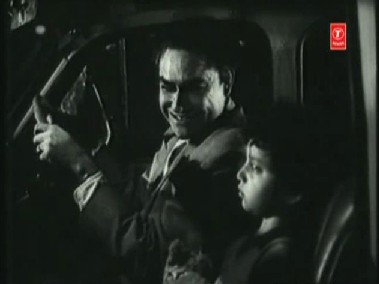
Bombai ka Babu (1960)

Much as I do not like like Dev Anand in his post-60’s avatar (the too-black hair, the bandanna and the cap don’t make him look any younger; they just bash home the fact that he’s aging most disgracefully)—I do like him in a lot of the films he did in the 50’s and early 60’s. There are some great suspense films here (CID, Baat ek Raat ki, Kaala Paani, Jewel Thief) and some great drama/thriller/romance/whatever (Jaal, Hum Dono, Paying Guest, Solvaan Saal, Guide, the very unusual Ferry)—and this, a simple story of a thief who finds himself impersonating the long-lost son of a village zamindar.

Continue reading

The Three Musketeers (1948)

I admire producers and directors who gamble on completely stereotyped stars and cast them in roles one normally wouldn’t associate with them. For instance, I would probably not have thought of casting Dean Martin, with his playboy image and his singing star persona, as the drunk and pathetic deputy in Rio Bravo. I may not have considered Doris Day (screwball comedy!) appropriate as the stalked woman in Midnight Lace. And I most certainly wouldn’t have thought of casting ace dancer Gene Kelly as the lead man in this entertaining swashbuckler, which doesn’t have a single dance.

Continue reading

Bandish (1955)

A consumptive is told by his doctor that his days are numbered. An orphan who doesn’t even know what his parents looked like, finds himself unwanted. A man who loves a dancer/singer is forbidden by his stern father to marry the girl—and she acquiesces. The man sinks into despondency, alcoholism and debauchery, ending up being blackmailed by a gold-digger with an eye on his wealth.
Meena Kumari. Ashok Kumar. Nasir Hussain.

Tragedy? I’m glad to say no!

Continue reading

Chhoti Bahen (1959)

This blog’s been on a Hollywood roll long enough (two films in succession? Too long). So we’re back to good old Bollywood, and with a film that somewhat repeats the cast of the deplorable Bhabhi: Balraj Sahni (again as the long-suffering, self-sacrificing eldest brother), Nanda (again simpering and whimpering), even Shyama, again as the daughter-in-law who starts off being nice but changes into a screechy harridan. And, like Bhabhi, this too is about a loving family split asunder.

Continue reading

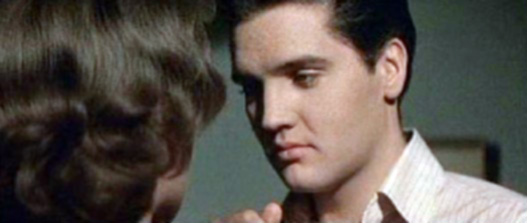
Wild in the Country (1961)

Last year, to celebrate my birthday, I posted a review of a film featuring an actor who also shares my birthday. The actor was the beautiful and very talented Nanda; the film was one of the best Hindi suspense films I’ve ever seen: Ittefaq.
Well, it’s my birthday again, and since I’m such a fan of tradition, I decided to stick with the precedent. So here’s another film featuring someone who had their birthday on January 8: Elvis Presley.

Continue reading

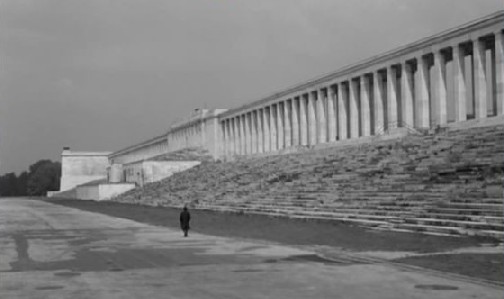
Judgement at Nuremberg (1961)

My mother was brought up in a family ruled by a very orthodox old curmudgeon—sorry, gentleman—who believed cinema was inherently evil. This was my great-grandfather, and thanks to his restrictions, the only films my mother and her siblings were allowed to watch were The Ten Commandments and Quo Vadis. After his death, though, the family let themselves go to seed. No, they didn’t start watching all the porn they could lay their hands on (I doubt there was much floating around in the Calcutta of the 60’s, anyway), but they certainly began seeing some films that, while not evil by any stretch of imagination, would probably not have won great-granddad’s approval. The Innocents. The Three Faces of Eve. And this one, a thought-provoking, disturbing film that raises a lot of questions.

Continue reading

Saat Hindustani (1969)

Last week I watched Shichi-nin No Samurai. Earlier this week, The Magnificent Seven (which was based on Shichi-nin No Samurai). So, logical progression? Next in line ought to be a film based on The Magnificent Seven. Saat Hindustani. Going by the law of averages (or should that be the law of diminishing merit?), I guess I shouldn’t have held out much hope for this one. Shichi-nin No Samurai is far superior to The Magnificent Seven, and The Magnificent Seven is light years ahead of Saat Hindustani.

Continue reading

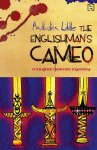
The Englishman’s Cameo

My first novel, The Englishman’s Cameo, published by Hachette India, is a detective story set in 17th century Delhi. — “Muzaffar Jang is that rare creature in Mughal Emperor Shahjahan’s Dilli – an aristocrat with friends in low places. One of whom, Faisal, stands accused of murder. When the body of Mirza Murad Begh is found stabbed in the chest, lying in a water channel in the Qila, poor Faisal is the only one around. But what of the fact that, right before his demise, the victim had stepped out of the haveli of Shahjahanabad’s most ravishing courtesan? Could not the sultry Mehtab Banu, and her pale, delicate sister Gulnar have something to do with the murder? Determined to save his friend, Muzaffar decides to investigate, with only a cup now and then of that new-fangled brew – Allah, so bitter – called coffee to help him…” Continue reading