Kapurush O Mahapurush (The Coward and The Holy Man) isn’t one film, even though these two short films—each just over an hour long—were released together, as a sort of ‘combined pack’. Unlike Satyajit Ray’s other well-known set of short stories-clubbed-together film, Teen Kanya, the two component stories of Kapurush O Mahapurush have barely anything in common (except possibly a central male character who drives—or does not drive—the story). I watched these two short films one after the other and thought of writing separate reviews for each—then decided that they’re best reviewed the way I saw them. Together, one after the other.
Restaurant Review: Peninsular Kitchen
Till a couple of years ago, one of our favourite places to go for a good South Indian lunch in Vasant Kunj—somewhat upmarket (not Udupi style), non-vegetarian, yet not prohibitively expensive—used to be Zambar. Then Zambar shut down, and we … Continue reading
Ten of my favourite Shashi Kapoor songs
Of the three Kapoor brothers—Raj, Shammi and Shashi—Shashi Kapoor is the one who falls in the middle when it comes to my personal preferences. Raj Kapoor I tend to not like (except in the occasional film now and then, like Chori-Chori or Teesri Kasam). Shammi Kapoor I am nuts about and will gladly watch in just about any film from his heyday. And Shashi Kapoor—well, he did act in some films I don’t like at all (Bombay Talkie, Benazir, Satyam Shivam Sundaram, Aa Gale Lag Jaa, Raja Sahib…), but he also acted in some of my favourite films. In Prem Patra, for instance. And Waqt. And Pyaar Kiye Jaa. And my guilty pleasure, Sharmeelee.
He was wonderfully handsome in a boyish sort of way, he was a versatile actor (compare, for instance, his hot-headed young Hindu radical of Dharmputra with the madcap of Pyaar Kiye Jaa), he was extremely watchable. (And, to his credit—or his wife, Jennifer Kendall’s?—remained relatively well-preserved until quite late. Of the three brothers, Shashi had the longest innings as a believable leading man, all the way from the start of the 60s to the early 80s).
Ten of my favourite percussion instrument songs
Continuing with an on-and-off series of song lists featuring—in the picturisation—various types of musical instruments. This began with my post on women pianists, followed much later by a post on male pianists, and then a post on songs that featured string instruments. It’s time, I decided, to try and compile a list of good songs that feature another important category of musical instruments: percussion instruments.
Restaurant Review: Mamagoto
I have reviewed a particular section of the Mamagoto menu on this blog before—the Mamabuns section— but, dining out at Mamagoto once again last week (with my parents, my sister and brother-in-law and us, in celebration of my husband’s birthday), … Continue reading
Aankhen (1968)
I spent part of last week reading fellow blogger Todd Stadtman’s book, Funky Bollywood: The Wild World of 1970s Indian Action Cinema (more on that, along with a link to my review of it, at the end of this post). Todd’s book discusses, in affectionate detail, all the iconic action films—spy thrillers included—of the 70s. In a fit of enthusiasm, brought on by Todd’s book, I told my husband, “I want to see Gunmaster G-9”. To which he replied, “I didn’t like that. What I really liked was Aankhen. That was fun.”
Home Delivery Review: Sushiya
While Chinese food has long been a favourite in Delhi, other cuisines from East Asia have taken somewhat longer to make their presence felt in the city’s food scene. Malaysian, Indonesian and Thai food were among the first to arrive … Continue reading
Taqdeer (1967)
Taqdeer—a remake of the Konkani film Nirmonn (1966, directed by A Salaam, who also directed Taqdeer)—wouldn’t have been a film I’d have watched had it not been for one particular song that I like a lot: Jab-jab bahaar aayi aur phool muskuraaye. I noticed the film was up on Youtube (incidentally, this is a surprisingly good print, and with seemingly no arbitrary snipping off of sections). So I settled down one night to watch. For the song. And discovered that the film wasn’t bad—and was somewhat different from the usual.
Lentils and mosques: Moth ki Masjid
Delhi has a vast number of mosques (not unusual, considering the many centuries this city was ruled by Muslims). They’re large and small, obscure and prominent. And some of them have really odd names: the Imliwaali Masjid (‘the mosque of the tamarind’); the Amrudwaali Masjid (‘the mosque of the guava’), and the Randi ki Masjid (‘the prostitute’s mosque’, formally known as Masjid Mubarak Begum, but called by its unsavoury epithet because it had been built by General Ochterlony’s extremely unpopular Indian wife Mubarak Begum).
And then there’s the Moth ki Masjid, near South Extension: the ‘mosque of the lentil seed’.
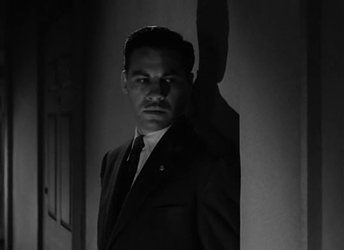
Somewhere in the Night (1946)
What if you woke up one day to find that you couldn’t speak, couldn’t move, and—even worse, perhaps—had no idea who you were? And that when you set out to find out, you opened up a can of worms? That every other person you met seemed to be wanting to beat you or kill you (or ended up dead)—and you had absolutely no idea why?
Some years back, watching Hitchcock’s excellent Lifeboat, I was fascinated by John Hodiak. It was the first time I’d seen this actor, and I wanted to see more of him. After some searching, I discovered this intriguing example of film noir which starred Hodiak as the amnesiac who sets out to discover his identity—and ends up with some even more baffling answers.