Ten of my favourite Dharmendra songs

Happy birthday, Dharmendra!

Considering I am so fond of Dharmendra (and I’ve reviewed so many of his films—including his debut film, the forgettable Dil Bhi Tera Hum Bhi Tere), it seems odd that I’ve never created a list of my favourite Dharmendra songs. Even though he did have a lot of good songs picturised on him. And he acted in some excellent films.

Born on December 8, 1935, in Sahnewal (Punjab), Dharmendra arrived in Bombay after winning the Filmfare New Talent Award. His first films weren’t huge successes: Dil Bhi Tera Hum Bhi Tere, Shola aur Shabnam, and Boyfriend were all flops, despite (in the case of Boyfriend) having an otherwise very popular lead pair. Within a couple of years, though, by appearing in hits like Anpadh and Bandini (in both of which, though, he didn’t have very major roles), Dharmendra began to be a known face—and was soon, by the mid-60s, one of Hindi cinema’s hottest (literally). He was to go on to become the ‘Garam Dharam’ of the 70s, but to me, the Dharmendra is the 60s hero: the quiet, sensitive poet of Anupama; the idealist of Satyakam; the dashing spy of Aankhen.
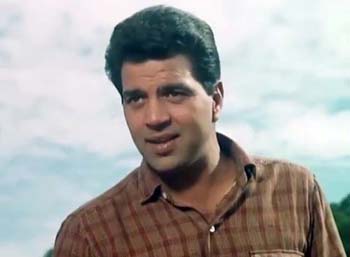
Dharmendra (in Shikar) Continue reading

Ten of my favourite Geeta Dutt duets

This was not the post I’d got planned for this week. But then, when so many people commenting on my Geeta Dutt solos post began writing about Geeta Dutt duets, I decided I may as well compile my list of the Geeta Dutt duets I love the most. After all, I knew I’d do this post, sooner or later. So why not now?

Geeta Dutt Continue reading

Ten of my favourite Geeta Dutt solos

Looking back at the six years this blog has been in existence, I find myself surprised that I’ve never done a post on Geeta Dutt. Geeta Dutt, née Geeta Ghosh Roy Chaudhury, the woman with that beautifully melodious, faintly nasal voice, who was known for singing bhajans and other songs with a classical or folk lilt to them—until SD Burman chose her to sing Tadbeer se bigdi hui taqdeer bana de, and opened up to millions of listeners across the years the astounding versatility of this glorious voice. Geeta Dutt, who could sing with equal finesse everything from club songs to wandering minstrel ones. Geeta, who sang some of the most achingly beautiful songs in Hindi cinema.

Geeta Dutt Continue reading

Mohabbat Zindagi Hai (1966)

Considering ‘arranged marriages’ were—and still are—so common in India, the fact that old Hindi cinema tended to focus mostly on ‘love marriages’ seems rather odd to me. It’s more romantic, I suppose, to imagine that one will fall in love and end up, after various trials and tribulations and having encountered sundry obstacles, married to one’s sweetheart.

There were exceptions, though, the occasional film about people getting married first, and falling in love later. There was Ghoonghat, Saanjh aur Savera, Blackmail, or those examples of child marriages, Chhoti si Mulaqat and Ji Chaahta Hai. Most of them about people who are forced—because of their own submissiveness, and because they can’t pluck up the courage to say no to bossy elders—into getting married to near or complete strangers.

Unlike this one. Mohabbat Zindagi Hai is one of the few examples (Mr & Mrs 55 was another) of someone getting married for a very mercenary reason. And, as in Mr & Mrs 55, the heroine here is an heiress who needs to get married in a hurry in order to inherit. No husband, no money. But, unlike Mr & Mrs 55, the heroine here doesn’t marry because she thinks she can easily divorce her unwanted husband soon after; she marries him because he’s on death row. He won’t be alive three days after their wedding.

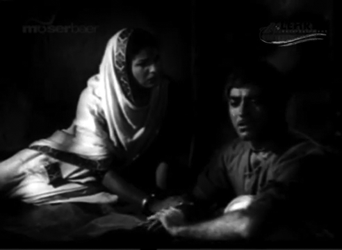
Dharmendra and Rajshree in Mohabba Zindagi Hai Continue reading

Godaan (1963)

I am not a one to make New Year’s resolutions; more often than not, it’s just something I silently tell myself I should attempt to do over the course of the coming year. At the start of 2014, I decided I should read more classic fiction this year—and, importantly, more fiction that wasn’t originally in English. Since the only two languages I am fluent in are English and Hindi, it meant that the only untranslated works I could read would be in either of those two languages. So, after many years (if I remember correctly, I last read a Munshi Premchand novel in school), I decided to read his landmark novel, Godaan.

…and didn’t even know, till a couple of months back, that it had been adapted into a film. When I discovered Godaan on Youtube, I bookmarked it immediately (noting, though, with trepidation, that it starred two people I’m not especially fond of: Raj Kumar and Kamini Kaushal). And I vowed to watch it as soon as possible, at least while the novel was still fresh in my mind.

Raj Kumar and Kamini Kaushal in Godaan Continue reading

Rustom Sohrab (1963)

Who would’ve thought that the Ramsay Brothers’ first production was a historical worthy of a Sohrab Modi [granted, it does have two far-too-chubby leading men and its fair share of violence, but still; Rustom Sohrab is no horror film, not by a long shot]? But yes, Ramsay Productions—famous for its B grade horror films of the 80s and 90s—did make this rather surprising debut, a film based on the Persian epic poem Rostam and Sohrab (part of the famous Shahnameh).

Prithviraj Kapoor and Premnath in and as Rustom Sohrab. Continue reading

Johny Mera Naam (1970)

One day in August, I checked my blog roll and discovered that not one, but two, of my favourite bloggers had posted reviews of films based (even if only in spirit) on The Arabian Nights. Anu had reviewed Ali Baba aur 40 Chor, and Ira (aka Bollyviewer) had reviewed The Thief of Baghdad. Coincidence? Planned? If the latter, then why hadn’t I, the third of the three soul sisters, been included in the plan?
It turned out to have been sheer coincidence, but Anu, Ira and I decided it would be a good idea to actually do a themed set of posts. And what better theme than the one Ira suggested: long-lost siblings, such a favourite trope in Hindi cinema.

So here goes. Head over to Anu’s blog to read her review of the delightful Yaadon ki Baaraat (singularly appropriate, considering the link between Anu and me) and to Ira’s blog to read her take on another extremely popular (and superb!) lost-and-found-siblings film, Seeta aur Geeta. And here, of course, is mine: a review of a film which just manages to make the cut for my blog when it comes to time period. A classic story of long-separated brothers who grow up, unknown to each other, on opposite sides of the law.

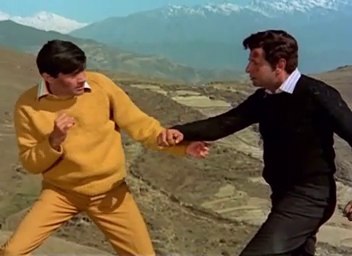
Dev Anand and Pran in Johny Mera Naam Continue reading

Mamta (1966)

While watching Pakeezah some months back (and reading Meghnad Desai’s book about the film), I was struck by how fond old Hindi cinema used to be of the motif of the ‘chaste tawaif’. A paradox, seemingly, because how could a woman be a tawaif – a prostitute, to put it bluntly – and be chaste? But films like Pakeezah and Adalat did just that: they portrayed women who lived in kothas, sang (in Adalat) and danced (in Pakeezah) but were ‘good’ women, chaste and pure, women who may have been lusted after by bad men, but who – thanks to fate, good friends and relatives, kind strangers (both human and animal) – were always able to avoid the fate worse than death: of yielding their chastity to a man they were not married to, or weren’t going to eventually marry, even if only in secret.

Suchitra Sen as Devyani/Panna Bai in Mamta Continue reading

Chor Bazaar (1954)

There were various reasons for my wanting to see this film. One was that it’s a historical (okay, faux historical, considering it’s set in some undefined supposedly Middle Eastern land named Sherqand). The other was that its music was scored by Sardar Malik, one of—in my opinion—Hindi cinema’s very underrated music directors. The main reason, however, was Shammi Kapoor. Though still in his moustached pre-Tumsa Nahin Dekha days, he is one of my favourite actors. So just about anything starring Shammi Kapoor is, for me, worth watching at least once.

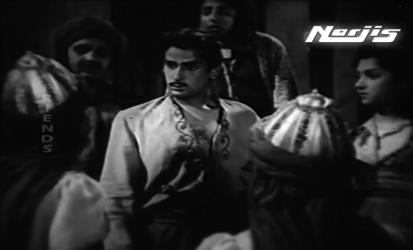
Shammi Kapoor in Chor Bazaar Continue reading