Kaala Paani (1958)

Today is the 100th birth anniversary of one of my favourite Hindi film directors, the suspense-specialist Raj Khosla (I hasten to add: I am well aware that that’s a generalization, since Khosla made a lot of films, too, that had nothing to do with the thriller/suspense genre: Mera Gaon Mera Desh, for example; Chirag, Main Tulsi Tere Aangan Ki, Do Badan, etc). But it is Khosla’s prowess with this particular genre that I especially admire, a skill and talent he showcased in classics of the genre such as Woh Kaun Thi? ((1964), Mera Saaya (1966), CID (1956) and Kaala Paani (1958). In each of these films, he managed to combine the classic elements of the Hindi masala film—a romance, a comedic side track, lots of fabulous songs—while making sure that the suspense remained (mostly) taut, the mystery a solid one.

To commemorate Khosla’s birth centenary, I wanted to review one of his suspense films. Several of these (CID, Mera Saaya, Ek Musaafir ek Haseena, Woh Kaun Thi?) I have already reviewed; I was torn between some of the others: Solva Saal, Kaala Paani, and Anita, all of which I have seen at some time or the other. I decided, eventually, that it was time to rewatch Kaala Paani, a film that I’ve watched several times, but too far back to have reviewed it on this blog.

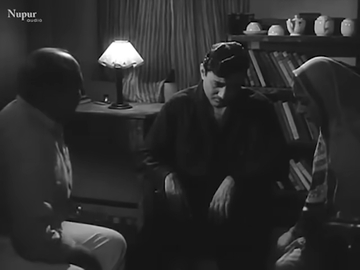
The story begins on a night in Bombay, with a woman (Mumtaz Begum) hurrying through the streets to the home of a family friend, Mr Kapoor (?). She is in great distress, and confides in Kapoor: Karan has discovered the truth. What this truth is we discover when Kapoor hurries to Karan’s home to find Karan (Dev Anand) sitting, looking bereft. He has found out (how, we aren’t told) that his father Shankar Lal has, for the past fifteen years, been incarcerated in Hyderabad jail for the murder of a tawaif named Mala. Not, as Karan has been led to believe all these years, dead.

Continue reading

Dev Anand: Ten Songs, Ten Voices

The very first Hindi film song I remember watching was a Dev Anand one. I was nine years old, and the film was CID. The film had already had a couple of songs (Boojh mera kya naav re, Leke pehla-pehla pyaar) that featured him, but when Aankhon hi aankhon mein ishaara ho gaya came on, it cast its spell on me. I was completely bowled over, and from then on, was a starry-eyed Dev Anand fan.

Over the years, as I’ve become older and wiser (more cynical?), the love for Dev Anand has been tempered somewhat. I don’t like the mannerisms, the exaggerated drawl and pout, the puff of hair, and the larger-than-himself persona he took on once he became a superstar. I find him a bit embarrassing in later films, from the 70s onward, where he’s trying desperately to appear much younger than he really was.

But, in his heyday, I think there was nobody to rival Dev Anand in the charisma department: nobody as suave, as charming, as watchable. And, as if that wasn’t all, his films always had great music. About 90% of my favourite songs as a teenager were from Dev Anand’s films. Munimji, CID, Nau Do Gyarah, Guide, Solvaan Saal, Kaala Paani, Kaala Bazaar, Baat ek Raat ki, Teen Deviyaan… one wonderfully entertaining film after another, one great song after another.

Continue reading

Ten of my favourite ‘two songs in one’

Some years ago, while watching Adalat, I was struck by the interesting way in which the song Jaa jaa re jaa saajna was composed (by Madan Mohan). It begins as a plaintive, melancholic song, the singer (Nargis, lip-syncing to Lata Mangeshkar’s voice) filling her song with the emotion she feels at being betrayed. Then, just as one had settled into thinking that this was a particular type of song, the tone of the song changed. The tempo increased, and though the lyrics still conveyed the same emotion, the singer (Asha Bhonsle) made them so teasing and flirtatious that their import changed. Two songs, one slow and anguished, one fast and vibrant, but woven together into one song. 

What an impressive performance, I thought: and it occurred to me that there were other songs, too, of this type, where a composer and a lyricist create two songs but weave them together. Note that I’m not talking of the back-to-back songs, like Kya se kya ho gaya/Mose chhal kiye jaaye. I mean songs where the two styles of the song alternate. Also note that I regard two tempos of the same tune as two different styles.

Continue reading

Homes and Houses: Ten songs

Some context, first, for this post.

I had recently been on a hiatus for a while because I shifted home. I’ve lived in Delhi for 32 years now, and for various reasons, my husband and I realized it would make more sense to move to Noida.

Shifting house is something I simply hate doing. I should’ve gotten used to it over the years: my father, after all, was in the IPS, and frequent transfers (once every year, when times were good) meant that we moved around a lot. Even after I grew up and got married, we’ve had to shift several times: because a relative offered us their flat at a nominal rent; because—one year down the line—they decided they wanted to sell it; because a landlady wanted to renovate a house; and so on. I have some idea of what to expect now when we hire packers and movers.

But there are always glitches, always another bunch of thoroughly unprofessional professionals. This time was no different. On top of that, I fell ill—first with a viral infection, and then with an infection of the eyes. Till a few days back, I was going around with two red eyes, a hacking cough, and a runny nose (I looked like something out of a Ramsay Brothers flick).

The silver lining, though, is that this made me think of just how important homes are to us. Not mere buildings, but places that we call our own. Places that shelter not just ourselves and our families, but which represent, too, our aspirations, our emotions, ourselves. Hindi cinema has done ample justice to the concept of ‘home’ and ‘house’, from songs like Ek bangla bane nyaara to films like Dastak, Biwi aur MakaanHamaara Ghar, Gharaunda and Tere Ghar ke Saamne.

Continue reading

Ten of my favourite ‘nazar’ songs

My blog posts come about in odd ways. Some are suggestions or recommendations from blog readers, or from friends. Some strike me as I go through life. Some are serendipitous—a video appearing on the sidebar in Youtube while I’m watching something else. And some are like this: an idea which strikes two people at almost the same time. Anu and I don’t always see eye to eye (pun intended), but more often than not, we look at things in exactly the same way.

Therefore, it came as no surprise that Anu’s ‘zulfein’ songs post gave me the idea for an ‘aankhen’ songs post (and, even less surprising, that Anu had already thought of an ‘aankhen’ songs post too). Or that, as I was publishing my post, I thought, “I should do a post on either nigaah or nazar next.” Or, that Anu should send me an e-mail later the same day, in which she wrote: “Perhaps I should do ‘Nigahein’ as a complementary post.”

Anyway, to cut a long story short: Anu and I decided we’d do twin (but not quite; look-alike, as in Hum Dono or Mujrim, might be a more appropriate description) posts. And then Anu suggested we ask our third soul sister, Bollyviewer, if she’d like to join the party as well: with a post about nayan/naina songs. Bollyviewer, good sport that she is, agreed. So here we are, with a trio of song lists. Head over to Anu’s blog to read her post on nigaahein songs, to Bollyviewer’s for her post on nayan/naina songs—and read on for my list of ‘nazar’ songs.

Aapki nazron ne samjhaa - nazar songs

Continue reading

Ten of my favourite ‘Man Sings, Woman Dances’ songs

Sometime back, I was watching Dil Hi Toh Hai, and for the first time, actually paid attention to the scenario and picturization of the classic Laaga chunari mein daag. Raj Kapoor, in disguise, plays a classical singer who prides himself on singing such complex tunes that no accompanying dancer can match him. That sparked off a memory: the situation in Madhuban mein Radhika naache re is similar—it’s a faceoff between a singer (a man) and a dancer (a woman).

And that led to memories of other songs, all with a similar setting: a man singing, a woman dancing. A good enough theme for a post, I thought—especially as I could think of some superb songs that would fit right in. I only had to set down some rules for myself, and these (besides my usual one of including only songs from pre-70s films that I’ve seen) would be that in each of these songs, the man shouldn’t dance, and the woman shouldn’t sing.

Also, the man must be physically present in the picturization of the song (which is why the popular Tu hai mera prem devtaa doesn’t feature in this list, even though I like it).

Man sings, woman dances

Continue reading

Dev Anand in Ten Moods

As teenagers, my friends and I were unanimous about one thing: there was no beating Shammi Kapoor and Dev Anand as the most watchable stars. Not that they were then in their prime; this was in the very late 80s, but as far as my pals and I were concerned, Hindi film heroes stopped being interesting somewhere in the 60s. Both Shammi Kapoor and Dev Anand were all we starry-eyed sahelis could’ve hoped for: utterly handsome, always in films that were generally happy (we conveniently forgot Guide), and always singing the most awesome songs.
We weren’t mature enough then to appreciate that Dev Anand was actually also a good actor, who could switch from melancholy to philosophy, tapori to suave gentleman, in a jiffy.

Continue reading

Ten of my favourite Madhubala songs

The Hallmark Group recently introduced a limited edition of gold-plated silver ingots representing 25 historic stamps of India. Issued under the authority of India Post, it’s called the Pride of India Collection. The stamps replicated run the gamut of concepts, events and people dear to India: Rabindranath Tagore, kathakali, the Taj Mahal, cricket—and more. And with Bollywood so close to the hearts of so many millions of Indians, there had to be a film star featured: and they couldn’t have chosen better.

Pride of India Collection - Madhubala ingot

[Personally, I think the stamp (released in March 2008) does Madhubala justice; the ingot doesn’t. She looks as if, as P G Wodehouse would put it, she’d been bingeing on starchy foods. The eyes are puffy; the smile is off; and she has a double chin. No, I wouldn’t pay Rs 6,000 for this.]

Continue reading