It’s All About Context: Ten Songs

When I create song lists, I always include only songs form films that I’ve watched. This is a rule I’ve imposed on myself, and it’s something that’s drawn questions, sometimes even accusatory. Why would I do that? I am asked.

Besides the fact that this is my blog (and so I get to govern it!), I have usually responded to that question by saying that some songs are best known in context.

Some songs. In fact, not very many. Most Hindi film songs—whether romantic, or depressed, or philosophical (or whatever other emotion)—are almost invariably neatly stitched together with the picturization. What’s happening onscreen is what’s echoed in the song.

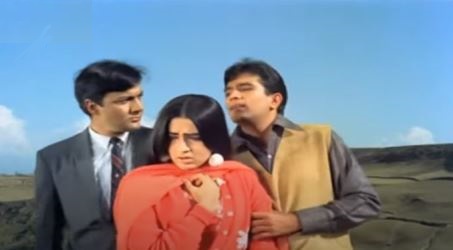
Not always, though. There are a few songs where the song’s lyrics, or the picturization, are deceptive. If you don’t know the context, you may well end up interpreting the song as something very different from how it appears in the film.
Continue reading

Talat Mahmood: Ten Solos, Ten Composers

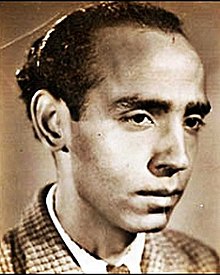
Today is the birth centenary of the ‘King of the Ghazal’, the inimitable Talat Mahmood. Talat was born on February 24, 1924 in Lucknow, and it was in Lucknow itself that he obtained his initial training in music: at the Marris College of Music, where he learnt classical Hindustani music from Pandit SCR Bhatt. By the age of sixteen, Talat was singing the ghazals of Urdu’s foremost poets for All India Radio Lucknow, and was soon taken on by HMV as well. His first introduction to cinema came through the film industry in Calcutta, where he not only sang songs (under the name ‘Tapan Kumar’), but also acted in several films. In 1949, at the age of twenty-five, Talat moved to Bombay, and the rest, of course, is history: he went on to become one of Hindi cinema’s most distinctive voices, and his songs—romantic, filled with pathos, tender, soulful—still live on.

Continue reading

Lata Mangeshkar: Ten Solos, Ten Composers – Part 3

When I posted a Lata Mangeshkar tribute to mark the passing of the singer, I had thought I’d just focus on ten songs with ten different composers; but that, as it turned out, wasn’t enough. There were too many composers, too many good songs, that fell by the wayside in compiling that first post. So I ended up compiling a second, follow-up post, with ten other composers. In the process, I wound up with more songs, more composers than could fit in that second post.

Here, then, is a third list of solos sung by Lata Mangeshkar: ten songs, ten different composers. Of course, none of these composers feature in my two earlier lists. Also, these songs do not overlap with the ones on my very first ‘Lata in Ten Moods’ song list. As always, these songs are all from pre-1970s Hindi films that I’ve watched.

Continue reading

Dilip Kumar in Ten Moods

RIP, Dilip Kumar.

A living legend has gone. Yusuf Khan, aka Dilip Kumar, one of the greatest actors (many would say the greatest) of Hindi cinema, a man who could seemingly effortlessly enact any role. A man who could convincingly be the maudlin drunk, the happy-go-lucky joker, the broken-hearted lover, the cynic who looks on with contempt at a world gone awry. Unlike several of his most successful contemporaries, who let their stardom get to their heads until what you saw onscreen was always the star, never the character—Yusuf Sahib managed always, unerringly, to bring the character to life. He was Devdas, he was Noshu. Amar, Azaad, Saleem. And every other character he has played.

Continue reading

Ten of my favourite Rajendra Krishan songs

2019 marks the birth centenary of two major lyricists of Hindi cinema: Kaifi Azmi and Rajendra Krishan. While they may have shared the same birth year, Krishan and Azmi appear to have been very different personalities. Unlike the ardently socialistic Azmi, Rajendra Krishan seems to have pretty much embraced the capitalist side of life (interestingly, he is said to have been the ‘richest lyricist in Hindi cinema’—not as a result of his earnings as a song writer, but because he won 46 lakhs at the races).

Also, unlike Azmi, who wrote songs for less than fifty films (up to 1998, when he wrote for Tamanna), Rajendra Krishan was much more prolific. Though he died in 1987, by then he had already written songs for more than a hundred films.

Continue reading

Ten of my favourite romantic serenades

This blog has been in existence ten years, and I suppose you can tell how important (or not) Valentine’s Day is over here by the fact that in all these years, I’ve dedicated a post to this day only twice—once, with a list of love songs in ten different moods, and (more recently) with a list of romantic duets.

So here we are, jumping on to the bandwagon yet again. This time, it’s a list of romantic serenades, of people singing in praise of the person they’re in love with (or, as in the case of a couple of fraudulent characters in this list, pretending to be in love with). There are serenades to others (Hindi cinema is full of serenades): to mothers and their near-divine maternalism; to the motherland and to the bond between siblings. None of these, I think, are as ubiquitous and as common as the serenade to a loved one. The praise in honour of his/her beauty, charm, sweetness, simplicity, virtues: going by the way Hindi songs serenade a love interest, you’d think the realm of Hindi cinema was crammed with utter paragons.

Continue reading

Sangdil (1952)

Hindi cinema has, over the years, borrowed liberally from English literature. Shakespeare (Hamlet, and in more recent years, Angoor, Omkara, Maqbool, and Haider), Agatha Christie (Gumnaam), Arthur Conan Doyle (Bees Saal Baad), AJ Cronin (Tere Mere Sapne): Hindi cinema seems to have drawn inspiration from a lot of authors, whether or not that inspiration has always been acknowledged or not.

Here, then, is another film derived from a literary work by a writer in the English language. Charlotte Brontë’s Jane Eyre, published in 1847, has spawned a number of cinematic adaptations (one of the first I ever saw starred Orson Welles and featured a very young Elizabeth Taylor as Helen Burns; one of my favourites stars the brilliant Toby Stephens as Rochester). In Hindi cinema, too, Jane Eyre was made into a film: Sangdil. I’ve been wanting to watch this for a while, and when recently I finally got around to reading the complete, unabridged version of Jane Eyre, I decided it was also time to watch the film.

Dilip Kumar and Madhubala in Sangdil

Continue reading