Great Expectations (1946)

Charles Dickens was one of those authors whose books, I think, might be very difficult to adapt to cinema. Most of his works have a plethora of characters, and characters, too, who are described in great detail: people who play an important part in the proceedings. The books are long and involved, and there’s a style to them that would be more suited, I’ve always thought, to a television series rather than a film.

But every now and then, there comes along a fine adaptation of a Dickens novel that manages to retain the essence of the original, and translate it effectively to screen. Adapted for the screen (along with several other people) by David Lean, and directed by him, Great Expectations was a film I’d approached with some trepidation, wondering how it would work as a film.

The story begins with orphaned Philip Pirrip ‘Pip’ (Tony Wager) running along near the marshes that border the village he lives in. Pip’s parents died years ago, and Pip has been brought up by his very hot-tempered, sharp-tongued sister, Mrs Joe Gargery (Freda Jackson) and her husband, the blacksmith (Bernard Miles). What Mrs Gargery lacks by way of human kindness, Joe makes up for: he’s a sweet, gentle, wise man, who is very fond of Pip.

Continue reading →

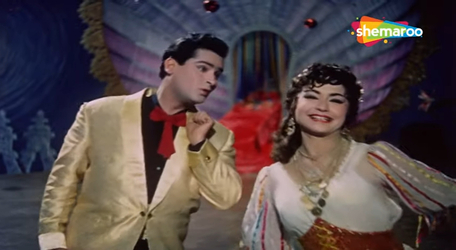
Zindagi (1964)

The main reason I watched this film was because of the songs, which include some very good ones. And Vyjyanthimala, whom I invariably enjoy watching. The two male leads, Rajendra Kumar and Raj Kumar, are not favourites of mine, but they aren’t absolutely unbearable either. And there was a star cast of several other people I like, such as Prithviraj Kapoor and Helen. Ramanand Sagar, who wrote and directed Zindagi, also has to his credit one film I really like (Aankhen) and some (Aarzoo, Ghoonghat, Charas) that I don’t mind too much. I figured there might be enough here for me to enjoy.

The story begins with Beena (Vyjyanthimala) coming home to her mother (Leela Chitnis) with the news that she has found a job, finally. Ma is happy, until Beena tells her what the job is: Beena is now a theatre actress. Ma is very upset and goes into a long harangue of how it’s better to be poor than to be in the theatre; their name will be mud, blah blah.

Continue reading →

Helen and a Male Star: Ten Dances

If Helen danced with many other female dancers—several of them also major actresses, besides being dancers—she also did her fair share of dancing with men. Not just with the ‘dancing extras’ like Herman Benjamin and Abe Cohen, but also men who were stars. In some cases, Helen was the one doing the dancing while the man stood around and wriggled awkwardly (Dev Anand, who was not the best dancer of them all, comes to mind). In other cases, with better dancers (Shammi Kapoor, Feroz Khan, Mehmood) Helen got rather more support from her fellow dancer.

Continue reading →

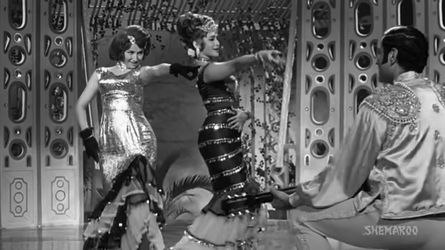
Helen and another Actress: Ten Dance Songs

As part of the birthday celebrations of Helen (she turned 85 on November 21st, 2023), another post of Helen songs.

While Helen has shimmied to umpteen songs by herself (or with a band of male dancers in attendance), there are also a fair number of songs where Helen isn’t the only woman dancing. To celebrate my favourite dancer’s 85th birthday, I thought, it would be fun to come up with a list of song-and-dance sequences featuring Helen with another actress.

Continue reading →

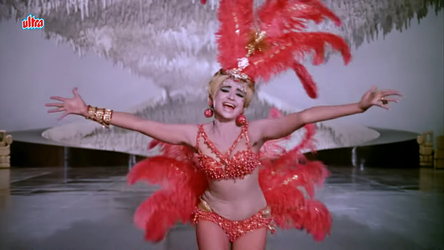
Ten of my favourite Helen songs

And, of course, that pretty much implies: Ten of my favourite Helen dances.

The ‘Queen of the Nautch Girls’ (as a 1973 documentary about her dubbed Helen) turns 85 today: she was born on November 21, 1938, in Yangon. The story of the long journey from Myanmar to Mumbai is not something Helen talks about (she seems to be amazingly reticent; Jerry Pinto, writing about her in The Life and Times of a Bollywood H-Bomb, says that he wasn’t able to get hold of her for even a short interview). But that she entered cinema, courtesy dancing mentor Cuckoo, as a teenager, is well-known. And that she burst upon the firmament of the Hindi silver screen and made it her own is there for everybody to see. From the mid-1950s onward, Helen was to be seen increasingly in Hindi cinema, and with the foot-tapping Mera naam Chin Chin Choo, she rocketed to the top: by the 60s, no commercial film worth its salt could be without a Helen number.

Continue reading →

Deya Neya (1963)

In English, ‘Give and Take’.

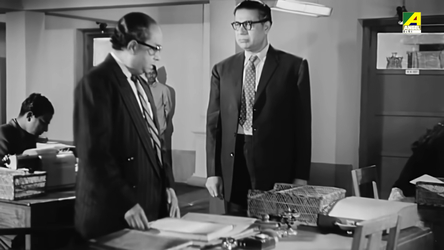
I read a review of this Uttam Kumar-Tanuja starrer many years ago, and, ever since, I’ve been wanting to watch Deya Neya. All this time, I had never been able to get a subtitled version of it, but now there’s one (thank you, Angel), and I wasted no time in watching it.

The story begins in Lucknow, where Proshanto Roy (Uttam Kumar) lives with his parents: his very successful and wealthy industrialist father BK Roy (Kamal Mitra) and doting mother (Chhaya Devi). Mr Roy has Proshanto working at the office, doing accounts; but Proshanto is never to be found at work, and it riles his father up no end.

Continue reading →

Woh Kaun Thi? (1964)

I began this blog on November 4. 2008 (with a review of Vacation from Marriage), so this post marks the fifteenth birthday of Dusted Off. I dithered over how I might celebrate the occasion, and finally came to the conclusion that it would be good to mark it with a review of a film I’ve been meaning to review ever since I decided to start blogging about classic cinema. Woh Kaun Thi? is a film I enjoy a lot, and which I’ve seen in various avatars: first on Doordarshan, when I was a teenager. Then, when VHS tapes became available, multiple times on our VCR. Then, when CDs came along, this was one of the first VCDs I bought… then the DVD. Now YouTube.

The story begins on a stormy night. Dr Anand (Manoj Kumar) is driving down a pot-holed and lonely road when he sees a woman (Sadhana), clad in white and standing in the middle of the road. Anand tells her to move out of the way, but when she doesn’t respond, he is compelled to get out and talk to her. To all his questions—who is she, where is she going, isn’t she scared to be out here alone—she gives evasive, mysterious answers. Finally, however, she consents to let Anand give her a lift, but on one condition: he is not to ask any questions. [Given the way he’s been bombarding her with questions, I’m not surprised].

Continue reading →

The General (1926)

I have a confession to make: I’ve never actually got around to watching, as far as I can remember, any of Buster Keaton’s films. The great American comedian, a contemporary of Charlie Chaplin’s, is often regarded on par with (if not better than) Chaplin. His The General, about an engine driver who accidentally becomes a Civil War hero, is considered by many to be a masterpiece, with Orson Welles calling it the ‘greatest comedy ever made’ (and ‘possibly the greatest movie ever made’).

It was about time I watched The General. Especially since it’s easily available (it’s in the public domain, you can even watch it on YouTube, here).

The story begins in Marietta, Georgia, in 1861. Engine driver Johnnie Gray (Buster Keaton) has just come into town, driving his beloved engine, which is named The General. The General is Johnnie’s great love, along with the pretty Annabelle Lee (Marion Mack). Johnnie attends to his beloved engine, then goes off to meet Annabelle.

Continue reading →

Ten of my favourite Prem Dhawan songs

This post is a little late. It was the birth centenary of Hindi film lyricist, composer, and choreographer Prem Dhawan earlier this year (he was born on June 13, 1923, in Ambala), but what with one thing and another, I just couldn’t find the time to work on this post back then. Anyway, better late than never, I guess. And Prem Dhawan was one person I did want to write about on this blog, because he is one of those rare individuals who didn’t merely excel in one realm of the film industry; he was rather more of a polymath than most.

Continue reading →

The Bad Seed (1956)

I am always intrigued by films that have children in important roles, films like The Search or The Four Hundred Blows, which call for children to really show off their acting skills. The Bad Seed is another for the list, and an unusual film, in that it has the child (Patty McCormack) in what might have been an unsettling experience for a child actor.

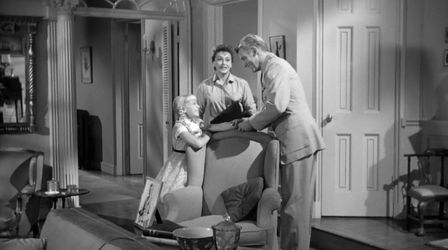
The Bad Seed begins in the home of Colonel Kenneth Penmark (William Hopper), who has been transferred to Washington, DC and is just about to leave. His farewell to his wife Christine (Nancy Kelly) and their eight-year-old daughter Rhoda (Patty McCormack) is touching: these three are obviously a loving, happy family. Rhoda, in particular, comes across as an affectionate child, adored by her father.

Continue reading →