Book Review: Anirudha Bhattacharjee and Balaji Vittal’s ‘R.D. Burman: The Man, The Music’

People who know this blog focuses on pre-70s cinema would possibly be surprised to find a review here of a book about RD Burman—who, to most people, is more associated with Dum maaro dum and all those very peppy Rishi Kapoor songs of the 70s, than the music of the 60s. The fact, however, remains that RD Burman had actually made his debut as an independent composer (not merely as an assistant to his father, SD Burman) as far back as 1961, with the Mehmood production Chhote Nawab. And that he composed the chartbusting music for what is possibly my favourite Hindi suspense film (and one, too, which doesn’t have a single song I don’t like): Teesri Manzil.

This review, therefore, of a book about a man I knew little about except through his music—which has always appealed to me, not just because so much of it was there, all around me, playing on LPs in our house and blaring from radios wherever we went when I was growing up, but because it was so infectious, so full of life. (It was only later that an older, more informed me realized just how versatile RDB was, what softly melodious songs he could compose).

Anirudha Bhattacharjee and Balaji Vittal's 'RD Burman: The Man, The Music'

Continue reading

The Innocents (1961)

My mother grew up in a family ruled by the iron hand of her grandfather, a strict disciplinarian who thought dining out, nightlife, and cinema were a waste of time. Not to mention immoral. As a result, while he was alive, about the only films the family went to watch were The Ten Commandments, Ben Hur, and Kismet.

Mummy once told me that the first film she happened to watch after the old gentleman (and his controlling ways) had passed on was The Innocents. And that she liked it. When I discovered that it starred Deborah Kerr—a favourite of mine—I was curious. I watched this film shortly after I began blogging, but decided I’d postpone a review (and a rewatch) for after I’d read the story on which this film was based: Henry James’s famous The Turn of the Screw.

Deborah Kerr in The Innocents

Continue reading

Ten of my favourite ‘background songs’

I love it when readers comment on my blog posts. I love it when they add songs to lists, introduce me to new songs, remind me of songs I’d forgotten about. I love it even more when they write in and suggest themes for song lists.

Here, therefore, is a song list that arose out of a suggestion. Ashish—who has been reading my blog and commenting on it regularly—sent me a request: how about a post on ‘background songs’? Songs that are relevant to the storyline, but which nobody lip-synchs to? That was a thought that had come to my mind earlier as well, but Ashish’s mail spurred me on to actually compile that list. So here it is: ten songs that appear in films and are relevant to the story, but which nobody is shown actually singing. One important restriction that I placed on myself was that the song should not be a ‘credits song’—it should not play out during the credits. (That, because a credits song list could be a pretty good post in itself).

Waqt ne kiya kya haseen sitam, from Kaagaz ke Phool

Continue reading

Karnan (1964)

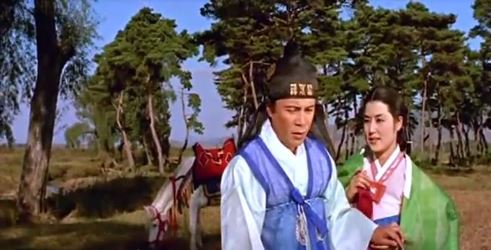
One post often leads to another on this blog. When I posted my list of jewellery songs, blog reader Afsal posted a song from the 1965 Mahabharat—so I went and watched Mahabharat, and reviewed it. And, when I mentioned in that review that I found the reduced-to-almost-nothing character of Karna very disappointing (since I think of Karna as one of the most intriguing characters of the epic), another blog reader—kayyessee—recommended a film that might be of interest, since it focused on Karna. The 1964 Tamil film, Karnan, with Sivaji Ganesan in the lead role. Kayyessee reminded me, too, that it had been a long time since I’d reviewed a regional language film.

Sivaji Ganesan, in and as Karnan

Continue reading

Baat ek Raat ki (1962)

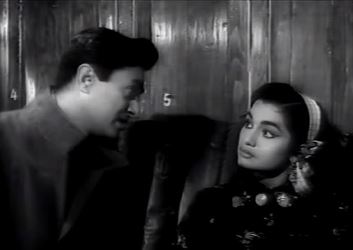
Anu had started this month with a Dev Anand film—and I, following suit, decided I would review a relatively little-known Dev Anand film too, to begin August. But, while Anu’s kept up the Dev Anand theme all through August, I’ve meandered off in different directions, all the way from The Rickshaw Man to jeep songs. But solidarity among friends counts for something, doesn’t it? So here I am back again, with another Dev Anand film. The sort of film that, on the surface, looks like it’s got everything going for it: a suave Dev Anand opposite a very beautiful Waheeda Rehman (who, along with Nutan, was, I feel, one of Dev Anand’s best co-stars as far as chemistry is concerned). SD Burman’s music. Suspense. Some good cinematography.

Waheeda Rehman and Dev Anand in Baat ek Raat ki

Continue reading

Ten of my favourite jeep songs

This post has been floating about in my head for a long time—at least, ever since I did a post on car songs (in which I’d mentioned pretty clearly that I meant only cars, not jeeps). When some readers began putting in jeep songs in the comments too, I figured I had to do a jeep songs list sometime. So here it is, after a long wait.

Unlike cars, which seem to be all over the place in Hindi cinema, being driven both through the countryside and in cities, jeeps are a little less ubiquitous. And there seem to be unwritten rules about who drives them (invariably men). And, more often than not, men in the countryside—preferably a hilly countryside. There’s that perception, I suppose, of the jeep being a rugged vehicle, one suited for rough roads and steep inclines: not the sort of thing a swanky imported car in 50s or 60s cinema would be able to handle.

Jeep Songs

Continue reading

Muhomatsu no Issho (1958)

Or, The Rickshaw Man.

I hadn’t heard of this film till a couple of months back. Around that time, looking at Toshirô Mifune’s filmography on IMDB, I came across The Rickshaw Man, and was intrigued enough to decide I must look out for the DVD. Then, as if destiny too wanted to help me along, I happened to read Ryūnosuke Akutagawa’s Rashōmon and Seventeen Other Stories. The stories—and Akutagawa’s biography at the start of the book—fascinated me. And when I read that one of Akutagawa’s sons grew up to be an actor, I went back to IMDB to see which films he acted in. And The Rickshaw Man was there.

As it turned out, Hiroshi Akutagawa doesn’t have a large role (though it is an important one) in The Rickshaw Man. But it was interesting to see this actor, whose father had written the two stories (Rashōmon and In the Bamboo Grove) on which Kurosawa based one of his best-loved films. And, of course, to see Mifune, who appears here as the epoymous rickshaw man, a poor rickshaw-puller named Matsu.

Toshiro Mifune in and as The Rickshaw Man

Continue reading

Mahal (1969)

I had no particular film review or song list in mind for this week, but when Anu declared August Dev Anand month over at her blog, and Harini reviewed Duniya, I saw a bandwagon that I liked—and decided to jump on to it. With a film that reminds me of Duniya in some ways: Dev Anand, late 60s, suspense.

Asha Parekh and Dev Anand in Mahal

Continue reading

Ten of my favourite ‘Give us a hug’ songs

The other day, I was thinking about some of those songs that end up featuring on every other list I make. Songs that are perennial favourites of mine, because they are those rare combinations of brilliant music and equally brilliant lyrics, singing, picturisation—everything. Songs like Aage bhi jaane na tu, Yeh duniya agar mil bhi jaaye toh kya hai, and Lag jaa gale ke phir yeh.

Lag jaa gale ke phir yeh made a thought pop into my mind: that a fair number of Hindi songs are an invitation to be hugged. That might seem fairly innocuous, but in the good old days of nodding flowers and birds putting their beaks together onscreen, an embrace was a daring enough statement: it meant you did love someone; you weren’t being frivolous. No heroine (or hero, even) worth their salt actually hugged anybody—in a romantic way—other than the love of their life. So telling someone to come on and give you a hug meant you were serious (even if the way it was said—as it is in some of the songs in this list—in a light-hearted way).

Give us a hug, now...

Continue reading

Book Review: Anirudha Bhattacharjee and Balaji Vittal’s Gaata Rahe Mera Dil: 50 Classic Hindi Film Songs

I know I’m a bit late to the party here; Anu had already written about Bhattacharjee and Vittal’s latest book over at her blog, and Harini reviewed it recently on her blog—but better late than never, I guess.

GaataRaheMeraDil

Bhattacharjee and Vittal’s book’s subtitle says it all: 50 Classic Hindi Film Songs. They define ‘classic’ too, in the prologue to the book, where they discuss what is for me truly a classic, the brilliant Baabul mora, by KL Saigal. A timeless song, a song as capable today as it was in the 30s of touching hearts, of making people catch their breath in sheer awe at the music, the lyrics, the rendition—and a song with a story behind it: the story of the exiled Nawab Wajid Ali Shah, ousted from his Awadh and sent away to Calcutta. A song rendered repeatedly by different singers, including some of the greatest voices. And the story, too, of its filming in Street Singer.

Continue reading