This was not the post I’d got planned for this week. But then, when so many people commenting on my Geeta Dutt solos post began writing about Geeta Dutt duets, I decided I may as well compile my list of the Geeta Dutt duets I love the most. After all, I knew I’d do this post, sooner or later. So why not now?
Category Archives: Dusted Off
Ten of my favourite Geeta Dutt solos
Looking back at the six years this blog has been in existence, I find myself surprised that I’ve never done a post on Geeta Dutt. Geeta Dutt, née Geeta Ghosh Roy Chaudhury, the woman with that beautifully melodious, faintly nasal voice, who was known for singing bhajans and other songs with a classical or folk lilt to them—until SD Burman chose her to sing Tadbeer se bigdi hui taqdeer bana de, and opened up to millions of listeners across the years the astounding versatility of this glorious voice. Geeta Dutt, who could sing with equal finesse everything from club songs to wandering minstrel ones. Geeta, who sang some of the most achingly beautiful songs in Hindi cinema.
Dynamite (1929)
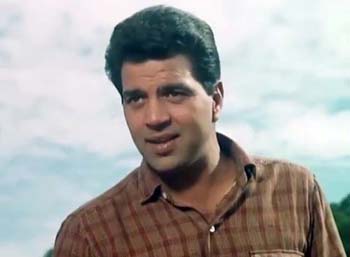
This post is a consequence of the last film review I did: that of the 1966 Dharmendra-Rajshree starrer, Mohabbat Zindagi Hai. A ‘marriage of convenience’ theme about an heiress who must marry in a hurry in order to inherit the wealth due to her—and chooses a man on death row as her husband, so that she can legally get her money, but is conveniently widowed. Only to find that things don’t quite work out the way she’d expected.
The connection with Dynamite, made nearly 40 years earlier, by the legendary Cecil B DeMille? This film, DeMille’s first full-length sound feature, has several similarities to Mohabbat Zindagi Hai: the rich female lead; the clause in a dead relative’s will requiring her to marry in order to inherit; the down-to-earth coal miner who is accused (and convicted) of murder and is chosen by the heiress as a temporary husband so that she can get her money…
Mohabbat Zindagi Hai (1966)
Considering ‘arranged marriages’ were—and still are—so common in India, the fact that old Hindi cinema tended to focus mostly on ‘love marriages’ seems rather odd to me. It’s more romantic, I suppose, to imagine that one will fall in love and end up, after various trials and tribulations and having encountered sundry obstacles, married to one’s sweetheart.
There were exceptions, though, the occasional film about people getting married first, and falling in love later. There was Ghoonghat, Saanjh aur Savera, Blackmail, or those examples of child marriages, Chhoti si Mulaqat and Ji Chaahta Hai. Most of them about people who are forced—because of their own submissiveness, and because they can’t pluck up the courage to say no to bossy elders—into getting married to near or complete strangers.
Unlike this one. Mohabbat Zindagi Hai is one of the few examples (Mr & Mrs 55 was another) of someone getting married for a very mercenary reason. And, as in Mr & Mrs 55, the heroine here is an heiress who needs to get married in a hurry in order to inherit. No husband, no money. But, unlike Mr & Mrs 55, the heroine here doesn’t marry because she thinks she can easily divorce her unwanted husband soon after; she marries him because he’s on death row. He won’t be alive three days after their wedding.
Godaan (1963)
I am not a one to make New Year’s resolutions; more often than not, it’s just something I silently tell myself I should attempt to do over the course of the coming year. At the start of 2014, I decided I should read more classic fiction this year—and, importantly, more fiction that wasn’t originally in English. Since the only two languages I am fluent in are English and Hindi, it meant that the only untranslated works I could read would be in either of those two languages. So, after many years (if I remember correctly, I last read a Munshi Premchand novel in school), I decided to read his landmark novel, Godaan.
…and didn’t even know, till a couple of months back, that it had been adapted into a film. When I discovered Godaan on Youtube, I bookmarked it immediately (noting, though, with trepidation, that it starred two people I’m not especially fond of: Raj Kumar and Kamini Kaushal). And I vowed to watch it as soon as possible, at least while the novel was still fresh in my mind.
The Last Time I Saw Paris (1954)
Looking through the blog posts I’ve published over the past few months, I realized what a long time it’s been since I reviewed one of those Hollywood classics, the type of film that people tend to recognize the name of, even if they’ve never seen it, or even if the film didn’t win any awards. Or wasn’t, eventually, as in this case, all that great after all. But I wanted to watch The Last Time I Saw Paris for two reasons: one, it stars Elizabeth Taylor, one of the most mesmerizing faces in 50s’ Hollywood.
Ten of my favourite string instrument songs
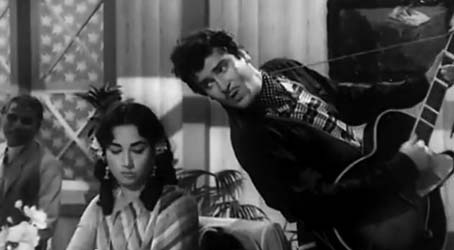
After I’d done my piano song posts, I began to think of other musical instruments that appear in the picturisation of songs. Songs where it’s not an orchestra (Ted Lyons and His Cubs, anyone? Or The Monkees?), but a hero or heroine, not a professional musician, being the one ‘playing’ an instrument? Guitars, I thought, would be a good place to start. A ‘guitar songs’ post. I tried by listing, off the cuff, all the songs I could remember as having a guitar-playing actor or actress. Then I went and checked on Youtube—and discovered that several of the songs I’d remembered as featuring a guitar actually featured a different string instrument: a mandolin, for example (in Tum bin jaaoon kahaan), or some even more unusual and exotic instruments.
Rustom Sohrab (1963)
Who would’ve thought that the Ramsay Brothers’ first production was a historical worthy of a Sohrab Modi [granted, it does have two far-too-chubby leading men and its fair share of violence, but still; Rustom Sohrab is no horror film, not by a long shot]? But yes, Ramsay Productions—famous for its B grade horror films of the 80s and 90s—did make this rather surprising debut, a film based on the Persian epic poem Rostam and Sohrab (part of the famous Shahnameh).
Flower Drum Song (1961)
A very belated tribute to an actor I’ve actually seen only in a couple of films, but whom I like a lot: James Shigeta. The Hawaiian-born Shigeta passed away on July 28 this year, and it came to me as a shock a couple of days ago when I discovered that he was gone—and that no newspaper and none of the sites I occasionally visit—mentioned it. The news, however, made me remember the first film in which I saw James Shigeta: Flower Drum Song, one of his earliest films. Very different from his debut film (the superb The Crimson Kimono, one of my favourite noirs), but enjoyable in its own way—and an interesting commentary, both deliberate and unwitting, on immigrants in the US.
Johny Mera Naam (1970)
One day in August, I checked my blog roll and discovered that not one, but two, of my favourite bloggers had posted reviews of films based (even if only in spirit) on The Arabian Nights. Anu had reviewed Ali Baba aur 40 Chor, and Ira (aka Bollyviewer) had reviewed The Thief of Baghdad. Coincidence? Planned? If the latter, then why hadn’t I, the third of the three soul sisters, been included in the plan?
It turned out to have been sheer coincidence, but Anu, Ira and I decided it would be a good idea to actually do a themed set of posts. And what better theme than the one Ira suggested: long-lost siblings, such a favourite trope in Hindi cinema.
So here goes. Head over to Anu’s blog to read her review of the delightful Yaadon ki Baaraat (singularly appropriate, considering the link between Anu and me) and to Ira’s blog to read her take on another extremely popular (and superb!) lost-and-found-siblings film, Seeta aur Geeta. And here, of course, is mine: a review of a film which just manages to make the cut for my blog when it comes to time period. A classic story of long-separated brothers who grow up, unknown to each other, on opposite sides of the law.