The Three Musketeers (1948)

I admire producers and directors who gamble on completely stereotyped stars and cast them in roles one normally wouldn’t associate with them. For instance, I would probably not have thought of casting Dean Martin, with his playboy image and his singing star persona, as the drunk and pathetic deputy in Rio Bravo. I may not have considered Doris Day (screwball comedy!) appropriate as the stalked woman in Midnight Lace. And I most certainly wouldn’t have thought of casting ace dancer Gene Kelly as the lead man in this entertaining swashbuckler, which doesn’t have a single dance.

Continue reading →

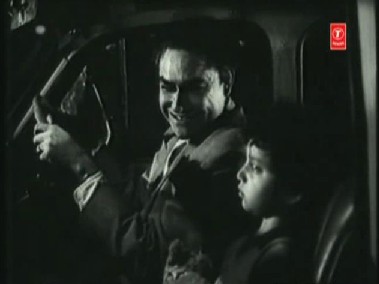
Bandish (1955)

A consumptive is told by his doctor that his days are numbered. An orphan who doesn’t even know what his parents looked like, finds himself unwanted. A man who loves a dancer/singer is forbidden by his stern father to marry the girl—and she acquiesces. The man sinks into despondency, alcoholism and debauchery, ending up being blackmailed by a gold-digger with an eye on his wealth.
Meena Kumari. Ashok Kumar. Nasir Hussain.

Tragedy? I’m glad to say no!

Continue reading →

Chhoti Bahen (1959)

This blog’s been on a Hollywood roll long enough (two films in succession? Too long). So we’re back to good old Bollywood, and with a film that somewhat repeats the cast of the deplorable Bhabhi: Balraj Sahni (again as the long-suffering, self-sacrificing eldest brother), Nanda (again simpering and whimpering), even Shyama, again as the daughter-in-law who starts off being nice but changes into a screechy harridan. And, like Bhabhi, this too is about a loving family split asunder.

Continue reading →

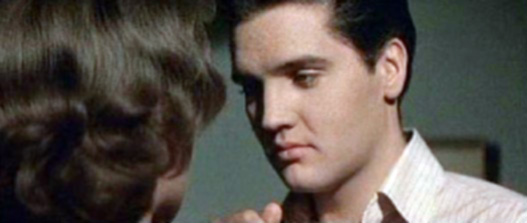
Wild in the Country (1961)

Last year, to celebrate my birthday, I posted a review of a film featuring an actor who also shares my birthday. The actor was the beautiful and very talented Nanda; the film was one of the best Hindi suspense films I’ve ever seen: Ittefaq.
Well, it’s my birthday again, and since I’m such a fan of tradition, I decided to stick with the precedent. So here’s another film featuring someone who had their birthday on January 8: Elvis Presley.

Continue reading →

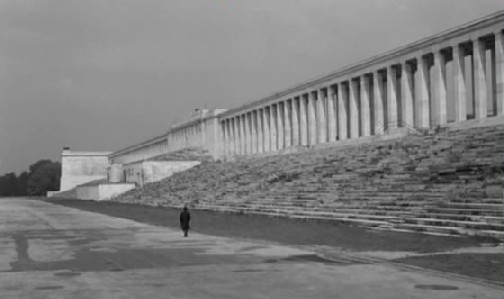
Judgement at Nuremberg (1961)

My mother was brought up in a family ruled by a very orthodox old curmudgeon—sorry, gentleman—who believed cinema was inherently evil. This was my great-grandfather, and thanks to his restrictions, the only films my mother and her siblings were allowed to watch were The Ten Commandments and Quo Vadis. After his death, though, the family let themselves go to seed. No, they didn’t start watching all the porn they could lay their hands on (I doubt there was much floating around in the Calcutta of the 60’s, anyway), but they certainly began seeing some films that, while not evil by any stretch of imagination, would probably not have won great-granddad’s approval. The Innocents. The Three Faces of Eve. And this one, a thought-provoking, disturbing film that raises a lot of questions.

Continue reading →

Saat Hindustani (1969)

Last week I watched Shichi-nin No Samurai. Earlier this week, The Magnificent Seven (which was based on Shichi-nin No Samurai). So, logical progression? Next in line ought to be a film based on The Magnificent Seven. Saat Hindustani. Going by the law of averages (or should that be the law of diminishing merit?), I guess I shouldn’t have held out much hope for this one. Shichi-nin No Samurai is far superior to The Magnificent Seven, and The Magnificent Seven is light years ahead of Saat Hindustani.

Continue reading →

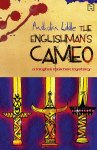
The Englishman’s Cameo

My first novel, The Englishman’s Cameo, published by Hachette India, is a detective story set in 17th century Delhi. — “Muzaffar Jang is that rare creature in Mughal Emperor Shahjahan’s Dilli – an aristocrat with friends in low places. One of whom, Faisal, stands accused of murder. When the body of Mirza Murad Begh is found stabbed in the chest, lying in a water channel in the Qila, poor Faisal is the only one around. But what of the fact that, right before his demise, the victim had stepped out of the haveli of Shahjahanabad’s most ravishing courtesan? Could not the sultry Mehtab Banu, and her pale, delicate sister Gulnar have something to do with the murder? Determined to save his friend, Muzaffar decides to investigate, with only a cup now and then of that new-fangled brew – Allah, so bitter – called coffee to help him…” Continue reading →

The Magnificent Seven (1960)

After having watched Akira Kurosawa’s brilliant Shichi-nin No Samurai last week, I figured it was time to rewatch this film, which goes so far as to mention that it’s based on Shichi-nin No Samurai. For me, The Magnificent Seven has much to recommend it. Firstly, it’s a Western, a genre I’m usually fond of (as long as it steers clear of the run-of-the-mill formulas that John Wayne acted in during the early 30’s—and which, sadly, continued in a lot of films well past the 30’s). Secondly, The Magnificent Seven stars one of my favourite actors, Yul Brynner. Thirdly, it was directed by John Sturges, the very capable man behind classic adventure films like Escape from Fort Bravo, The Great Escape, and Ice Station Zebra.

Continue reading →

Shichi-nin No Samurai (1954)

I first heard about this film when I was a child—The Magnificent Seven was being shown on TV, and one of my parents said it was based on Seven Samurai. End of story, for then.
I’ve grown up since. I’ve heard about the brilliance of Akira Kurosawa. And I’ve recently read that Shichi-nin No Samurai (Seven Samurai) was supposedly the first film ever to use the concept of a group of unconnected people being brought together for a common cause. It therefore seemed high time to finally see the film for myself.
Having just finished watching it, I’m still stunned. This is a mind-blowing film, colossal and profound, gut-wrenching and brooding and action-packed and funny and romantic and… Well, simply unforgettable.

Continue reading →

Games People Play

On a hot day, we climb the Great Wall of China. Not, unfortunately, at Simatai or Mutianyu, the less touristy sections of the Wall near Beijing, but at Badaling. Badaling is 70km from Beijing, the nearest the Wall comes to the capital, and the most commercial and crowded section.

Hanging on to the iron railing that snakes up one of the steeper sections of the Wall, I lean over at a crazy angle of 45˚, trying desperately to adjust my centre of gravity to match the gradient. From one of the upper curves of the Wall, I look down and feel faintly sick as I watch the crowds push on. I am reminded of something a Taiwanese friend had told me: the Chinese word for crowd is people mountain, people sea.

Come August 2008, and the mountain will grow taller, the sea wider. For the 550,000 sports enthusiasts and 10,000-odd sportspeople expected to arrive for the Beijing 2008 Olympics, the city’s going to be spiffy and cosmopolitan. The sights will be spruced up, the hotels plush. There will be English-speaking student volunteers to guide you around, and shiny malls with the biggest brands in the world. Yep, the Games are going to be big.

That is something peculiarly appropriate to the nature of Beijing. In the Forbidden City, the larger than life aspect is expected–after all, everyone knows the Chinese emperors lived in style–but just about everything in Beijing seems to be larger, older, more spectacular, more completely unbelievable than almost anywhere else in the world.
There is, for example, the Yonghegong Tibetan Lama Temple, a busy but charming complex of prayer halls, clouds of incense, white silk scarves, and trees laden with ripening persimmons and pomegranates. I walk through the temples, admiring the gilded Buddhas, twirling the prayer wheels outside each hall till I reach the last one. This is occupied by the pride and joy of Yonghegong: an 18m high statue of the Maitreya Buddha, carved from a single block of white sandalwood.
Craning my head to look up at it, I realize that it is not just the mortal sportspeople who are in the business of bettering the best. Everything in the ‘Northern Capital’ seems to be vying for the Guinness Book. And to leave Beijing after watching just the athletes break records would be as incomplete an experience as tasting only the crisp skin of a succulent Peking Duck.
So, in between the opening and closing ceremonies, pencil in a visit to the Forbidden City, with its 8,000 rooms and lacquered and painted palaces. Push and jostle with the crowds for a glimpse of the exhibits–porcelain, scrolls of calligraphy, jewellery, imperial seals, weapons, even outsize drums. But there are quieter corners: The Museum of Clocks and Watches, hidden behind a screen of pine trees, is deliciously quiet and home to some fascinating timepieces, from diamond-studded pocket watches to huge clepsydras that rise halfway to the ceiling.

Ditto with the Temple of Heaven, Tiantan. Like the Forbidden City, Tiantan isn’t one building, but a series of structures that sprawl across acres of land; in this case, lush parkland dotted with gnarled old junipers. The most important building in Tiantan rejoices in an equally grand name, the Hall of Prayer for Good Harvest. It’s flooded with tourists when I arrive, but this temple is so huge, it dwarfs everything.

I circle around the hall, admiring the triple eaves of the roof–painted in blue, red, green and gold–and peer into the red lacquered interior, where the emperors once prayed for the prosperity of the land. It’s stunning, and I discover that this particular building is made completely of wood, without the use of a single nail.

The second discovery is even more striking, not to mention disconcerting. The all-wood structure of the Hall of Prayer for Good Harvest was struck by lightning in 1889 and burnt down. A subsequent enquiry revealed that prior to the fire, a lowly caterpillar had crawled all the way to the golden ball that surmounts the building, thus defiling it–attracting the bolt of lightning as heavenly retribution. Fanciful, but what really shook me was the fact that 32 court officials were executed for having allowed the caterpillar to get up there in the first place.

That the imperial family was decidedly imperious in its dealings comes as no surprise. The Empress Dowager Ci Xi, who virtually ruled China for 47 years in the late 19th century, for instance, used public funds to build the vast Summer Palace, a series of pavilions, temples and halls on the shores of Lake Kunming. In a darkly humorous bit of irony, Ci Xi actually used embezzled naval funds to get an opulent boat carved out of white marble for the Summer Palace.

To get away from the crowds–the Bird’s Nest, as the National Stadium is fondly called, can seat 91,000 people–take yourself to the Dazhong Si, the Great Bell Temple. It’s now a museum for bells, tucked away in a quiet little corner of north-west Beijing. Its bells range in size from tiny thumb-sized midgets to iron leviathans carved all over with Chinese characters, cranes, clouds and dragons. The pièce de resistance is a bell that hangs all by itself in the very last hall, and weighs all of 50 tonnes.

That’s still 13 tonnes short of Beijing’s biggest bell, which hangs in the Bell Tower. A vertiginously steep flight of 80-odd stone stairs, in a narrow and dark stairwell, leads up to the Bell Tower. I’ve never been scared of heights, but by the time I reach the top–and like an idiot, glance down–I’m sweating. But the bell, towering massively above, is majestic and impressive. Quintessential Beijing.

Will the Games match up? We’ll see.

(First published in Lounge, December 2007)