Humsaaya (1968)

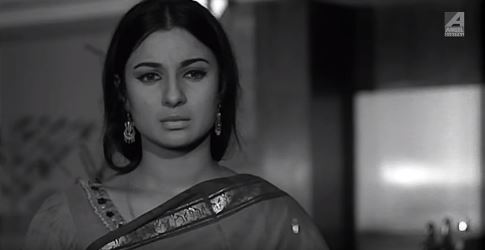
In which Joy Mukherji single-handedly (with some help from the snow-clad Himalayas) defeats an invading army of Chinese guerrillas, thus lending a whole new meaning to the phrase ‘humsaaya aasmaan ka’.

Continue reading

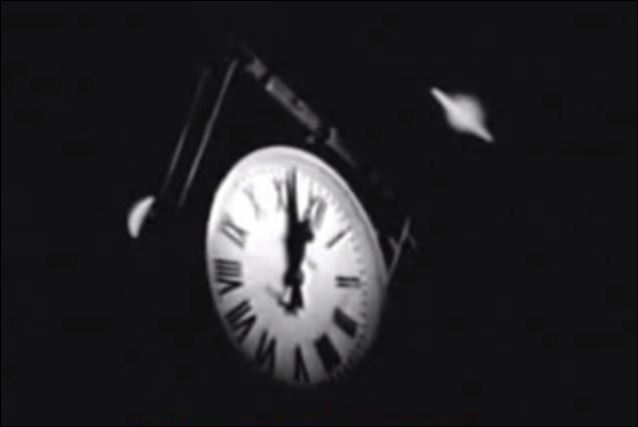
12 O’Clock (1958)

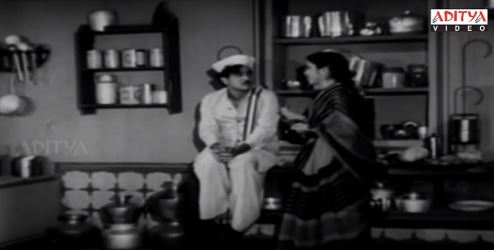
Years ago, in the good old days when the single channel on Doordarshan was our main source of entertainment and we therefore watched everything that was telecast, I watched 12 O’Clock. I’d already seen Guru Dutt’s big films—Pyaasa, Sahib Biwi aur Ghulam, Kaagaz ke Phool, Chaudhvin ka Chaand. I assumed, based on those (I had yet to watch Bahurani or Saanjh aur Savera, and had thought Mr & Mrs 55 a flash in the pan), that 12 O’Clock would be along the lines of the serious stuff Guru Dutt churned out.

… which this is not. Because this is one of a handful of the films Guru Dutt acted in but did not direct.

Continue reading

Pursued (1947)

Exactly a week back, this blog was celebrating the birthday of a favourite of mine: the gorgeous Mumtaz turned 70. Today, Dusted Off celebrates the birth anniversary—the centenary, in fact—of another favourite of mine: Robert Mitchum.

Born on August 6, 1917, Mitchum first began appearing in cinema during the early 40s (having already worked in an eclectic range of jobs, from ditch-digging, professional boxing, theatre actor and writer, to a machine operator at Lockheed). Although he is today best known for noir films (think Cape Fear and The Night of the Hunter), Mitchum acted in varied roles and genres. From one of the best submarine war films ever (The Enemy Below) to an unusual—and endearing—love story in Heaven Knows, Mr Allison; from the angsty medical drama Not as a Stranger to the hard-hitting expression against anti-Semitism, Crossfire… Mitchum was in films of all types.

To commemorate Mitchum’s birth centenary, I found myself in a dilemma. I’ve already reviewed several of his best-known films (not to mention several that are barely known). I’ve even devoted an entire week on Dusted Off to Mitchum. It seemed appropriate to review a Mitchum film: one of the classic noirs? Blog reader Hurdy Gurdy Man suggested Out of the Past or The Big Steal. I decided, instead, to review an unusual film, a sort of cusp between the Westerns that marked Mitchum’s early career and the noirs that marked his later years as an actor. Pursued is a noir Western.

Continue reading

The Outrage (1964)

Rashōmon, set in the Wild West.

I hadn’t heard about this film, let alone seen it, till a few weeks back, when blog reader Hurdy Gurdy Man, commenting on my review of Rashōmon, mentioned it.

Rashōmon—and the Rashōmon Effect—fascinates me, to the extent that I will watch just about any film, read just about any book, that uses this potentially gripping style of multiple narratives. From Andha Naal to The Woman in Question: I am game for them all. So The Outrage, starring one of my favourites (Paul Newman), and in a genre for which I have a soft spot (Western) was immediately bookmarked.


Continue reading

Baadal (1966)

The Three Musketeers meets Hamlet meets Azaad meets general swashbuckling mayhem.

I will admit I watched this film mainly for two reasons: for Sanjeev Kumar, who is deliciously handsome in his early roles; and for the song Nain bedaardi chhalia ke sang lad gaye, which is total eye candy. [I am shallow, that way].

But then, ten minutes into the film, I sat up and began getting my hopes up. Because this was taking the route of one of those classic novels that I’ve always wished Hindi cinema had adapted for the screen: Dumas’s The Three Musketeers.

Continue reading

Ten Thousand Bedrooms (1957)

A hundred years, ago, on June 7, 1917, in Ohio was born Dino Paul Crocetti, the son of an Italian immigrant and his wife, also of Italian origin. Dino spoke nothing but Italian until he was five years old—and didn’t have an easy time growing up, what with having to work jobs as varied as that of a steel mill worker and a gas station attendant. Until 1946, when he finally landed up in Hollywood, changed his name to the more Anglicized ‘Dean Martin’, and teamed up with comic actor Jerry Lewis in a series of comedies. They were to part ways some years later, but Dean Martin went on to become a far greater star—as actor and as singer—than anyone could ever have imagined.

Continue reading

Lucky Star (1929)

Lucky Star is a movie of moments.

A moment when a man, washing down the head of a young girl who’s grubby as can be, happens to ask her how old she is, and realizes, with a start of embarrassment, that she’s not the kid he’s imagined her to be, but a young woman.

A moment when a girl, grateful for the support and friendship of a crippled man, hugs him—and he, after a moment of euphoria, realizes that the love is all on his side; she does not see him as a lover, but as a friend, perhaps as something like an elder brother.

A moment when a crippled man, desperate to be ‘normal’ again, rises painfully up on crutches, grins in triumph—and crashes to the floor the next instant.

Continue reading

Under Capricorn (1949)

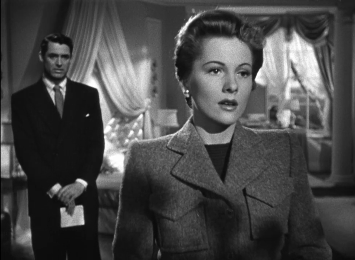
Alfred Hitchcock is, for me, the cinematic equivalent of writers like PG Wodehouse or Georgette Heyer or Agatha Christie: I see their names on a work, and I know that this is something I can read (or watch, in Hitchcock’s case) and almost certainly not end up finding it a waste of time. The other day, trawling Youtube for something to watch, I came across Under Capricorn. I had heard of this one before, but besides being aware that it had been directed by Hitchcock, I knew nothing of the film. A good opportunity to watch a Hitch film I hadn’t seen.

This story begins in an unusual location (for Hollywood, that is): below the Tropic of Capricorn, in Australia. Set in 1831, Under Capricorn begins one day in Sydney, where the new Governor (Cecil Parker) of New South Wales, having just arrived on the continent from Ireland, is addressing the people. His welcome, while all gleaming brass and starched uniforms on the official side, is lukewarm when it comes to the general public. They aren’t especially impressed.

Continue reading

The Women (1939)

Much is made of International Women’s Day, and I find myself inundated with messages relating to that, beginning a week in advance of March 8. Promotions from online retailers, newspaper ads, flyers offering discounts on everything from spa treatments to cosmetics: it’s all there. I however tend to mostly ignore Women’s Day and treat it just as another day.

This time, though, I thought: why not post a review of a film that puts women in an important role? It occurred to me then that it had been years—more years than I could remember—since I had watched The Women. And that this might be a good excuse to rewatch a very unusual film: unusual, not because of the story (which isn’t so very offbeat), but because of the fact that the film has no male characters appearing onscreen. Men are there in The Women, but they are neither seen nor heard.

Continue reading

Kahin Din Kahin Raat (1968)

Let’s say you’re a film maker in the Hindi cinema of the late 1960s. You’ve set your heart on making a thriller. You have some money, but not enough to be able to hope to churn out something with Shammi Kapoor, set in Europe. You see all these glittering films—Teesri Manzil, An Evening in Paris, Jewel Thief—being released, and it irks you. If they can do it, why can’t you? So one day you gird up your loins, and inspired by all of these, and all the James Bond movies you can lay your hands upon, you set out to make your own thriller.

You cannot afford Shammi Kapoor [or is he perhaps too discerning to agree after he’s read the script?], so you settle for Biswajeet instead. You don’t have the budget to shoot abroad, but that doesn’t matter. You will make do by bringing abroad here to India, by plonking a bronze wig onto Biswajeet and having him pretend to be a Parisian named Robbie for much of the film.

Biswajeet with Helen in Kahin Din Kahin Raat Continue reading