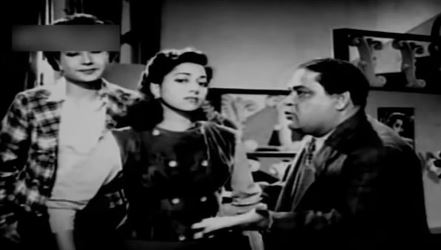
Phool aur Patthar (1966)

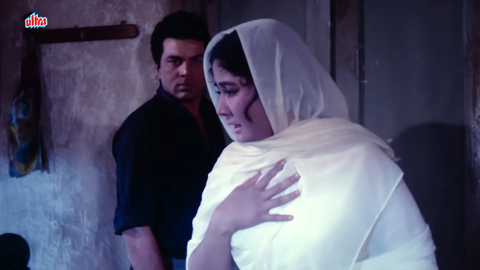
A couple of years back, I watched (and later reviewed) the Meena Kumari-Dharmendra starrer, Bahaaron ki Manzil. A good suspense thriller, it put me in mind of another film starring these two: Phool aur Patthar. I had seen the film many years ago, as a child (implication: this would have been in the early 80s, when Doordarshan’s sole TV channel was our only entertainment besides books and radio, which meant we watched anything that was aired, no matter how mediocre). I remembered nothing of it except that Dharmendra played a thief who ends up being cared for by Meena Kumari, playing a widow.

Continue reading

Chitralekha (1964)

I have decided it’s high time I began rewatching some of the old Hindi films I last saw when in my teens (or, in some cases, even before that). Back then, all our film viewing used to happen on India’s sole television channel, Doordarshan, which would telecast Hindi films every weekend, and sometimes in between as well. Most of the films were old classics, and I have fond memories of first viewings of films which became firm favourites almost from the get-go: Junglee, Teesri Manzil, Nau Do Gyarah, Dekh Kabira Roya, Woh Kaun Thi?, Mera Saaya

There were also films that I watched (we watched everything, there was such a paucity of options for entertainment) but which I ended up not liking. Or, as in the case of Chitralekha, not really understanding. I guess this was a simple case of being too young, too immature, to grasp the niceties of a film that wasn’t the standard masala entertainer.

About time, I thought, I saw this one again.

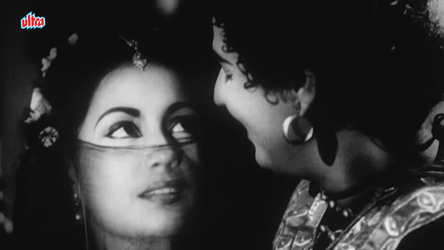
Kidar Sharma, who directed Chitralekha, had already made this film (based on a novel by Bhagwati Charan Verma) earlier as well. The 1941 Chitralekha starred Mehtab (who of course later married Sohrab Modi) and the juiciest bit of information about the film is that it featured a bathing scene (Cineplot used to have an article about this, an excerpt from Kidar Sharma’s autobiography, but since Cineplot now seems to be sadly defunct, that’s gone). Kidar Sharma did say, from what I recall of his autobiography, that the original Chitralekha was far superior to the 1964 remake.

But the 1941 film is, I think, gone—or at least not available for viewing online, though there are songs and stills galore. I may as well watch the 1964 Chitralekha, I decided, since that was the one I had hazy recollections of watching as a child.

The story is set in Pataliputra during the heyday of the Gupta Empire. Aryaratan Samant Beejgupt (Pradeep Kumar), a high nobleman, has just returned to Pataliputra after a sojourn elsewhere. Beejgupt’s arrival in the city is greeted with anticipation: his fiancée Yashodhara (Shobhna) is shyly hopeful that this time he will marry her.

Continue reading

Aladdin aur Jaadui Chiraagh (1952)

Some weeks back, when I reviewed Police (1958), the thought that had stayed in my mind regarding Madhubala’s character—and her acting—in that film and otherwise, in the larger context of her career, was that she got sadly stereotyped. Too many people, film-makers most of all, ended up slotting her as the ravishingly beautiful woman who need only be cast for the fact that she could light up a screen like few others could. Her acting ability (which was actually very good) got overlooked far too often.

Something similar, though in a different way, happened to Meena Kumari. In Meena Kumari’s case, the ‘Tragedy Queen’ label got affixed fairly early in the actress’s career and branded her forever as the Main Chup Rahoongi type: the weepy, self-sacrificing, stoic Bhartiya naari. Despite films like Kohinoor, Azaad, Majhli Didi, Tamasha and Bandish, most people today associate Meena Kumari with ‘serious’ roles.

So, this film, which starred Meena Kumari in one of her lighter roles.

Continue reading

Bhabhi ki Chudiyaan (1961)

Some days back, a blog reader wrote to me (after having recommended several Hollywood films over the past weeks) to tell me that I was ‘wasting my time’ watching and reviewing ‘silly Indian films’.

I was initially too furious to be able to respond, but I eventually wrote back to say how unjustified and insulting this comment was. This, after all, is my blog. Nobody— not my family, not my friends, not the people who might be considered to have some sort of say—tells me what to watch. Recommendations, requests: more than welcome. Judgemental and rude remarks, no. You do not govern how I spend my time.

Once I simmered down a bit, I decided this called for a tribute to ‘silly Indian films’. So, for the duration of August 2022, I’m only going to be focusing on Indian cinema. Not one film from outside India is going to feature on Dustedoff all through this month.

So, to kick off ‘Silly Indian Film Month’, a review of a film I’ve been meaning to watch for a long time now.

Bhabhi ki Chudiyaan begins by introducing us to Mohan (Master Aziz), who lives with his elder brother Shyam (Balraj Sahni). Shyam and Mohan only have each other for family; their mother died giving birth to Mohan, and their father died a few months later. On his deathbed, he entrusted to Shyam the care and bringing up of Mohan. Shyam works as a clerk, and in order to be able to focus on Mohan’s education and upbringing, hasn’t even married. The two brothers somehow make do, but on days such as this—when Shyam has been too busy to make it to Mohan’s school function, where Mohan is getting various prizes—there is angst. Mohan is annoyed and tearful.

Continue reading

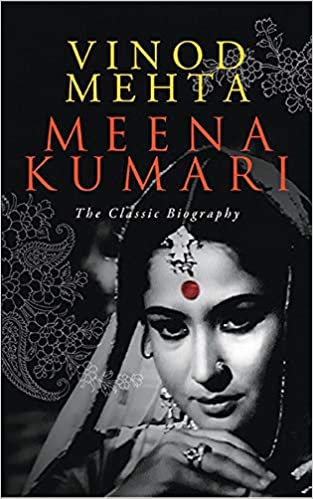
Book Review: Vinod Mehta’s ‘Meena Kumari: The Classic Biography’

On 31st March, 1972, a Good Friday, Meena Kumari died, after a long and painful battle with cirrhosis of the liver. She had been admitted to St Elizabeth’s Nursing Home in Bombay on 28th March, and died three days later surrounded by the people who had played an important part in her life, both personal and professional. Her sisters Khursheed and Madhu; her estranged husband Kamal Amrohi; and various luminaries of the film world, including Begum Para and Kammo, from whose house the Aab-e-Zamzam (holy water from Mecca) was fetched to be spooned into Meena Kumari’s mouth as she was dying.

Over the next few days and weeks and months, Meena Kumari’s name dominated Hindi film news. Her magnum opus, Pakeezah, had just been released, having been 15 years in the making; Meena Kumari’s death served to make the film a success: thousands went to watch Pakeezah simply as a way of paying tribute to the much-loved actress. Praise was lavished on ‘India’s greatest tragedienne’ and there was much speculation about who, really, was responsible for her lifelong misery, and the alcoholism that had finally taken her life. People who had worked with her—co-actors, directors, and others—paid homage.

And Vinod Mehta, based on the success of a book he’d already written (not a biography) was asked if he would be up to writing Meena Kumari’s biography.

Vinod Mehta's 'Meena Kumari: The Classic Biography'
Continue reading

Sharaarat (1959)

It might surprise some of you to know just how many films I watch. No, not new ones, but old films, in the hope that I will find something worth reviewing for this blog. Perhaps one in five of those films gets reviewed, and that because either it’s worth recommending, or conversely, it’s worth warning people off. 

A lot of the Hindi films I watch, I watch because of the music. Occasionally (Duniya Jhukti Hai, Bank Manager, Chandni Chauk) there’s just one song that has prompted my viewing of the film, and the film itself turns out to be so ho-hum that I decide there’s not much point reviewing it. I assume, you see, that most people (unlike me) are sensible enough to not waste a couple of hours watching a film just because it has one good song. 

Sometimes, though, a film has a bunch of good songs, and a cast I have great hopes of. Then, even if it ends up being a bit of a dud, I feel obliged to review the film. Because I want to tell you: steer clear; despite the cast and despite the songs, this is really not worth your while. 

Also, in the case of Sharaarat, there was the fact that this film starred Meena Kumari. And, as I’ve seen from films like Miss Mary, Tamasha, Kohinoor, Azaad, etc, Meena Kumari was very good at comedy. Here, she was paired with Kishore Kumar. I settled down, hoping for some fun. Sharaarat, after all: that sounded promising. 

Continue reading

Miss Mary (1957)

This film has been on my watchlist for a long time now. Earlier this year, when I reviewed the delightful Maya Bazaar, my attention was drawn to Miss Mary, because—like Maya Bazaar—this was a film that was originally made in Tamil and Telugu (as Missiamma/Missamma) and, in this case, then into Hindi too. I was already aware that the film had some lovely songs, and Meena Kumari in a light-hearted role is always a pleasure to watch.

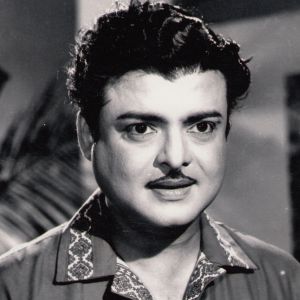
Plus, it stars Gemini Ganesan, whose birth centenary it is today. He was born on November 16, 1919, into a distinguished family that included his aunt Muthulakshmi Reddi, a much-respected social reformer who was instrumental in passing the Devadasi Abolition Act. Thanks to Muthulakshmi, Ganesan was enrolled at Ramakrishna Mission Home, and acquired a fairly strong ‘classical’ education here, including Sanskrit, the Vedas and Upanishads, and yoga. As an adult, though, Ganesan’s career graph was rather more eccentric: he harboured dreams of becoming a doctor, attempted to join the Indian Air Force, and ended up teaching chemistry at Madras Christian College. In 1947, a job at Gemini Studios (from which Ganesan drew his screen name) led him to receive a casting offer from the studio—and Gemini Ganesan’s acting career was launched.

Gemini Ganesan, b Nov 16,1919

Continue reading

Tamasha (1952)

When you are as devoted to the pursuit of old Hindi cinema as I am—and you assiduously discuss old cinema with other like-minded souls—you keep getting recommendations. Some recommendations I take with a certain amount of leeway automatically assigned, since I know that the recommender has his or her own biases that are likely to be reflected in the film in question. Others I tend to blindly follow, because over time, I’ve realized that these are people who pretty much share my own ideas of what comprises watchable cinema.

One of these is Anu, who blogs at Conversations over Chai. We have our differences (Raj Kapoor is one), but by and large, Anu and I tend to agree about cinema. So when Anu, chatting with me during my trip in August to meet her, recommended Tamasha, I immediately made a note of it. After all, Dev Anand, Meena Kumari, Ashok Kumar, Kishore Kumar—and a comedy? That certainly sounded like something I wanted to watch.

Continue reading

Parineeta (1953)

Sometime during the 1990s, I pretty much stopped watching contemporary films. By then, there were a few channels on TV that regularly aired old films, and that was enough for me—in any case, I was in a job so time-consuming that I barely got time to sleep, let alone watch films. For several years, I watched a handful of films that were the current rage. As it was, the songs rarely appealed to me; I didn’t much care for a lot of the people who seemed to be the hottest stars; and some of the biggest films—or so I gathered—were action blockbusters, not really my idea of fun.

And then I watched Parineeta. The 2005 one, which marked the Hindi film debut of one of my favourite present-day actresses. It also proved a turning point for me with reference to Saif Ali Khan, whom I didn’t like before, but began to like (in some roles) after this one. It’s one of the few films in which I’ve not minded Sanjay Dutt. Plus, it has perhaps my favourite score of any film from the 2000s so far.

It wasn’t till much after I’d seen Parineeta—perhaps a few years—that I discovered that there had been an earlier Parineeta as well. Made by Bimal Roy, and starring Meena Kumari and Ashok Kumar. Just those three names in themselves are enough to make me watch a film. And a film based on a novel by Sarat Chandra, no less? I realized it was high time I watched this.

Continue reading

Sanam (1951)

I started off being a diehard fan of Dev Anand’s. While in school and college, pretty much all of Dev Anand’s films I’d seen were the ones Doordarshan aired: CID, Teen Deviyaan, Tere Ghar ke Saamne, Jewel Thief, Nau Do Gyarah, Munimji… what wasn’t to like? Yes, I drew the line at Dev Anand post the early 70s—those mannerisms by then had begun to be tiresome, and the man’s ‘evergreen’ image really didn’t fool me. It was downright embarrassing to watch films like Warrant or Heera Panna.

And then, when I was in my twenties or so, I began paying a little more attention to Dev Anand’s early career—and found that here was a mix of films, some good and some pretty forgettable except for some good music. After trying out films like Vidya and Sazaa, I sort of gave up. Until Sanam was recommended to me by someone who knows his Dev Anand movies inside-out. A comedy, surprisingly modern, I was told.

Continue reading