Top Ten Songs Sung by Actors Themselves (or by Singers Appearing Onscreen) – Guest Post by Abhik

Some weeks back, fellow blogger and reader Abhik Majumdar suggested an idea for a song list: songs actually sung by (not merely lip-synched by) actors. Not singer-cum-actors, but people who were known only for their acting. I couldn’t think of too many songs that would fit my criteria (and those I could think of, were more often than not, from films I hadn’t seen). It did sound like an interesting topic, though (and wouldn’t it be fun to hear the singing voices of people we invariably ‘heard’ only in the voices of playback singers?). So I took the easy way out: I asked Abhik to do a guest post. And here it is. Since this one’s a guest post (and atithi devo bhava and all that…), I allowed Abhik a bit of a free hand. No need to stick completely to my blog’s time lines, for example.

Over to Abhik:

Madhulika’s blog is what a friend calls a ‘time black-hole’ – you get completely immersed randomly browsing through, and then you’re left wondering just where all that time went. Some time I had suggested to her a ‘top-ten’ post on actors singing their own songs or singers appearing onscreen. Most generously, she responded by asking me to do a guest-post instead.
Continue reading →

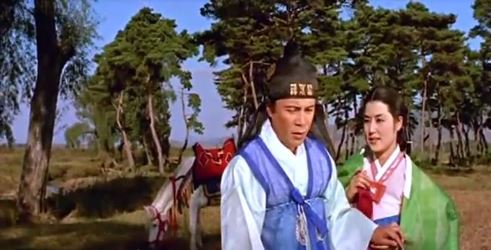
Seong Chun-Hyang (1961)

Among the most popular old tales in Korea—or so various sites inform me—is that of Chun Hyang, the beautiful daughter of a courtesan, and of Chun Hyang’s efforts to remain faithful to her husband, come what may.

I happened to come across a highly abridged version of The Tale of Chun Hyang on Scribd, read it (it was just six pages long) and liked it enough to try and see if I could get a novel-length version. I couldn’t get one—but what I found was that this tale seems to be to Korean cinema what Beauty and the Beast is to Western cinema: done and redone since the first moving pictures began. There have been over twenty versions made of this story, some of them now gone missing. The original story has been retained in most versions (including this one that I’m reviewing); there’s a TV series dating from 2005 (Delightful Girl Choon Hyang) which sets the same story in modern-day Korea and gives it a typical K-drama touch; and there are ‘what-if’ scenarios that have been spawned from The Tale of Chun Hyang.

Kim Jin-kyu and Choi Eun-hee in Seong Chun-Hyang.

Continue reading →

Book Review: Balraj Sahni: An Autobiography

I have Richard, over at Dances on the Footpath, to thank for this. Several years back, Richard had linked a blog post to a URL from where one could download Balraj Sahni’s autobiography. Since I’m a fan of Mr Sahni’s, I did so, promptly (which was just as well, since sometime later, that link went dead). What with this and that, however, I didn’t get around to reading the book until a week or so back—and then I wished I’d taken the time to read it earlier.

Balraj Sahni in Anuradha

Continue reading →

Ek Gaon ki Kahaani (1957)

What is it about Bengali directors—Bimal Roy, for instance, or Hrishikesh Mukherjee, or (if one steps out of the realm of just Hindi cinema, Satyajit Ray)—that they manage to bring so vividly to life the everyday happenings in the lives of everyday people? Not the escapist fare that most people tend to equate Hindi cinema with, but stories about real people, people one can relate to? Films like Majhli Didi, Parivaar, Parakh, Sujata, Anand: not larger than life, not without a shred of reality. Not art films, not angst-riddled, songless films about the search for the meaning of life, but everyday stories. Songs and all, still very much commercial cinema, but easy to relate to.

Add to that list Dulal Guha, who while he also went on to make films like Mere Humsafar, began his career as a director in Hindi cinema with this charming little film about a sleepy village named Chandangaon, that’s jolted by the arrival of a new doctor…

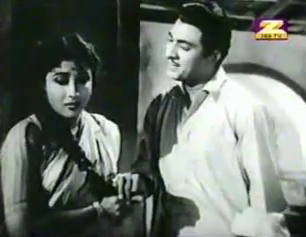
Talat Mahmood and Mala Sinha in Ek Gaon ki Kahaani

Continue reading →

Ten of my favourite ‘credits songs’

When I posted my list of ‘background songs’ (songs that form part of the film, but to which nobody lip-synchs), I made one stipulation: that they wouldn’t include ‘credits songs’, or songs that play while the credits roll. Not all of these, as you’ll see from my list below, are necessarily ‘background songs’ as well: some of them are ‘sung’ by people onscreen. And they run the gamut from songs that introduce the film’s ethos or primary theme, to—well, just another song to add to a list of songs the film already boasts of. And they are all sorts, from romantic to philosophical to patriotic.

JIs mulk ki sarhad ki nigehbaan hain aankhen

Continue reading →

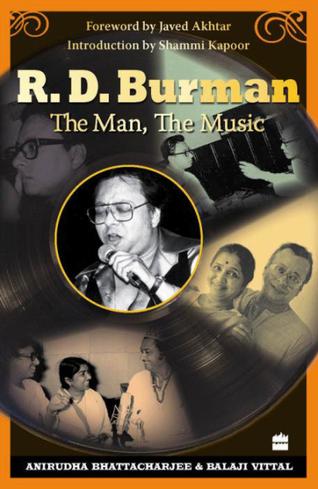
Book Review: Anirudha Bhattacharjee and Balaji Vittal’s ‘R.D. Burman: The Man, The Music’

People who know this blog focuses on pre-70s cinema would possibly be surprised to find a review here of a book about RD Burman—who, to most people, is more associated with Dum maaro dum and all those very peppy Rishi Kapoor songs of the 70s, than the music of the 60s. The fact, however, remains that RD Burman had actually made his debut as an independent composer (not merely as an assistant to his father, SD Burman) as far back as 1961, with the Mehmood production Chhote Nawab. And that he composed the chartbusting music for what is possibly my favourite Hindi suspense film (and one, too, which doesn’t have a single song I don’t like): Teesri Manzil.

This review, therefore, of a book about a man I knew little about except through his music—which has always appealed to me, not just because so much of it was there, all around me, playing on LPs in our house and blaring from radios wherever we went when I was growing up, but because it was so infectious, so full of life. (It was only later that an older, more informed me realized just how versatile RDB was, what softly melodious songs he could compose).

Anirudha Bhattacharjee and Balaji Vittal's 'RD Burman: The Man, The Music'

Continue reading →

Muzaffar Jang is back! Announcing: Crimson City

(Plug alert: my latest novel, what it’s about, and some background)

Some of you who’ve been reading this blog for a while—or who know something of what I write about besides classic cinema—probably know by now that I am also the creator of a fictional 17th century Mughal detective named Muzaffar Jang. Muzaffar first appeared in a short story in a collection of South Asian women’s writing, called 21 Under 40. I had, however, already half-written a novel featuring this protagonist, and that book, set in the summer of 1656, went on to become the first full-length Muzaffar Jang novel, The Englishman’s Cameo, published by Hachette India in 2008.

Seven years later, and here I am, at the fourth book of the series.

Crimson City, the fourth book in the Muzaffar Jang series.

Crimson City, the fourth book in the Muzaffar Jang series.

Continue reading →

The Innocents (1961)

My mother grew up in a family ruled by the iron hand of her grandfather, a strict disciplinarian who thought dining out, nightlife, and cinema were a waste of time. Not to mention immoral. As a result, while he was alive, about the only films the family went to watch were The Ten Commandments, Ben Hur, and Kismet.

Mummy once told me that the first film she happened to watch after the old gentleman (and his controlling ways) had passed on was The Innocents. And that she liked it. When I discovered that it starred Deborah Kerr—a favourite of mine—I was curious. I watched this film shortly after I began blogging, but decided I’d postpone a review (and a rewatch) for after I’d read the story on which this film was based: Henry James’s famous The Turn of the Screw.

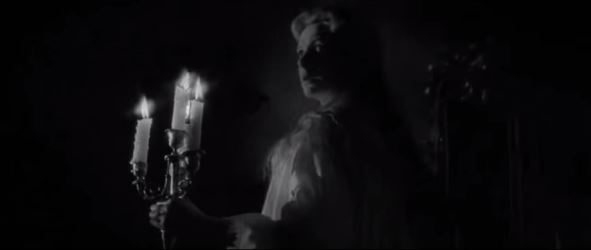
Deborah Kerr in The Innocents

Continue reading →