Aaye Din Bahaar Ke (1966)

(Coincidentally enough, I watched Aaye Din Bahaar Ke some weeks back, just after I’d posted my review of Phool aur Patthar. Back then I’d not known that we would be mourning the passing of Dharmendra so soon after. Consider this a tribute).

When I watched Phool aur Patthar some weeks back, I was reminded of the many fairly entertaining films Dharmendra worked in through the mid- and late-1960s. Not all of them were good (some, like Chandan ka Palna, were terrible), but quite a lot of them had at least good songs, a fair deal of entertainment value, and an undeniably handsome male lead to make them worth at least a one-time watch. Some of these (like Aankhen, arguably my favourite Dharmendra film) I’ve reviewed already; there are several others.

Here’s one. I last watched Aaye Din Bahaar Ke perhaps about 20-odd years ago, and actually remembered a fair bit of it. That I didn’t mind watching it again, even though the film is far from perfect, says a lot for it.

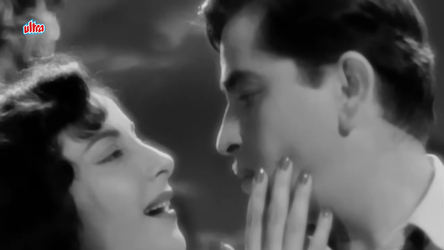
The story begins in Darjeeling, where Ravi (Dharmendra) lives with his widowed mother (Sulochana Latkar). Ravi is devoted to his mother: so much so that when Ma is doing her pooja, he tells her, “You may worship your gods, but I will worship only you.” She has devoted her life to looking after Ravi, educating him, etc, which is why this somewhat OTT sentiment.

Continue reading

Chori Chori (1956)

Happy 100th birthday to one of India’s greatest film makers, Raj Kapoor!

RK was born in Peshawar on December 14th, 1924. What can I say about him that hasn’t already been said or written, and by people much more erudite, well-informed, and more fond of RK’s cinema than I am? Yes; I will admit that I am not the greatest of Raj Kapoor’s fans, but let us keep the whys and the wherefores of that, the debates and the discussions, for another time. As Anu Warrier (of Conversations over Chai, not just a fellow blogger I admire hugely, but also an RK fan) said “I know there are RK films you like!”: and for RK’s birth centenary, I decided it was high time I finally reviewed an RK film that I particularly like.

I have watched Chori Chori several times, and always with great satisfaction. Even though it starred Raj Kapoor (opposite Nargis, moreover), the film is not at all the sort of film RK was known for: this was the light-hearted romp that younger brother Shammi was to go on to make his own. A road trip, a pampered heiress, a romance. Lots of songs, great chemistry.

Continue reading

Police (1958)

If you’ve been reading this blog some years, you probably know by now that I am a fan of Madhubala’s. I’ve watched most of her films (several of which I have not got around to reviewing on this blog), I’ve done lists of my favourite songs of hers, and I have waxed eloquent every now and then about how much I like her.

One of the things I dislike about much of the online (at least) raving about Madhubala is that the praise is invariably just about her beauty. How gorgeous, how exquisite. Yes, indeed; but Madhubala’s beauty, I think, often comes in the way of people appreciating what a good actress she was, too. Watch her performances in films like Mughal-e-Azam and Amar, for instance, and if you can look past her face, you will see how well she holds her own against heavyweight thespians like Dilip Kumar and Prithviraj Kapoor.

And she was a fantastic comedienne too. The madcap way she matches Kishore Kumar in Chalti ka Naam Gaadi, for example. Or her airhead character in Mr & Mrs 55. Interestingly, Madhubala is often compared to Marilyn Monroe, almost entirely on the basis of their beauty and popularity; but I think the two stars had one more thing in common: both could portray the ditzy beauty very well. This, in fact, is just the type of woman Manju, of Police, is: nutty, silly, a clown. But so endearing too (and, it goes without saying, so gorgeous).

Continue reading

Woh Kaun Thi? (1964)

I began this blog on November 4. 2008 (with a review of Vacation from Marriage), so this post marks the fifteenth birthday of Dusted Off. I dithered over how I might celebrate the occasion, and finally came to the conclusion that it would be good to mark it with a review of a film I’ve been meaning to review ever since I decided to start blogging about classic cinema. Woh Kaun Thi? is a film I enjoy a lot, and which I’ve seen in various avatars: first on Doordarshan, when I was a teenager. Then, when VHS tapes became available, multiple times on our VCR. Then, when CDs came along, this was one of the first VCDs I bought… then the DVD. Now YouTube.

The story begins on a stormy night. Dr Anand (Manoj Kumar) is driving down a pot-holed and lonely road when he sees a woman (Sadhana), clad in white and standing in the middle of the road. Anand tells her to move out of the way, but when she doesn’t respond, he is compelled to get out and talk to her. To all his questions—who is she, where is she going, isn’t she scared to be out here alone—she gives evasive, mysterious answers. Finally, however, she consents to let Anand give her a lift, but on one condition: he is not to ask any questions. [Given the way he’s been bombarding her with questions, I’m not surprised].

Continue reading

Nastik (1954)

A hundred years ago, on January 27, 1922, in Golconda (Hyderabad) was born Hamid Ali Khan, known to thousands of Hindi film viewers (and, even thousands more who have perhaps never watched any of his films) as Ajit. The man of ‘saara shahar mujhe loin ke naam se jaanta hai’. The iconic villain, suave and eerily soft-spoken though at the same time very oily and dangerous, of films like Zanjeer, Yaadon ki Baaraat, and Kalicharan. The baas of Raabert and Lilly (who was constantly being told not to be silly).

But long before he became the stuff of really bad jokes, before he attained the stature of one of Hindi cinema’s greatest onscreen villains, Ajit was a hero. Coming to Bombay in the face of parental opposition (having first sold his college books to finance the trip), Ajit had to struggle a lot to find work in the cinema industry. He began as an extra, and worked in several films until being noticed by the Gujarati-Hindi director Nanabhai Bhatt (Mahesh Bhatt’s father) who not only gave him the screen name Ajit, but also launched him in a leading role. Across the 50s and 60s, Ajit acted in a slew of films, both as leading man (Nastik, Dholak, Baradari, Marine Drive, Tower House, Opera House, etc) as well as in major supporting roles (of special note here are Naya Daur and Mughal-e-Azam, in both of which he appeared alongside Dilip Kumar).

Continue reading

Ek Nazar (1951)

June 23, 2021 marked the birth centenary of one of my favourite actors, the very talented and charismatic Rehman. Born Sayeed Rehman Khan in Lahore, Rehman joined the Royal Indian Air Force in 1942 and underwent training at Pune as a pilot. The Air Force soon lost its charm for Rehman (he failed a test) and he went off to Bombay to join the cinema industry. Initially taken on as a third assistant director by the writer-director Vishram Bedekar for Bedekar’s film Lakharani (1945), Rehman went on to assist director DD Kashyap in the film Chaand, where, completely by chance, Rehman appeared onscreen. In a dance sequence in the film, a Pathan character was needed—and the only person around who knew how to tie a turban the Pathan way was Rehman. And he knew how to tie it only around his own head.

The Hindi proverb ‘Daane-daane pe likha hai khaane waale ka naam’ comes to mind.

Rehman was required to say a couple of lines in that brief appearance, and fluffed it repeatedly; thirty takes were required to get it right, possibly because the first line began with a K: “Kitna achha naach thha”. Rehman, even years later, and as a seasoned actor, found it very difficult to begin a dialogue with the K sound and would request that a different word be substituted, or the words moved around.

Rehman had enough of a presence for his potential as an actor to be recognized, and he went on to act as a lead, working opposite major actresses like Madhubala, Suraiya, Nalini Jaywant and Nigar Sultana.

Continue reading

Doli (1969)

The Hindi film industry has always been an upholder of patriarchy. Its male stars attract ridiculously high prices in comparison to their female colleagues, and have disproportionately longer careers than them (plus a much longer time as leads). Sexism is rampant, ranging all the way from sexual discrimination to violence. And, though more women directors, scriptwriters, lyricists etc are around now, it’s still pretty much a male-dominated industry.

Hardly surprising, then, that most of our films tend to look at things (at best) from a male point of view. At worst, they uphold patriarchy in its most virulent forms, reducing women to a cypher, expected to devote their lives to the service of men. Ever-forgiving Sati Savitris, wrapped in saris and simpering prettily every time their lord and master deigns to be kind. Or unkind, it doesn’t matter; he is still her devta.

Doli is one such film, steeped in patriarchy and regressive in the extreme.

It begins in a college, where Amar (Rajesh Khanna) and Prem (Prem Chopra) have just graduated. Amar is the star athlete, Prem the star pupil who has topped the college and won a scholarship for higher studies in America. Later, in their dorm, both Prem and Amar receive letters from home, informing them that their weddings have been fixed. On the same day, in the same town, Nasik. Neither of them is happy about this, but Prem, having known already that a match had been found for him, is rather more resigned.

Continue reading

Door Gagan ki Chhaaon Mein (1964)

Just ten days ago, this blog celebrated the birth centenary of an actor who pretty much came to exemplify the ‘Hindi film villain’ of the 50s and 60s: the inimitable Pran. Today, it’s time to celebrate the birth centenary of another actor who carved such a niche for himself that his name became nearly synonymous with a particular kind of role. Iftekhar, who brought so much dignity and intelligence to his usual role of police officer or lawyer—or army officer, or doctor…

Continue reading

Jab Pyaar Kisise Hota Hai (1961)

Nasir Hussain, as someone (he himself?) once remarked, came to Bombay with one story in his briefcase, and made out of it one blockbuster after another. The story of a son, separated by circumstances from one parent and going through various ups and downs (including falling for the distant parent’s foster offspring, being impersonated by a crook, etc) before the happy ending, was one that was played out in Tumsa Nahin Dekha, Dil Deke Dekho, Phir Wohi Dil Laaya and Pyaar ka Mausam.

But, contrary to popular belief, Nasir Hussain was by no means a one-trick pony. He had other plot elements up his sleeve as well, and they appear now and then sporadically in various films. The ‘couple promised to each other as children’ trope is one [which always ends up with the couple—completely unaware of having been ‘betrothed’ in childhood, even sight unseen—falling in love with each other]. Another was the hero being [mistakenly, of course] believed to have killed a sister [or sister figure] of the heroine’s, after having played fast and loose with her—this, naturally, causing serious heartache and betrayal for the heroine until she realizes that her beloved couldn’t possibly do something so heinous.

Asha Parekh and Dev Anand in Jab Pyaar Kisise Hota Hai

Continue reading

Jis Desh Mein Ganga Behti Hai (1960)

In one pivotal scene in Jis Desh Mein Ganga Behti Hai, Kammo (Padmini), the daughter of a dacoit chief tells her naïve beloved that they, the dacoits, are not to be scorned or derided, because they wield guns to make things equal between the rich and the poor. They take from the rich and give to the poor, because the poor have always been preyed upon by the rich.

Kammoji, tum log chochilist ho?” asks Raju (Raj Kapoor), wide-eyed. Because chochilists, as he informs Kammo, also work to make things ‘barobar’ between the rich and the poor. And when he is reassured that yes, that is the philosophy of the dacoits, Raju decides there and then that he will no longer think of dacoits as evil people.

Raj Kapoor and Padmini in Jis Desh Mein Ganga Behti Hai Continue reading