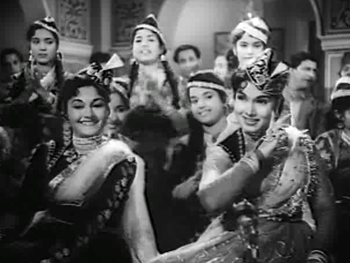
Phool aur Patthar (1966)

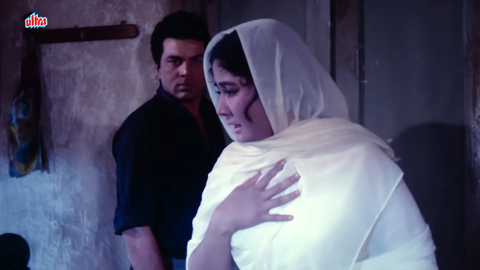
A couple of years back, I watched (and later reviewed) the Meena Kumari-Dharmendra starrer, Bahaaron ki Manzil. A good suspense thriller, it put me in mind of another film starring these two: Phool aur Patthar. I had seen the film many years ago, as a child (implication: this would have been in the early 80s, when Doordarshan’s sole TV channel was our only entertainment besides books and radio, which meant we watched anything that was aired, no matter how mediocre). I remembered nothing of it except that Dharmendra played a thief who ends up being cared for by Meena Kumari, playing a widow.

Continue reading

Udan Khatola (1955)    

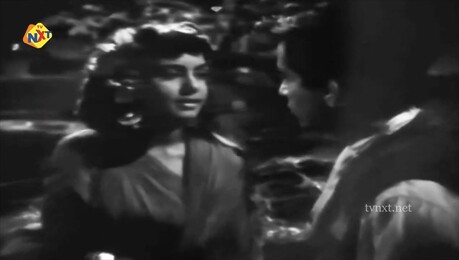
Does Udan Khatola hold some sort of record for largest number of love/lust triangles?

Here’s a rough count:

There’s the unnamed aviator, the pardesi (played by Dilip Kumar) who is in love with the local peshwa’s daughter Soni. Who, in turn, loves him back.

Continue reading

Kundan (1955)

Some days ago, in this delightful post about chai in Hindi cinema, I came across a mention of Kundan. Aao hamaare hotal mein chai peeyoji garam-garam sounded so interesting that I bookmarked the film without even really checking to see what it was all about (though the cast, barring Nimmi—whom I often find very irritating—appealed to me). Then, just a couple of days later, Anu posted this wonderful tribute to Sohrab Modi, in which she listed Kundan as one of her favourite ten films directed by Modi. Adapted from Victor Hugo’s classic Les Miserables.

That sealed it. I had read Les Miserables a couple of years ago, and had been blown away by it: by the depth and width of it, the characterization, the sheer scope of it all. And now, it looked as if the universe was pushing me towards Kundan. I had to watch this one.

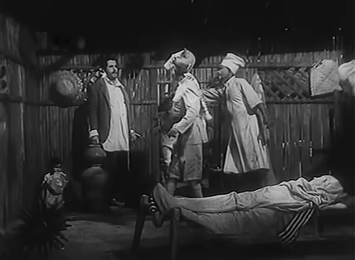
The story gets off to a flying start. Kundan (Sohrab Modi) is a very poor man who lives with his very ill sister and her little daughter Radha. Unable to earn [it’s not clear why, given that he looks able-bodied enough], a desperate Kundan finally steals a loaf of bread from a bakery and runs home to give it to Radha. Since he’s made no attempt to commit this theft in secrecy, the alarm has been raised and Kundan is arrested even as Radha is eating the loaf.

Continue reading

Sunghursh (1968)

This was the first film I watched after Dilip Kumar passed away on July 7 this year. The tributes and reminiscences were still in full flow two days later, on July 9, which marked what would have been the 83rd birthday of Sanjeev Kumar. On a Sanjeev Kumar tribute post on Facebook, I read a comment in which someone recalled Dilip Kumar’s remark about Sanjeev Kumar, who was his co-star in Sunghursh: “Is Gujarati ladke ne toh paseena nikaal diya!” (“This Gujarati boy made me sweat!”)

This, I thought, might be an interesting film to review by way of tribute to both Dilip Kumar as well as Sanjeev Kumar. But I had other Dilip Kumar films to also watch: Musafir and Sagina Mahato for the first time, Ram aur Shyam for a long-overdue rewatch. So, while I watched this and wrote the review, I decided the publishing of the review could wait for now.

Because today, August 21, 2021, marks the birth centenary of Harnam Singh Rawail, the director of Sunghursh.  HS Rawail, as he was usually billed, debuted in 1940 with the film Dorangia Daaku, but it wasn’t until 1949, with Patanga (of Mere piya gaye Rangoon fame) that he became famous. Rawail was to make several well-known films through the following decades, but his two best-known works are probably Mere Mehboob (1963) and Sunghursh.

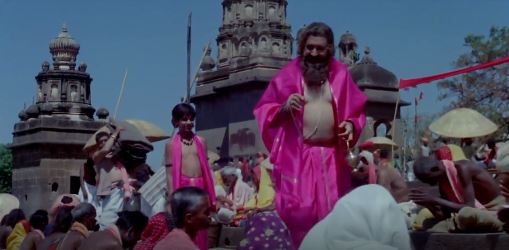
The story, based on Mahashweta Devi’s Laayli Aashmaaner Aaina, begins in Banaras of the 19th century (the riverfront, sadly, looks very mid-20th century). Bhawani Prasad (Jayant), bearded and seemingly benevolent, walks back from the temple after pooja. At his heels follows his grandson Kundan (?). Bhawani Prasad is much venerated, and the way he hands out alms to the poor and blesses those bowing before him, one might be forgiven for thinking him a good man.

Continue reading

Ram aur Shyam (1967)

I wanted to watch a Dilip Kumar film to commemorate the life and career of this extraordinary actor. But which one? There are lots of iconic Dilip Kumar films that I have either seen long ago (Devdas, Footpath, Daag, Deedaar, Udan Khatola, Andaaz) and not reviewed on this blog, or which I’ve never seen (Tarana, Jugnu, Mela, Shaheed, Musaafir). I could watch a film I’d never seen before, but—knowing what a lot of Dilip Kumar’s early films are like—there was always a chance I’d run up against something depressing.

I finally decided to rewatch a film I’d seen years ago. A film that’s a good showcase of Dilip Kumar’s versatility, his ability to pull off comic roles as well as the tragic ones for which he was better known. Ram aur Shyam is an out-and-out entertainer, a film I’d watched and loved as a teenager, and which I knew for a fact would cheer me up.

Continue reading

Jaadoo (1951)

There are several reasons why I decided to review this film, even though it’s not a particularly impressive one. For one, it’s one of the rare Indian films set outside India and the Middle East (more on this later). For another, its music by Naushad, who (I would have thought) would not have been the most obvious choice to compose music for a film that’s distinctly Latin in tone. And, because this is a film I’ve long been wanting to see—ever since I first watched Lo pyaar ki ho gayi jeet on Chitrahaar as a pre-teen.

Continue reading

Pyaar Kiya Toh Darna Kya (1963)

For those who’ve been following this blog since pretty much its inception, or who’ve explored some of the older posts and specials on Dustedoff, it should come as no surprise that I am a fan of Shammi Kapoor. I have seen most of the star’s films from after his watershed year of 1957 (which was the year Tumsa Nahin Dekha was released, catapulting him to sudden stardom), and I’ve seen several from the early 1950s as well.

Finding a 60s (or late 50s) Shammi Kapoor film that I’ve not seen before is therefore a matter of singular excitement [or was; I have begun to realize, after several less than enjoyable experiences, that there is a reason most of these films aren’t better-known]. This time, when I came across Pyaar Kiya Toh Darna Kya, I approached it with caution. Pandit Mukhram Sharma’s name among the credits bolstered my hopes somewhat; he wrote some good stories, so I began thinking this might not be too bad.

Continue reading

Ten of my favourite filmi qawwalis

I have been meaning to write this post for a long time now—I love qawwalis—but I’ve kept putting it off, because I’ve always thought that it would be impossible to create a list of just ten filmi qawwalis that are my favourites. (Barsaat ki Raat itself features at least three qawwalis that completely bowl me over).

But. I’ve finally decided to take up the challenge, and do it. These are ten fabulous qawwalis from pre-70s films that I’ve seen (though I must confess that I like the qawwalis of some 70s films—especially Rishi Kapoor ones). To make this post a little more challenging, I decided not to include more than one qawwali per film.

Continue reading

Ten of my favourite Hindi film ghazals

This is another of my ‘prize posts’, dedicated to one of the people who participated in the Classic Bollywood Quiz I hosted on this blog last year. One of the quiz questions was a toughie that no-one was able to answer: Which was Sahir Ludhianvi’s first ghazal to be recorded in Hindi cinema? I did provide one clue: the operative word is ‘ghazal’.

This post therefore is dedicated to Ravi Kumar, the only person who guessed which song I was referring to, though since his guess came in the wake of his submission, it didn’t count. The song was Tadbeer se bigdi hui taqdeer bana le, from Baazi (1951) – a song which is, in my opinion, a good example of what a ghazal is and isn’t. No, it’s not defined by its music – so, it needn’t be slow and soulful; it can be fast-paced and peppy. What does define a ghazal are its lyrics: rather, its structure and its rhyme scheme.

Continue reading

Rafi in Ten Moods

The other day, after a long gap of 16 years, I met someone who used to teach me in college. I never knew back then that he was a Mohammad Rafi aficionado; and now, chatting with him about Dusted Off, I got a request: do a Rafi post.
So, as a sort of gurudakshina, here it is: a Rafi post. And since I cannot even begin to think of trying to narrow down my favourite Rafi songs to just ten (or even a hundred), I’m taking the easy way out. Rafi, in ten moods. Ten songs that showcase the breathtaking versatility of this man and his voice. There will always be dozens of other Rafi songs out there that reflect the same emotions behind these songs, but these are my favourites. And, in keeping with the rules I always set for myself, they’re all from the 50’s and 60’s, from films I’ve seen.

Continue reading