I have to admit I have never watched this film in all my years of watching and blogging about old Hindi cinema. Part of the reason is, I suppose, that this film—directed by Bimal Roy—somehow always tends to get sidelined in all the praise that’s showered on his better-known works: Do Bigha Zameen, Bandini, Devdas, Parakh, Sujata, Madhumati… then, too, there’s the fact that Kamini Kaushal has never been one of my favourite actresses. I’ve always found her a little affected, her diction and expressions too exaggeratedly innocent.
Continue readingTag Archives: Manorama
Kundan (1955)
Some days ago, in this delightful post about chai in Hindi cinema, I came across a mention of Kundan. Aao hamaare hotal mein chai peeyoji garam-garam sounded so interesting that I bookmarked the film without even really checking to see what it was all about (though the cast, barring Nimmi—whom I often find very irritating—appealed to me). Then, just a couple of days later, Anu posted this wonderful tribute to Sohrab Modi, in which she listed Kundan as one of her favourite ten films directed by Modi. Adapted from Victor Hugo’s classic Les Miserables.
That sealed it. I had read Les Miserables a couple of years ago, and had been blown away by it: by the depth and width of it, the characterization, the sheer scope of it all. And now, it looked as if the universe was pushing me towards Kundan. I had to watch this one.
The story gets off to a flying start. Kundan (Sohrab Modi) is a very poor man who lives with his very ill sister and her little daughter Radha. Unable to earn [it’s not clear why, given that he looks able-bodied enough], a desperate Kundan finally steals a loaf of bread from a bakery and runs home to give it to Radha. Since he’s made no attempt to commit this theft in secrecy, the alarm has been raised and Kundan is arrested even as Radha is eating the loaf.
Continue readingKhandaan (1942)
If Hindi cinema has ever had an iconic onscreen villain—not a villain in one film, but in film after film—it has got to be Pran. There have been other actors, from Wasti to Ajit, Ranjeet to Madan Puri, who have played memorable villains in films: but none, in my opinion, was quite able to sustain it and make it so much his forte that his own name became a synonym for villainy (it’s common knowledge that for many years, Indian parents refused to name baby boys Pran because of Pran).
In film after film, from period dramas like Halaku to comedies like a Half Ticket, from weep fests like Do Badan to supernatural stuff like Madhumati—Pran was in them all. With aplomb, he carried off every shade of villainy, whether it was the lisping and ruthless truck driver Mohan of Kashmir ki Kali or the tuneless dacoit-cum-gentleman of Munimji. He even did the occasional unusual role (as a doctor in Aah, and as a kotha frequenter in a cameo in Devdas), until, in the late 1960s, he began to play some sympathetic characters as well. From the cynical Malang Chacha of Upkaar, to Dev Anand’s long-lost brother in Johny Mera Naam, to his role in Zanjeer: Pran proved that he wasn’t just a great villain, he was a great actor, period.
Today would have been Pran’s hundredth birthday: he was born on February 12, 1920 in Delhi. And, to mark the occasion of his hundredth centenary, I thought I’d review a Pran film with a difference. Not Pran as the villain, but Pran as the hero. A young, gangly Pran, probably not even twenty-two years old yet, plays opposite a girlish Noorjehan in one of the first Hindi films to get a lot of pre-release publicity: Khandaan.
Roop ki Rani Choron ka Raja (1961)
In 1956, Waheeda Rehman made her debut in Hindi cinema in CID, with Dev Anand (Waheeda wasn’t the heroine of CID—Shakila was—but she had a good and somewhat offbeat role as the vamp with a heart of gold). Over the next decade and a half or so, Waheeda and Dev Anand were to go on to act together in several more films, probably their most famous pairing being in the hugely popular Guide (1965).
I have watched, as far as I know, all of the Waheeda-Dev films over the years. The only one that (again, as far as I know) I hadn’t watched yet was this one. Time, I decided, to make amends for that.
As in many other films of his, Dev Anand in Roop ki Rani Choron ka Raja is a crook—a thief, to be precise. We are introduced to Chhagan (Dev) when he’s in a shady-looking dive, buying a bottle of booze. Shortly after, Chhagan is accosted by ‘Langad Deen’, a partly-crippled character (played by Jeevan), who has a bit of news for Chhagan: a steamer is about to begin the journey down the river to the pilgrimage spot of Shivsagar. Langad Deen has it on authority that among the people on board is a wealthy jeweller who is carrying a very valuable diamond to be offered up to the god Shiv at Shivsagar.
Gateway of India (1957)
Hindi cinema has a tendency towards stories that stretch over long periods of time. Days, at the least, but often months, often many years too (that old trope of children growing up has been a part of too many films to name). It is the unusual film, especially in the 50s and 60s, that extends over just a few hours. Solvaa Saal was one such; Gateway of India is another. Both films are about runaway girls who meet the loves of their lives in the course of one night. That, though, is where the resemblance stops.
Parineeta (1953)
Sometime during the 1990s, I pretty much stopped watching contemporary films. By then, there were a few channels on TV that regularly aired old films, and that was enough for me—in any case, I was in a job so time-consuming that I barely got time to sleep, let alone watch films. For several years, I watched a handful of films that were the current rage. As it was, the songs rarely appealed to me; I didn’t much care for a lot of the people who seemed to be the hottest stars; and some of the biggest films—or so I gathered—were action blockbusters, not really my idea of fun.
And then I watched Parineeta. The 2005 one, which marked the Hindi film debut of one of my favourite present-day actresses. It also proved a turning point for me with reference to Saif Ali Khan, whom I didn’t like before, but began to like (in some roles) after this one. It’s one of the few films in which I’ve not minded Sanjay Dutt. Plus, it has perhaps my favourite score of any film from the 2000s so far.
It wasn’t till much after I’d seen Parineeta—perhaps a few years—that I discovered that there had been an earlier Parineeta as well. Made by Bimal Roy, and starring Meena Kumari and Ashok Kumar. Just those three names in themselves are enough to make me watch a film. And a film based on a novel by Sarat Chandra, no less? I realized it was high time I watched this.
Bahaaron ke Sapne (1967)
I can blame my not having watched Bahaaron ke Sapne all these years on my father: when I first expressed an interest in the film because it had been directed by Nasir Husain (back then, a teenaged me associated Nasir Husain only with frothy and entertaining films like Dil Deke Dekho, Tumsa Nahin Dekha, and Phir Wohi Dil Laaya Hoon), my father said, ‘It’s a serious film.’
And that was that. Because, back then, I didn’t care to ask how serious. Anything that smacked of reality rather than escapism was not to be touched with a barge pole.
Dil Hi Toh Hai (1963)
Some months back, I watched two relatively new Muslim socials: Daawat-e-Ishq and Bobby Jasoos. Both were an interesting reflection on the way the Muslim social has changed over the years (after close to disappearing during the 90s). The Muslim social of the 1950s was, more often than not, a film that, even when set amongst the wealthy upper class—the nawabs and their kin—came heavily burdened with all the stereotypical trappings of what was perceived as ‘Muslim’: the qawwalis and mushairas, the shararas and sherwanis. (I’ll write about all of those, and more, in a post to follow).
Bobby Jasoos and Daawat-e-Ishq had shed those to quite an extent. But that process had begun in earlier films, even as far back as the 60s. In Neend Hamaari Khwaab Tumhaare, for example, where Nanda’s character—the daughter of a nawab, no less—doesn’t merely have a Western education, but spends most of her time in skirts and dresses. And this film, where Nutan’s Jameela is a firebrand, giving as good as she gets, and by no means the simpering and demure Muslim girl exemplified by her contemporaries in films like Mere Mehboob, Mere Huzoor, and Chandni Chowk.
Bahurani (1963)
Inspirations to watch (and review) films come to me from all over. Friends and relatives are occasionally badgered to suggest genres; blog readers’ requests and recommendations (some of them, alas, long-pending) are taken into consideration. And, sometimes, I get inspired by the most outlandish of things. For instance, this film—which I first watched years ago, on TV—jumped to the top of my to-watch list because one day, while washing up in my kitchen, I was reminded of Mala Sinha.
[And no, not because I happened to be scrubbing a colander].
Reporter Raju (1962)
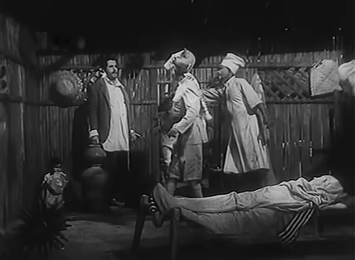
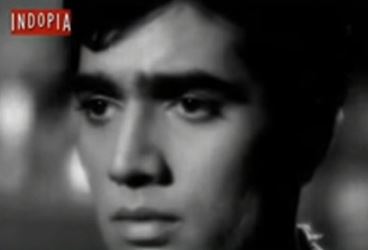
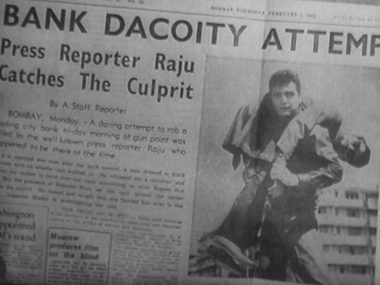
A couple of months ago, I got a call from Seventymm (the video rental service I’d subscribed to), letting me know that they were shutting down rentals and becoming retail-only. Since I’d paid up in advance for a year’s subscription, I had Rs 800 worth of unused vouchers—which, they said, I could use to pick products from the store. I ordered seven DVDs. They (or, rather, the five Seventymm were able to deliver—the rest went out of stock) arrived last week. Reporter Raju was one of them.
Also, last week, I finished a writing assignment for which the research involved watching a diverse set of films. A lot of them, though, had one thing in common: a newspaper office and/or a reporter as an important character. This one was on the to-watch list, but didn’t arrive in time for me to see it before submitting my article. Just as well, actually, because despite the name, it doesn’t exactly show the reporter doing much any newspaper work. Unless beating up goons is part of the job description.