Chori Chori (1956)

Happy 100th birthday to one of India’s greatest film makers, Raj Kapoor!

RK was born in Peshawar on December 14th, 1924. What can I say about him that hasn’t already been said or written, and by people much more erudite, well-informed, and more fond of RK’s cinema than I am? Yes; I will admit that I am not the greatest of Raj Kapoor’s fans, but let us keep the whys and the wherefores of that, the debates and the discussions, for another time. As Anu Warrier (of Conversations over Chai, not just a fellow blogger I admire hugely, but also an RK fan) said “I know there are RK films you like!”: and for RK’s birth centenary, I decided it was high time I finally reviewed an RK film that I particularly like.

I have watched Chori Chori several times, and always with great satisfaction. Even though it starred Raj Kapoor (opposite Nargis, moreover), the film is not at all the sort of film RK was known for: this was the light-hearted romp that younger brother Shammi was to go on to make his own. A road trip, a pampered heiress, a romance. Lots of songs, great chemistry.

Continue reading

Howrah Bridge (1958)

Aaiye meherbaan baithiye jaan-e-jaan, and Mera naam Chin Chin Choo. Two great actresses, two iconic songs.

When I was doing the Helen tributes last month, I was reminded of Mera naam Chin Chin Choo all over again—and remembered, too, that I had never reviewed Howrah Bridge on this blog. It has also been many years since I last watched the film (before I launched Dusted Off), so I decided it was high time I revisited this.

Howrah Bridge begins very far from the bridge, and in fact from Kolkata: in Rangoon, where Prem Kumar (Ashok Kumar) finds his father (Brahm Bhardwaj) in a flap. Daddy is distraught because Prem’s elder brother Madan (Chaman Puri, in a cameo role) has run off from home, taking with him an invaluable family heirloom, a dragon which has been in the family for generations. We later discover that the dragon was crafted in China many centuries ago, and from there came to be owned by the king of Burma, after which it passed into the possession of Prem’s family.

Continue reading

Zindagi (1964)

The main reason I watched this film was because of the songs, which include some very good ones. And Vyjyanthimala, whom I invariably enjoy watching. The two male leads, Rajendra Kumar and Raj Kumar, are not favourites of mine, but they aren’t absolutely unbearable either. And there was a star cast of several other people I like, such as Prithviraj Kapoor and Helen. Ramanand Sagar, who wrote and directed Zindagi, also has to his credit one film I really like (Aankhen) and some (Aarzoo, Ghoonghat, Charas) that I don’t mind too much. I figured there might be enough here for me to enjoy.

The story begins with Beena (Vyjyanthimala) coming home to her mother (Leela Chitnis) with the news that she has found a job, finally. Ma is happy, until Beena tells her what the job is: Beena is now a theatre actress. Ma is very upset and goes into a long harangue of how it’s better to be poor than to be in the theatre; their name will be mud, blah blah.

Continue reading

Amrapali (1966)

Happy birthday, Vyjyanthimala! (it’s either her 90th birthday or her 87th today, it doesn’t seem very clear which, but anyway).

Among the recent books I’ve read is Advait Kottary’s Siddhartha: The Boy Who Became the Buddha, a fictionalized retelling of the story of the Buddha. While Siddhartha is the focal point of the narrative, several other important historical personages appear in the book, among them the nagarvadhu or courtesan of Vaishali, Amrapali. Amrapali is shown to have originally had a relationship with the ruler of Magadha, Bimbisara: so much so that she bears him a son, whom she is later compelled by circumstances to hand over to the Buddha to bring up. Bimbisara’s belligerent and headstrong son and heir, Ajatshatru, though he’s never seen ‘his father’s courtesan’ (as Kottary describes her), detests Amrapali.

… until he, injured in a way with Vaishali, impersonates a Lichhavi (native to Vaishali) soldier in order to escape with his life. Fate brings Ajatshatru and Amrapali together: she, thinking him to be Lichhavi, tends to his wounds and heals him, and they fall in love.

It’s been ages since I watched the Vyjyanthimala-Sunil Dutt Amrapali, and while I remembered some of the core elements, I’d forgotten much of it. As far as I remembered, the film had nothing whatsoever about Amrapali’s relationship with Bimbisara or her having a son with him. To be honest, I’d have been very surprised if that aspect of her life had been shown: it would have been far too bold for Hindi cinema, back then, to have a heroine who could have affairs with both father and son, and bear a child out of wedlock.

So I decided it was time to rewatch Amrapali, which begins in Magadha. Here, the king, Ajatshatru (Sunil Dutt), is in conference with his trusted advisor, friend, and Magadha’s commander-in-chief, Veer (Premnath). Ajatshatru is a hot-headed warmonger, and right now baying for the blood of the democratic Lichhavis, whose land, Vaishali, lies across the river to the north.

Continue reading

Nagina (1951)

This Gothic mystery story has an interesting claim to fame: it was the film Nutan wasn’t permitted to watch at the premiere, even though she starred in it.

Nutan had debuted in the film Hamari Beti (1950; it was directed by her mother, Shobhna Samarth) when she was all of fourteen. The following year, after having spent the intervening period at a finishing school in Switzerland, she was cast as the female lead in Ravindra Dave’s Nagina, which starred Dilip Kumar’s brother Nasir Khan. Nagina was released under an A certificate because it was considered too frightening for children; Nutan, then not even sixteen years old, was escorted to the premiere of the film by family friend Shammi Kapoor, but was not allowed in because she was underage.

The story begins [rather choppily; I wonder if this is the modern-day slash-and-burn style of video editing that’s reflected here, rather than the original film’s editing] with Srinath (Nasir Khan) having a conversation with his wheelchair-bound mother (Anwari Bai). As it later emerges from the story, Srinath’s father, a jeweller named Shyamlal, has been missing these last twelve years, ever since he was accused of having murdered the wife of a zamindar, Raiji, over a valuable gemstone (a ‘nagina’) set in a ring.

Continue reading

Bhoot Bungla (1965)

The last of the ‘silly Indian films’, at least for now.

I watched Bhoot Bungla for the first time as a child, when it was aired on Doordarshan. I remembered very little of it, except that RD Burman struck me as very funny (even funnier than Mehmood, who—back then—I had still not begun to think of as irritating). And that my mother, sitting beside me and watching Tanuja lip-sync to O mere pyaar aaja, remarked that she (Mummy) used to sing this song as a lullaby for my sister when she was a baby.

Then, when I reviewed Adhey Kangal some time back, a few blog readers observed that the plot was pretty similar to that of Bhoot Bungla.

Time, I decided, for a rewatch.

As the credits roll, an unidentified man screams “Lakshmi!” and having pulled a bloodied dagger out of his chest, proceeds to keel over, dead. A woman (Minoo Mumtaz), presumably Lakshmi, goes running out of the house, clutching a toddler to her, looking panicked.

Continue reading

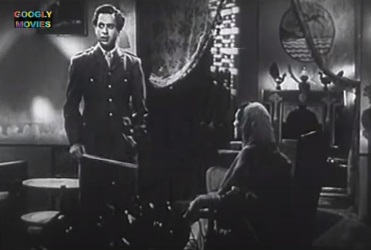
Do Phool (1958)

I have watched hundreds of Hindi films. Many of these I’ve reviewed here on this blog, and for many of those, I’ve had readers mention that so-and-so film was actually a remake of so-and-so Hollywood film, or was inspired from this novel or that play. In some, of course, I’ve been able to spot a source immediately: the grand mansion being run as a hotel by its manager who then forces the owner to pretend to be a guest is lifted from Come September and used—without any credit for the original idea—in both Kashmir ki Kali and Mere Sanam. Adalat is a remake of Madame X; Aradhana of To Each His Own; Gumnaam of And Then There Were None… all uncredited. And umpteen others.

This is something I find very irritating. The amount of work that goes into coming up with a good plot is substantial, and if you’re acknowledging that by thinking it worthy of being copied, then you should certainly think it worthy enough to pay for. But by calmly hogging all the credit and assuming that Indian audiences won’t cotton on to this plagiarism, and Hollywood (or foreign writers), too far from the world of Hindi cinema, will be oblivious.

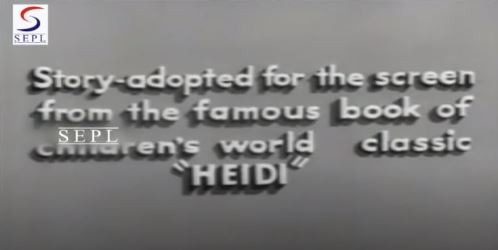
Anyway, that’s a long, convoluted and messy topic, which I should probably leave for later. For now, the reason why all of that came to my mind: because this film does give credit where it’s due. Not, unfortunately, to the writer of the book (Johanna Spyri), but at least to the book itself.

Continue reading

Ten of my favourite Hasrat Jaipuri Songs

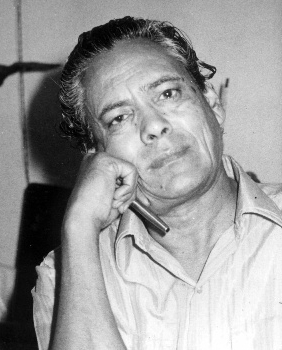
Today is the birth centenary of one of Hindi cinema’s greatest lyricists, the very prolific and versatile Hasrat Jaipuri. Born in Jaipur on April 15, 1922, ‘Hasrat’ was named Iqbal Hussain, and took to writing poetry fairly early in life. In 1940, not even 20 years old, Hasrat moved to Bombay, where, though he attended mushairas and wrote (and recited) a good deal of verse, he was also obliged to take up a job as bus conductor. This job helped him make ends meet for the next 8 years, when Hasrat had the good fortune to be noticed by none other than Prithviraj Kapoor at a mushaira. Kapoor was so impressed by the young poet, he recommended Hasrat to his son Raj, who was then in the midst of planning Barsaat (1949). Hasrat was taken on to write songs for the film, and that was the start of a very long association with RK Films—Hasrat wrote lyrics for all of Raj Kapoor’s films for the next two decades and more, invariably alongside fellow lyricist Shailendra.

Continue reading

Love Marriage (1959)

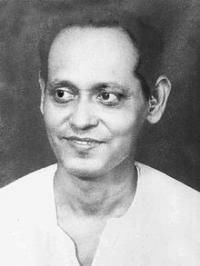
Today is the birth centenary of the Indian director, writer and producer Subodh Mukherji. While Mukherji doesn’t have a huge list of films to his name—barely a dozen—the majority of the films he did make proved to be very successful ones, big entertainers that had great music, starred beautiful people, and were generally good time-pass, if nothing else.

Born in Jhansi on April 1, 1921, Subodh Mukherji was jailed for three months in 1942 for his activities as part of the Indian freedom movement. Subsequently, at the behest of his family, he was made to go to Bombay to join his elder brother Sashadhar Mukherji (who had established Filmistan Studios along with Madan Mohan’s father, Rai Bahadur Chunilal; Ashok Kumar; and Gyan Mukherjee). It was for Filmistan that Subodh Mukherji made his first film, writing and directing Paying Guest (1957), though he also took time off in between to direct Munimji (1955). Through the late 50s and the 60s, Mukherji was to go on to write, produce, and/or direct several films that exemplified his philosophy of making films that told entertaining stories: Junglee (1961), Love Marriage (1959), Shagird (1967, starring Sashadhar Mukherji’s son, Joy Mukherji).

Continue reading

Sharaarat (1959)

It might surprise some of you to know just how many films I watch. No, not new ones, but old films, in the hope that I will find something worth reviewing for this blog. Perhaps one in five of those films gets reviewed, and that because either it’s worth recommending, or conversely, it’s worth warning people off. 

A lot of the Hindi films I watch, I watch because of the music. Occasionally (Duniya Jhukti Hai, Bank Manager, Chandni Chauk) there’s just one song that has prompted my viewing of the film, and the film itself turns out to be so ho-hum that I decide there’s not much point reviewing it. I assume, you see, that most people (unlike me) are sensible enough to not waste a couple of hours watching a film just because it has one good song. 

Sometimes, though, a film has a bunch of good songs, and a cast I have great hopes of. Then, even if it ends up being a bit of a dud, I feel obliged to review the film. Because I want to tell you: steer clear; despite the cast and despite the songs, this is really not worth your while. 

Also, in the case of Sharaarat, there was the fact that this film starred Meena Kumari. And, as I’ve seen from films like Miss Mary, Tamasha, Kohinoor, Azaad, etc, Meena Kumari was very good at comedy. Here, she was paired with Kishore Kumar. I settled down, hoping for some fun. Sharaarat, after all: that sounded promising. 

Continue reading