Muslim socials are among the genres I can never have too much of. Back in their heyday, they had some of the best music around (remember Chaudhvin ka Chaand? Barsaat ki Raat? Mere Mehboob? The inimitable Pakeezah?) There was the chance to savour the mellifluous sound of Urdu; to peek into a social structure and lifestyles that often went otherwise unexplored in cinema; and to see women in shararas and men in achkans [the latter, like military uniforms, equipped with some inexplicable means of making even Bharat Bhushan and Rajendra Kumar look good].
Tag Archives: Hindi cinema
Intequam (1969)
When Anu listed her favourite Sadhna films, I remarked that another Sadhna film I like—though it’s from later in the actress’s career—is Intequam. Based on Vendetta, a Marie Corelli novel (the only film adaptation of a Corelli work that’s in colour), Intequam is a story of vengeance. Though it features a Sadhna whose gorgeousness had begun to suffer because of her medical problems, she’s still interesting—and the central character in this film.
An Evening in Paris (1967)
…and a day or two in Beirut (plus an afternoon in the Lebanese countryside, masquerading as provincial France). A couple of days in Switzerland, and a grey afternoon at the Niagara Falls. Lots of Paris, of course, from the Eiffel Tower and the Champs Elysées, to the bateau mouche and pretty little cafés.
And Sharmila Tagore. And Shammi Kapoor. And pretty mad masala.
What with reading about Amar Akbar Anthony (and thinking over the lost-and-found trope), I ended up thinking, too, about An Evening in Paris, which is a good enough example of the genre. In this one, Sharmila Tagore is the one who plays the character(s) who’re lost: twin sisters, separated as children, thanks to a villain. They grow up unaware of each other’s existence, and in classic Hindi film style—ranging from Anhonee to Sharmeelee—with one sister good and the other bad, or at least not-so-good.
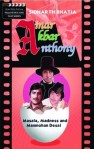
Book Review: Sidharth Bhatia’s Amar Akbar Anthony: Masala, Madness and Manmohan Desai
Since I am a writer, I’m always on the lookout for good books to read—there’s so much to learn from other writers. And, when the book in question happens to be about cinema, the film fanatic in me rejoices. A … Continue reading
Ten of my favourite filmi wedding songs
It’s wedding season in Delhi (has been, in fact, for the past couple of months). Almost every night, there’s a large shamiana at our local municipal park. There are traffic jams because of huge baaraats, all the women laden with jewellery and tinsel. We see white mares (or, in some cases, a pair of mares pulling a flower-bedecked ‘chariot’) trotting along on roads. We hear a lot of music—or what passes for music.
In fact, every time I hear the sort of music that’s played at many Delhi weddings, I’m tempted to go up to whoever’s acting the DJ, and ask them to play some good shaadi songs.
Since I can’t actually do that, I decided to create my own list: ten Hindi film songs that are directly related to weddings. (Which is why Ab ke baras bhej bhaiyya ko baabul or Laali-laali doliya mein laali re dulhaniya don’t qualify; the words relate to a wedding, but the context is completely different).
Ten wedding songs, therefore, from pre-70s films that I’ve seen. Enjoy!
Raj Hath (1956)
Despite my love for historicals and Madhubala, I was surprised when Ava mentioned this film on her blog. A historical (and a Sohrab Modi one, too), with Madhubala, and I’d never heard of it? Ava recommended it, so I decided to keep an eye out for it. Fortunately, I discovered Raj Hath on Youtube—therefore, this post. Ava, thank you. This was an enjoyable film.
Ten of my favourite ‘Who’s that lip-synching?’ songs
If the title of this post stumps you, let me explain.
Anybody who’s seen Hindi films (especially from the 1940s onward, when playback singing became widespread) knows that most actors and actresses onscreen weren’t singing for themselves. Occasionally, as in the case of artistes like Suraiya, KL Saigal, Noorjehan or Kishore Kumar, they did sing for themselves, but more often than not, the recording was done off-screen, and the actor lip-synched to the song onscreen. So we have all our favourite actors, warbling blithely (or not, as the case may be) in the voices of our greatest singers.
And just now and then, while the song may reach the heights of popularity, the person on whom it is filmed may be, to most people, a non-entity. Sidharth Bhatia, author of Cinema Modern: The Navketan Story (as well as a book on Amar Akbar Anthony, which I’m looking forward to reading) pointed this out to me the other day, with a couple of examples in support of his point. Jaan-pehchaan ho, and Tum apna ranj-o-gham. Sidharth made a request: would I compile a list of songs of this type? Famous songs, but lip-synched by not so famous faces?
So here it. And, Sidharth: thank you. This was challenging, and fun.
Boot Polish (1954)
When I reviewed Les Quatre Cents Coups a couple of weeks back, I was mentally riffling through the list of good films with child protagonists that I’d seen. I couldn’t, sadly, think of many. There were some—The Night of the Hunter, Bhai-Bahen, Bandish, Do Kaliyaan, for instance—in which children played an important part. But these were either not really films about children, or they were films about stylized children: little adults, really, or oversized toddlers.
Then I saw Kaphal – Wild Berries, made by blog reader, fellow blogger and film maker Batul Mukhtiar (aka Banno), and thought: yes, this is what a good film about children should be like. (Here, on my website, is a review of Kaphal). I also remembered, then, that Banno had once recommended a film about children. The Raj Kapoor production, Boot Polish, which she’d reviewed on her blog, and which I’d never got around to watching. If someone who could make such a lovely film about children could recommend a film, that film would be worth watching.
So here we are. And, thank you, Banno.
Railway Platform (1955)
Railway Platform begins, not on a platform, but in a train.
It starts with a song, Basti-basti parbat-parbat gaata jaaye banjaara, lip-synched by a philosopher and poet (Manmohan Krishna) as he rides in a crowded train compartment. This man, only referred to as ‘kavi’ (poet) throughout the film, acts as a sort of sutradhar. Not strictly the holder of the puppet strings, not always a narrator, but a voice of reason, of conscience, of dissent. His favourite saying is that “Two and two do not always make four; they sometimes make twenty-two.”
Manna Dey: In Tribute
I am listening to Poochho na kaise maine rain bitaayi as I write this. I am hearing Manna Dey’s voice, bringing so much emotion, so much frustrated longing into “Ut jale deepak, it mann mera; phir bhi na jaaye mere mann ka andhera”. And I am remembering all the other songs of Manna Dey that I’ve loved over the years. Songs that I grew up with (and, more often than not back then, didn’t know who sang them). Songs that I loved from the very first moment I heard them. Songs that have grown on me. Songs that make Manna Dey immortal, even though he’s no more.